
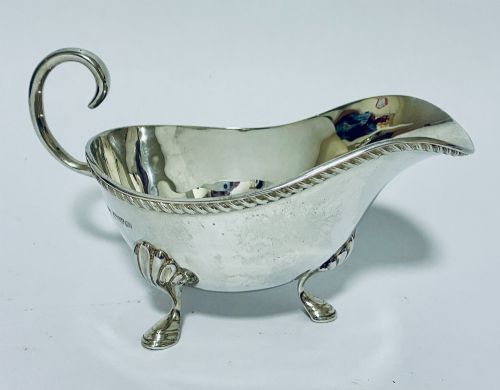
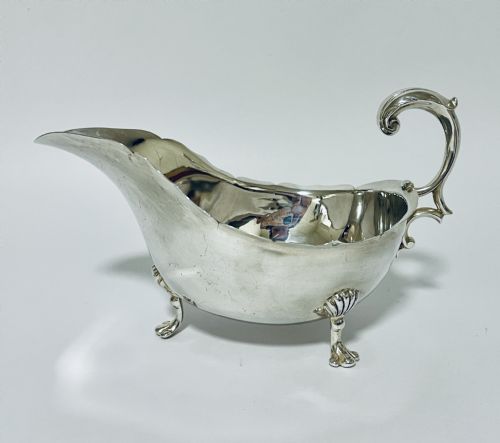
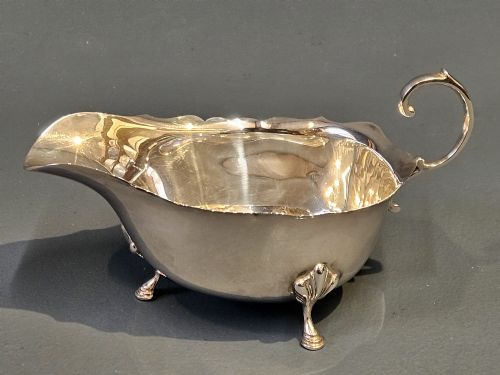

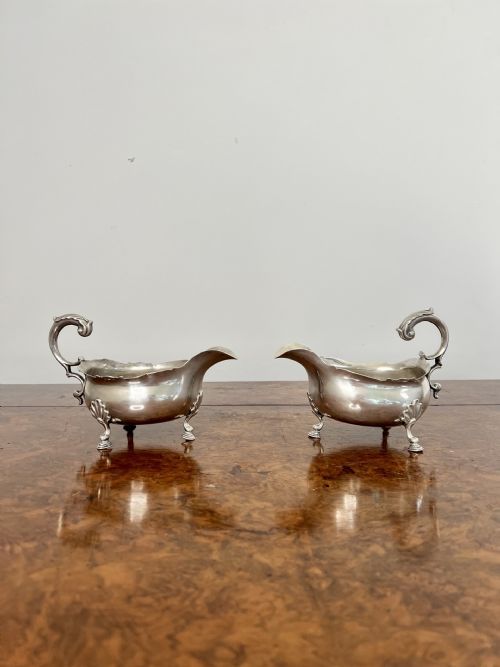


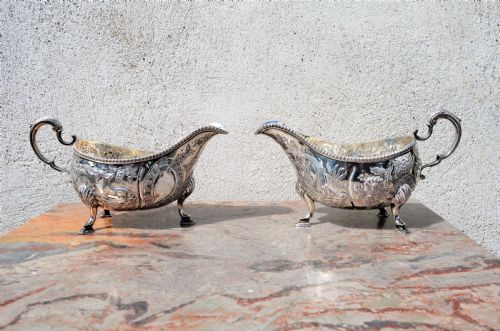


Sterling Silver Sauceboat
These sterling silver sauceboat examples bring serious presence to the dining table, crafted for rich gravies and drawn butter with enduring style.
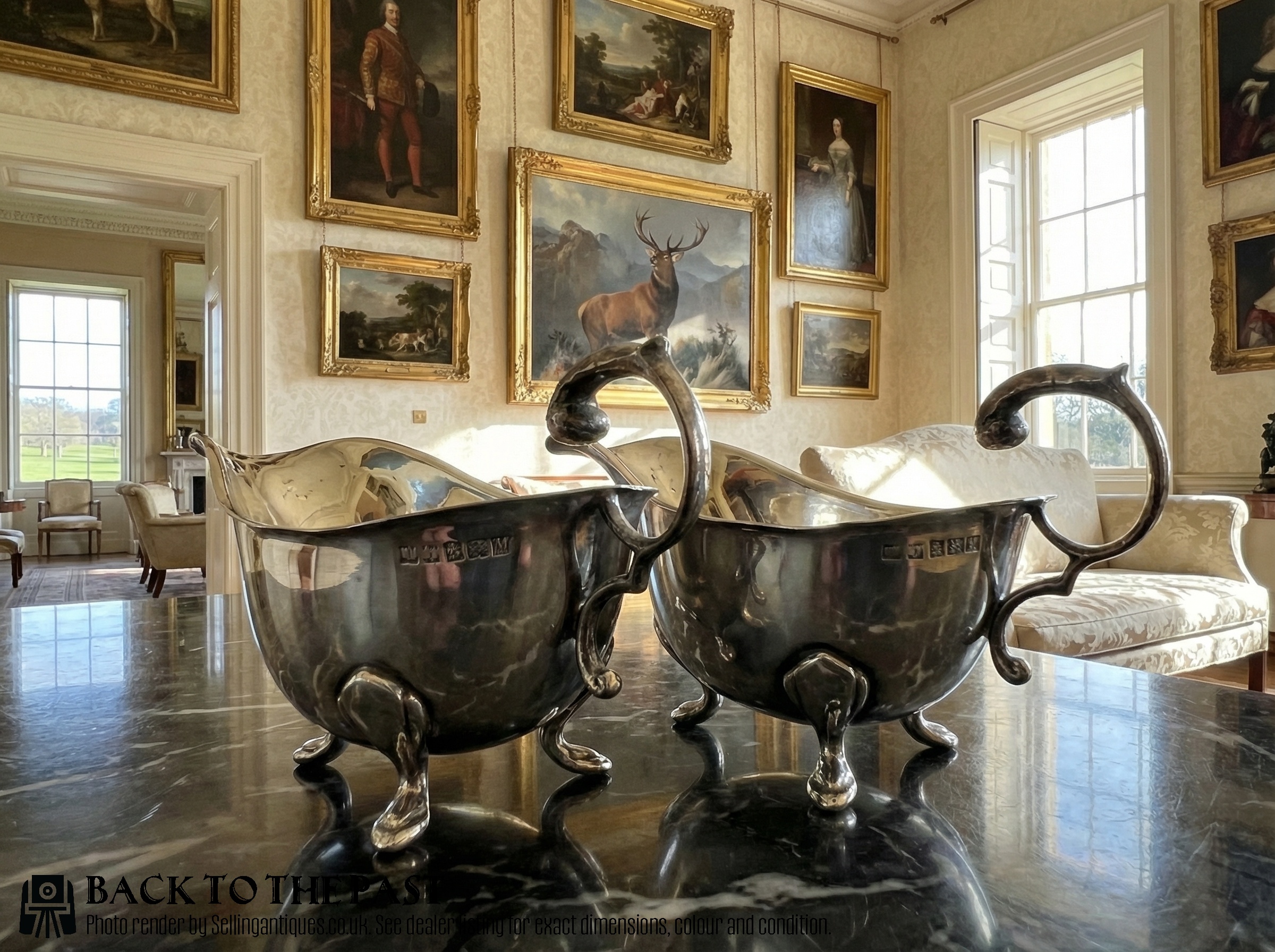
What these sterling silver sauceboat pieces are
When you search for a sterling silver sauceboat, you are looking at substantial serveware designed to hold and pour gravies, sauces, and drawn butter at the table. These vessels span multiple eras, including Georgian, Victorian, and Edwardian periods, alongside mid-century twentieth-century work.
The pieces you meet on this page include single vessels and matching pairs, often raised on pedestals or tripod feet for stability and presentation. Forms range from classical neoclassical silhouettes to naturalistic motifs featuring details like acorn designs.
Origin points encompass British hallmarked items from London as well as American silver, reflecting distinct workshop traditions. Whether plain polished surfaces or ornamented bodies, each sterling silver sauceboat serves as a functional centrepiece for formal dining.
How they were made
Silversmiths constructed each sterling silver sauceboat using high-purity silver alloys, hammering and shaping the metal from sheet form or casting heavier components like handles and feet separately. Molten or rolled silver provided the ductile base required for raising smooth bellies and flared rims.
Details such as beaded borders, gadroon edges, and applied naturalistic elements like acorns were soldered onto the body or worked directly into the metal through chasing and repoussé techniques. Lidded variants required precise hinge work and fitted finials to ensure smooth operation of the cover.
Retail Price Guide 2026
Typical UK retail prices for sterling silver sauceboat, calculated from the Sellingantiques database of over a million retail prices indexed since 2003. This retail price guide relies exclusively on Sellingantiques data; no external sources or auction records are used, so the figures do not describe the wider market.
Listings feature sterling silver sauceboat examples from Georgian, Victorian, and Edwardian periods, alongside mid-century twentieth-century production.
What varies in quality
The distinction between standard commercial pieces and the top of the range lies in the weight of the metal and the crispness of the chased or cast ornamentation. Thicker gauge sterling silver resists denting and gives the vessel a reassuring heft in the hand.
Maker attribution also dictates standing, with documented American and British firms achieving higher regard than unmarked wares. Harmony in a matching pair and the retention of sharp, unrubbed hallmarks further elevate a sterling silver sauceboat.
Tiffany & Co·JC Moore·Theodore B Starr
The Sterling Silver Sauceboat Glossary
- Sterling silver
- A silver alloy containing 92.5 percent pure silver by mass, with the remainder usually copper. This standard ensures the durability required for functional tableware.
- Hallmark
- An official stamp applied to precious metals indicating the purity, the assay office, and the date letter. British silver relies on these marks for precise dating.
- Pedestal
- A raised foot or base supporting the body of the vessel above the table surface. This form elevates the pouring spout for easier service.
- Chasing
- A metalworking technique where the silversmith punches and pushes the front surface of the metal to create a raised design without removing material.
- Repoussé
- A method of ornamentation where metal is hammered from the reverse side to form a low relief design. It often pairs with chasing to refine details on the front.
Frequently Asked Questions
What is a sterling silver sauceboat used for?
These vessels were traditionally filled with warm gravies, melted butter, or savoury sauces to accompany roasted meats and poultry at the dining table. Their flared spouts and comfortable handles allowed guests or servants to pour contents smoothly onto plates.
Today, they function equally well as decorative display items on sideboards or as refined containers for sauces during formal dinner parties.
How do I date a sterling silver sauceboat?
Dating relies heavily on stamped hallmarks, which reveal the assay office, standard mark, and a specific date letter corresponding to the year of manufacture. Stylistic clues such as neoclassical pedestal bases or Victorian naturalistic motifs also point to specific decades.
Examining the construction methods and maker marks helps narrow down whether a piece originates from the Georgian era, the nineteenth century, or later twentieth-century production.
Are pairs harder to find than single pieces?
Matching pairs of silver sauceboats occur less frequently because many vessels became separated over generations of use and inheritance. Surviving pairs often command greater interest from collectors setting a symmetrical table.
Single vessels remain more common, representing individual survivals from larger antique dining services.
How should I clean my silver sauceboat?
Regular dusting and occasional washing with warm water and mild soap remove everyday oils and dust safely. When tarnish develops, a quality silver polish applied with a soft cloth restores the original lustre without abrading the metal surface.
Harsh abrasive dips should be avoided, particularly on pieces with chased or engraved details where dark recesses give depth to the design.