
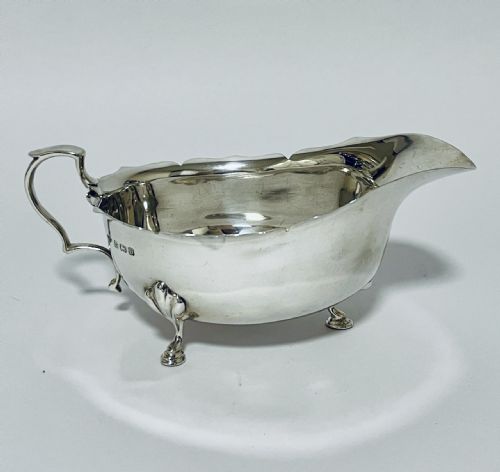
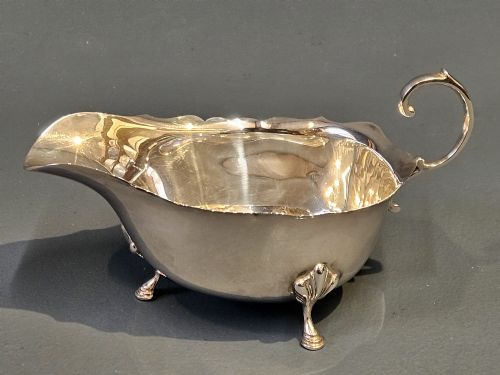


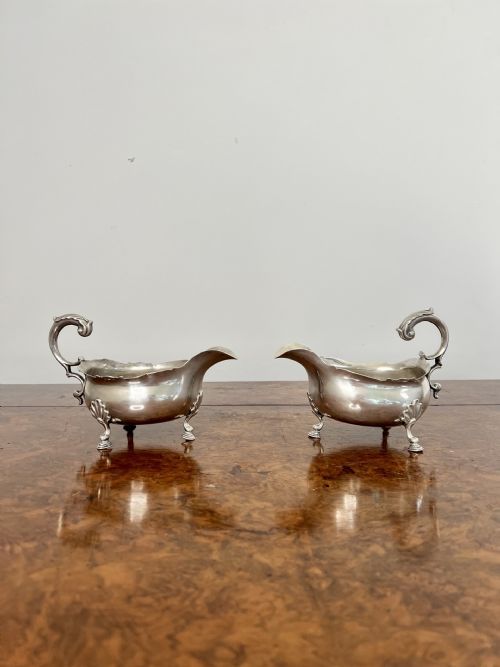


Silver Gravy Jug
These silver gravy jug examples are classic dining table serveware pieces sought after for traditional table settings.
Identifying silver gravy jug pieces
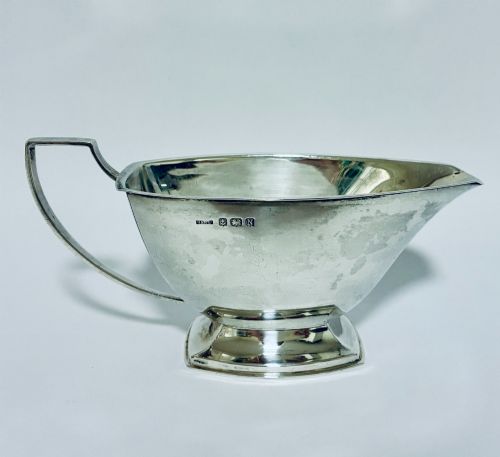
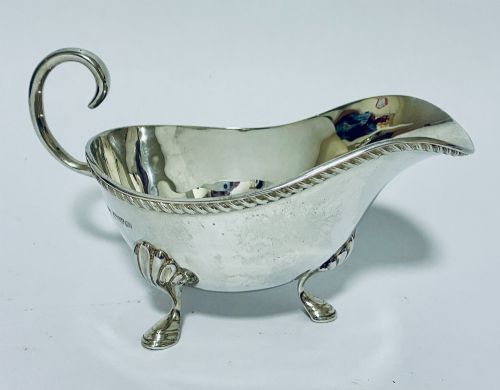
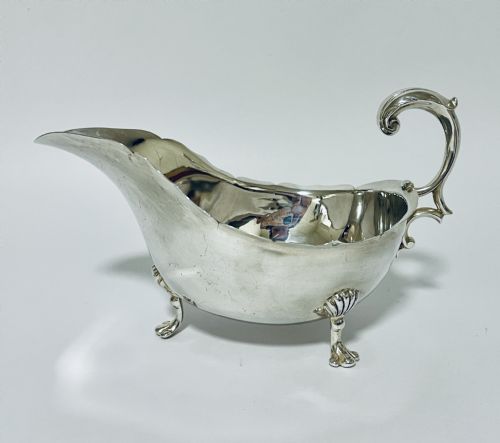
A silver gravy jug is typically encountered as a sauce boat or gravy boat designed for table service. The pieces listed under this search phrase span from the George III period through the Victorian era and into the mid-twentieth century.
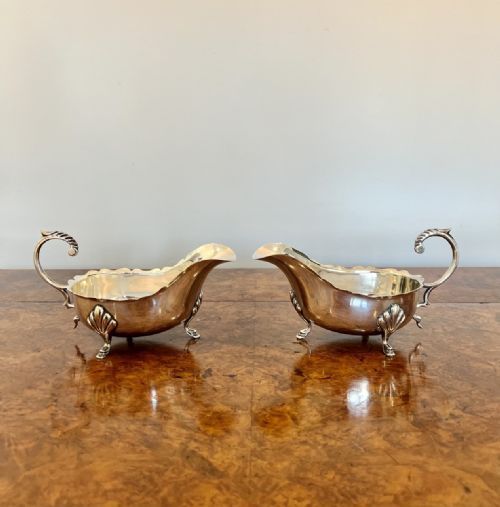
Buyers will find both single vessels and matched pairs available in various weights and capacities. Many examples draw on Georgian styles or feature specific regional designs including Norwegian Dragestil work.
Common forms include traditional double lip vessels and single spout jugs suited for serving sauces at the dining table. These items bridge formal nineteenth century dining traditions with twentieth century revival pieces.
Materials and construction methods
These items are constructed from solid silver and sterling silver using traditional silversmithing techniques. The material provides both the durability required for functional table use and the malleability needed for shaping.
Maker techniques involve forming the body, attaching handles, and often incorporating decorative elements such as naturalistic acorn designs. Construction ranges from standard gauge metal to heavy gauge silver intended for substantial everyday use.
Retail Price Guide 2026
Typical UK retail prices for silver gravy jug, calculated from the Sellingantiques database of over a million retail prices indexed since 2003. This retail price guide relies exclusively on Sellingantiques data; no external sources or auction records are used, so the figures do not describe the wider market.
The site's inventory includes both individual sauce boats and matched pairs originating from English and Norwegian makers.
Quality differences across the range
The distinction between standard examples and higher tier pieces rests primarily on metal weight and the complexity of the silversmith's work. Heavier vessels demonstrate a more substantial physical presence on the dining table.
Stylistic execution also defines quality, with refined Georgian revival pieces and intricate naturalistic ornamentation standing apart from simpler utilitarian serves. Maker attribution to known firms further separates exceptional items from unmarked examples.
Walker And Hall·Elkington And Co·Asprey
The Silver Gravy Jug Glossary
- Sterling Silver
- A silver alloy containing 92.5 percent pure silver by mass and 7.5 percent other metals, usually copper. This standard ensures the necessary hardness for functional serveware while maintaining a bright metallic lustre.
- Double Lip
- A vessel design featuring pouring spouts on opposite sides of the rim. This configuration allows for convenient pouring from either end during table service.
- Dragestil
- The Norwegian dragon style revival of the late nineteenth century. It incorporates Norse interlaced ribbon patterns and dragon motifs into decorative metalwork.
Frequently Asked Questions
What is a silver gravy jug used for?
These vessels serve sauces, gravies, and melted butter during formal and casual dining occasions. Their design allows for steady pouring directly onto the plate.
They also function as decorative table centrepieces when not in active use during a meal.
How do I care for solid silver serveware?
Regular washing with mild soap and warm water removes food residues after use. Dry the metal thoroughly with a soft cloth to prevent water spots.
Periodic polishing with a dedicated silver cleaner maintains the bright finish without wearing down the underlying metal.
Are these pieces marked with hallmarks?
Most pieces carry traditional British hallmarks indicating the assay office, metal standard, and date letter. These marks help identify the specific year of production and the city of testing.
Some international items feature alternative purity marks, such as the Norwegian standard indicator.
Can I use antique silver gravy jugs daily?
Solid silver is durable enough for regular household use provided it is handled with care. Hand washing protects the delicate handles and decorative rims from damage.
Avoid using abrasive scrubbers that might scratch the polished surface over time.