
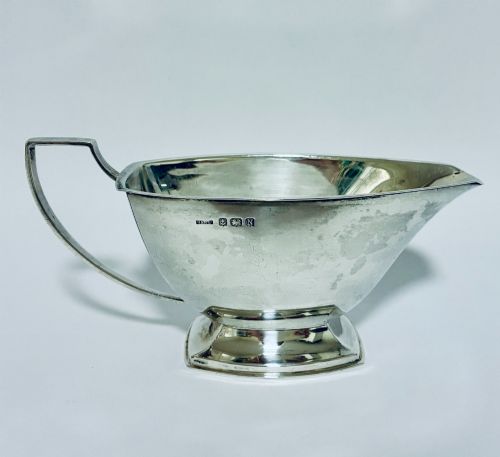
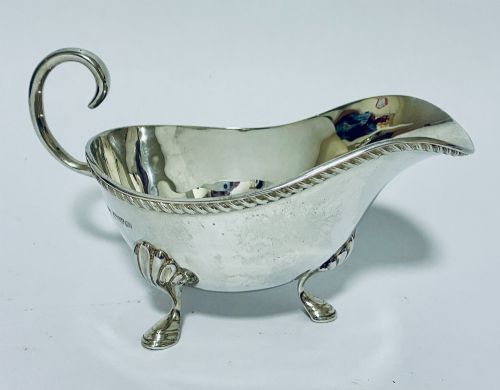
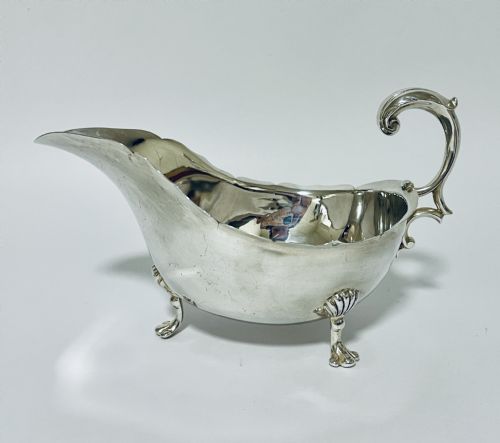
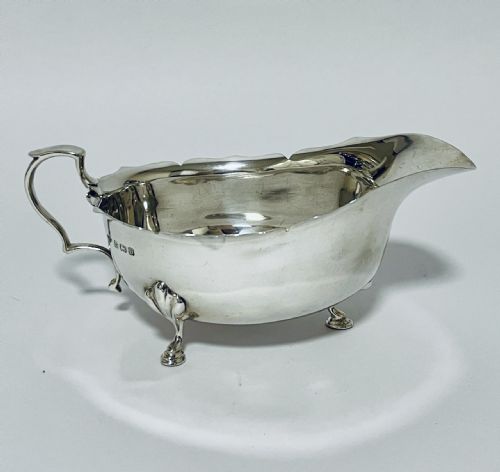
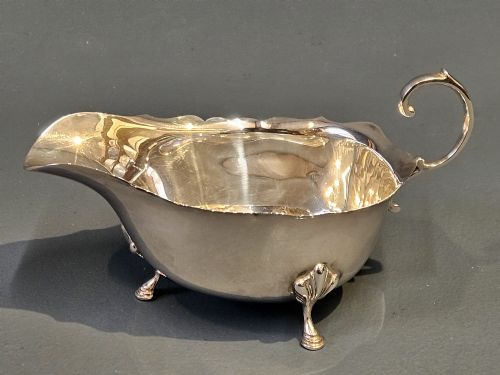


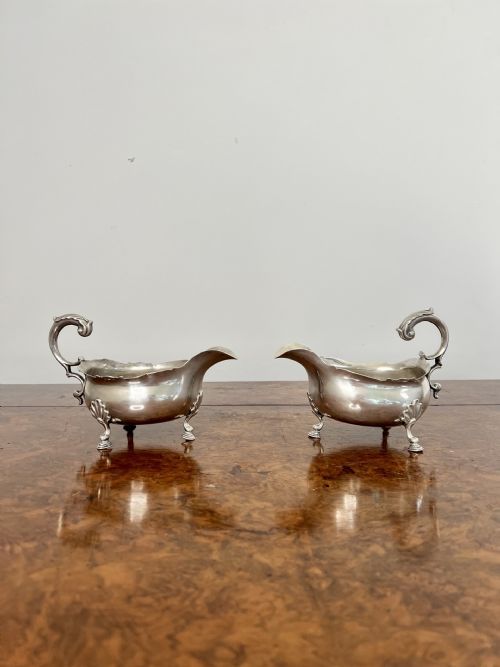


Sterling Silver Gravy Boat
A sterling silver gravy boat brings tactile weight and bright reflection to the dining table, grounding the service of sauces and gravies in enduring metal.
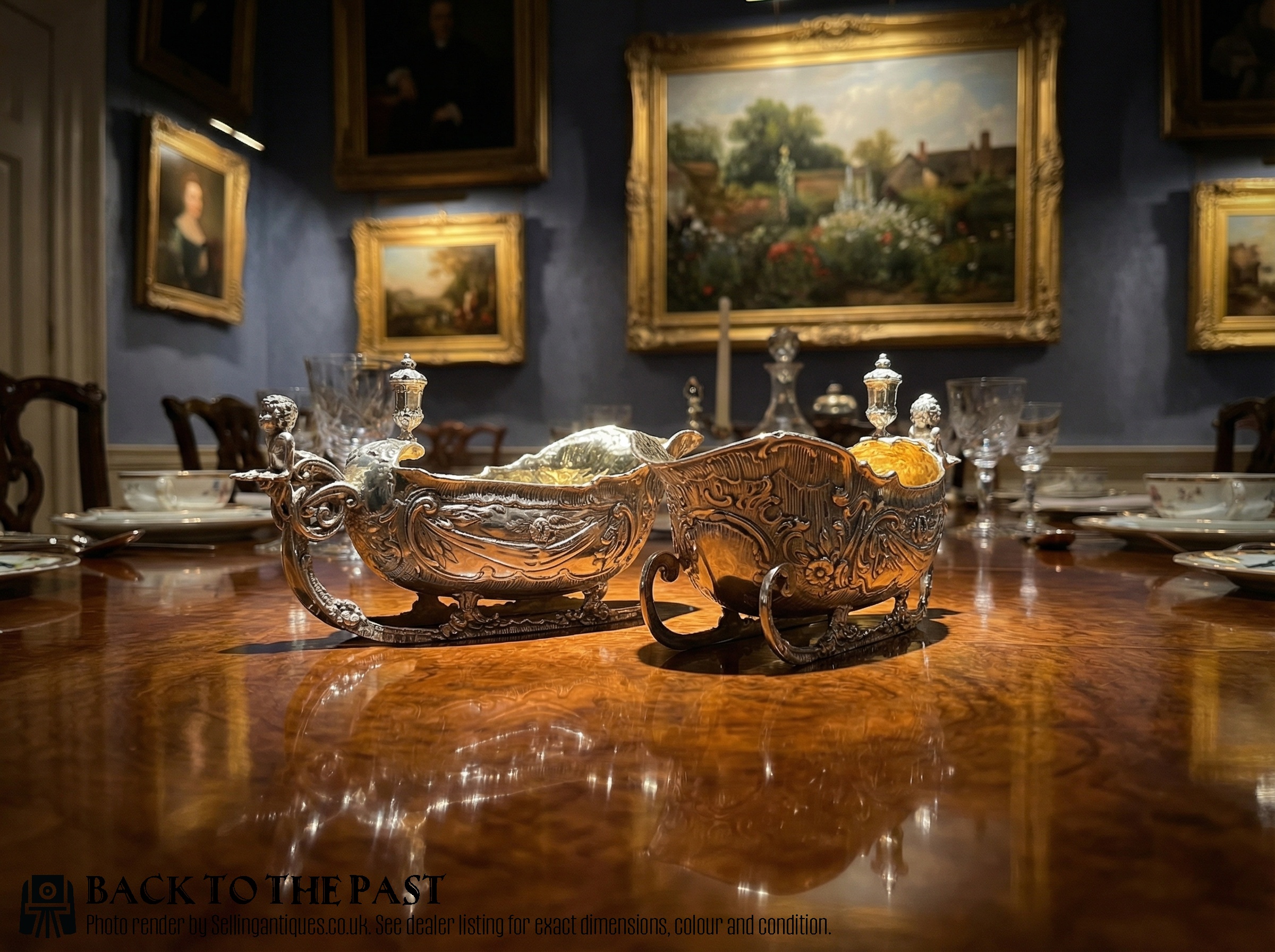
Sterling Silver Gravy Boat
A sterling silver gravy boat is a table vessel designed to hold and pour sauces, taking forms that range from neoclassical pedestal bodies to streamlined Art Deco silhouettes. When exploring a sterling silver gravy boat, a buyer encounters domestic serveware shaped across centuries, from mid-eighteenth-century Georgian examples to twentieth-century productions.
The objects appear singly or in pairs, often supported on three feet or elevated upon circular pedestals. Makers frequently incorporated double lips, cast handles, and applied borders into the designs, adapting the forms for dining rooms of various scales.
How They Were Made
Silversmiths constructed these vessels using sterling silver and silver-gilt, hammering and raising sheet metal into hollowware bodies or casting heavier components separately. Handles, feet, and decorative trims were cast and subsequently soldered to the main body, ensuring structural integrity during heavy daily use at the table.
Surface decoration involved chasing, embossing, and engraving, techniques that brought forth naturalistic motifs like acorns or geometric bands. Assay office hallmarks stamped directly into the silver record the year of creation, the town of testing, and the purity standard of the metal.
Sterling Silver Gravy Boat Retail Price Guide 2026
Typical asking prices for sterling silver gravy boat among the pieces listed under this phrase on Sellingantiques today, from the lower quarter to the upper quarter. They describe what is for sale here now, not the wider market.
Acorns and oak leaves occasionally sprout from Victorian handles, giving formal gravy a surprisingly rustic woodland temperament.
What Varies in Quality
The calibre of a piece rests upon the weight of the silver used in its construction and the crispness of its cast details. Thicker gauge metal resists distortion along the rim and handle, ensuring the vessel maintains its geometry over centuries of handling.
Artisanal execution distinguishes standard production from exceptional work, particularly in the hand-chasing of decorative elements and the smooth integration of feet to the body. Pieces bearing clear maker marks and complete hallmarks anchor higher tiers of craftsmanship.
Tiffany and Co·Theodore B Starr·William Comyns·Walker and Hall·Viners Ltd·Asprey London·William Grundy·James Welch
The Sterling Silver Gravy Boat Glossary
- Sterling silver
- An alloy containing 92.5 percent silver by mass and 7.5 percent other metals, usually copper. This composition provides the durability required for functional tableware while retaining a bright metallic lustre.
- Silver-gilt
- Sterling silver that has been coated with a thin layer of gold on its interior or exterior surfaces. This technique protects the silver from acidic food sauces and adds a warm golden tone.
- Hallmark
- A series of official marks stamped on items to certify the purity of the metal, the maker, and the year of assay. These stamps provide a reliable timeline for historic silver.
- Chasing
- A metalsmithing technique where the artisan pushes metal from the front using punches and hammers to create raised surface relief. It adds depth and texture without removing material.
- Pedestal base
- A raised, supportive foot beneath the main body of the vessel, lifting the container above the table surface. This form is common in Georgian designs.
Sterling Silver Gravy Boat: Frequently Asked Questions
How are gravy boats dated?
Makers relied on official assay office marks stamped directly onto the metal surface. These punches include date letters corresponding to specific years of testing.
Additional maker marks and town symbols help narrow down the exact period of production alongside stylistic clues.
Were these vessels used daily?
Dining rooms utilised these silver vessels for serving hot gravies, melted butter, and thin table sauces during formal meals. The reflective metal complemented ceramic dinner services.
Households often kept them in pairs to serve different sauces at opposite ends of long dining tables.
What is silver-gilt interior?
Silversmiths applied a thin gold wash to the inside of the silver bowl to prevent acidic food juices from tarnishing the metal. This inner golden layer protected the silver and added visual contrast.
Many antique vessels retain traces of this original gilding inside the pouring bowl.
How should antique silver be polished?
Owners maintain the surface shine by using specialised silver cloths and non-abrasive polishes formulated for antique metals. Gentle application preserves delicate hand-chased details and maker hallmarks.
Frequent light cleaning prevents the buildup of heavy tarnish without wearing down the underlying silver.