



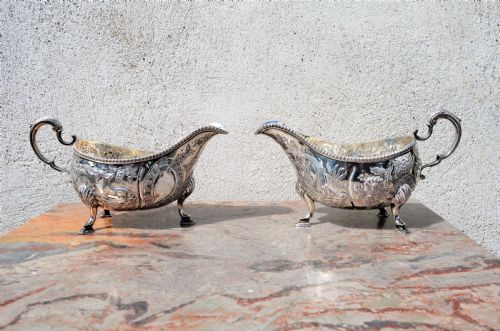

Pair Silver Sauce Boats
Pair silver sauce boats are matching vessels for gravies and condiments, bringing formal dining history directly to the table.
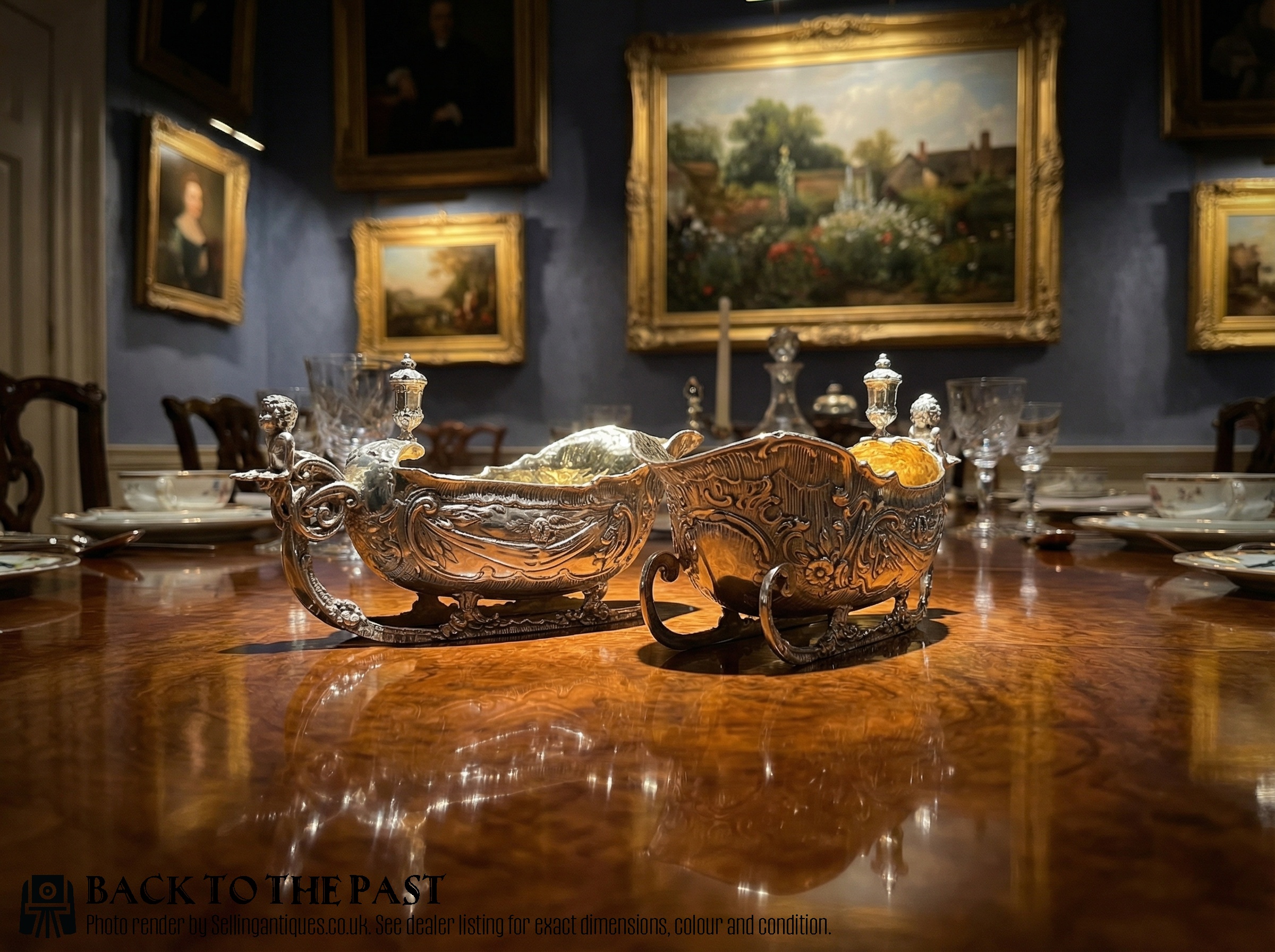
Pair Silver Sauce Boats
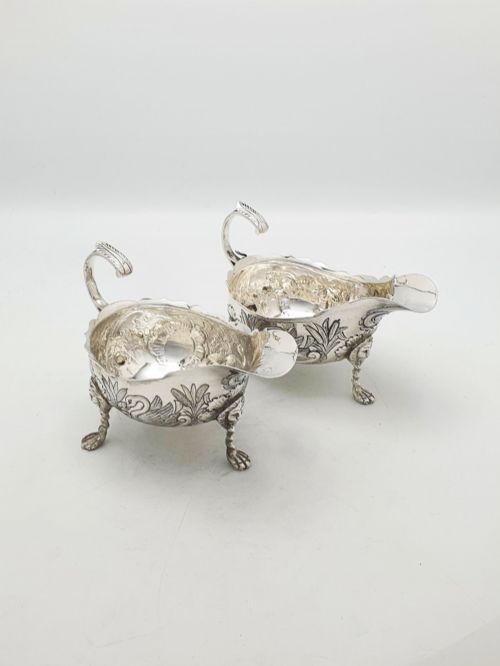
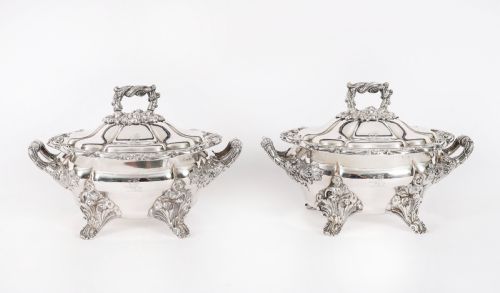
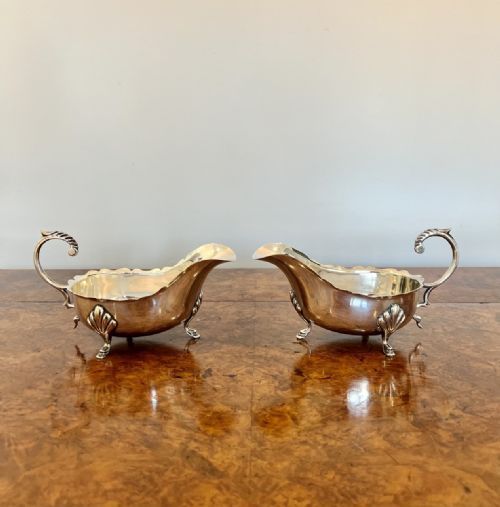
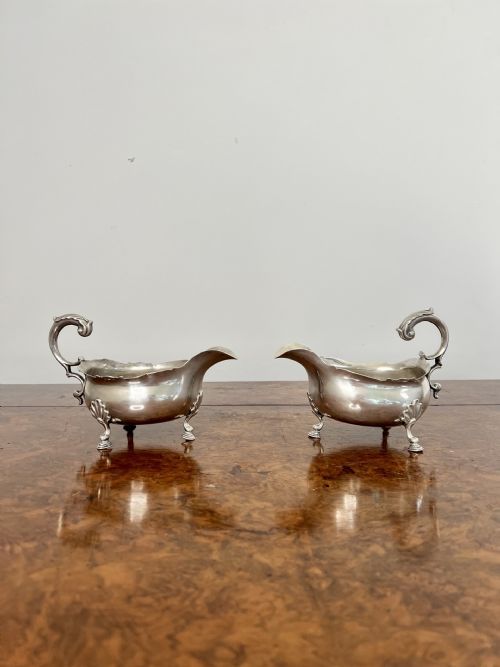
Pair silver sauce boats are matching dual vessels designed for serving gravies, drawn butter and table sauces during formal meals. When searching this phrase, a buyer encounters matching sets spanning solid sterling silver and silver plate, shaped in Georgian pedestal forms, Victorian sleigh bodies and Edwardian styles.
The domestic dining room relied upon these matched pieces for symmetry on the table, often accompanied by matching ladles or resting upon dedicated stands. Surviving examples range from eighteenth century George III creations to twentieth century silver plated service sets.
The most common versions met on this page combine classic eighteenth century revival styling with sturdy pedestal bases and scroll handles. Collectors encounter everything from plain domestic vessels to ornate pieces decorated with leaf detailing and acanthus claw feet.
Materials and Construction
Silversmiths utilised solid sterling silver, silver plate, copper, Sheffield plate and electroplated nickel silver to construct these serving vessels. Solid sterling silver pieces were raised from sheet metal or cast in sections before undergoing hand finishing and polishing.
Sheffield plate and later silver plated items involved fusing a thin layer of silver to a base metal core such as copper, requiring skilled edge-wiring to conceal the base metal seams. Silver-gilt variants received an additional thin application of gold over the interior silver surface.
Handles, feet and rims were frequently cast separately and attached using silver solder. Ornate ornamental details such as leaf motifs, shell-shaped bowls and acanthus claw feet were chased or applied by hand.
Pair Silver Sauce Boats Retail Price Guide 2026
Typical asking prices for pair silver sauce boats among the pieces listed under this phrase on Sellingantiques today, from the lower quarter to the upper quarter. They describe what is for sale here now, not the wider market.
Evaluating Quality
The distinction between ordinary production and superior craftsmanship rests in the weight of the metal and the crispness of the chased or cast ornament. Heavy gauge sterling silver maintains rigidity and clean lines, whereas thinner metal compromises the structural integrity of the pedestal and handle.
Hand-finishing separates the finer examples from mass-produced items, visible in the smooth integration of applied feet and the absence of fire scale or clumsy solder joints. The clarity of the hallmarks stamped into the metal provides a reliable indicator of the silversmith's standard and workshop reputation.
Design harmony dictates the success of a pair, ensuring that matching vessels share identical gauge, weight, ornamental detailing and proportion. Subtle discrepancies in hand-formed handles or bases reveal whether the pair was genuinely made together as a matched set.
Abraham Portal·Asprey·Francis Higgins·Harrods·John and Joseph Angell·Mappin and Webb·Marples and Co·Walker and Hall·William Collins·William Comyns·William Grundy·William Neale Ltd
The Pair Silver Sauce Boats Glossary
- Sauce boat
- A small open vessel with a spout and handle, designed for serving gravies and sauces at the table. These pieces usually feature an oval or helmet-shaped body raised on feet or a pedestal base.
- Old Sheffield plate
- An early form of plated metal produced by fusing a sheet of silver to a copper ingot before rolling them together into plates. This technique creates a distinctive warm tone where the underlying copper occasionally shows through at high points.
- Pedestal base
- A raised foot structure supporting the main body of the sauce boat above the table surface. This architectural feature elevates the vessel and mimics classical urn proportions.
- Silver-gilt
- Sterling silver that has been coated with a thin layer of pure gold on the interior surface. This treatment protected the silver from tarnishing when exposed to acidic sauces and gravies.
- Hallmark
- A series of official marks stamped into precious metal objects indicating the standard of purity, the assay office, the maker and the year of manufacture. These stamped symbols allow researchers to date British silver with precision.
Pair Silver Sauce Boats: Frequently Asked Questions
What is a pair silver sauce boats used for?
These matching vessels served gravies, melted butter and thin sauces during formal dining. Placed symmetrically on the dining table, they allowed guests to help themselves easily.
Over generations, their domestic role shifted from active dining room service to ornamental display and collection. Many surviving sets still retain their original fitted cases or matching ladles.
How do I clean antique silver sauce boats?
Warm soapy water and a soft cloth remove everyday dust and oils safely without damaging the metal. Avoid abrasive pastes or harsh chemical dips that strip away the fine patination accumulated over centuries.
Silver plate requires particular care to prevent wearing through the thin silver layer down to the underlying base metal. Gentle handling preserves both the engraved details and the historic hallmarks stamped on the base.
How can I tell the period of these pieces?
British silver incorporates official hallmarks that record the assay office, standard mark and date letter. Consulting reference guides links these stamped letters directly to specific manufacturing years.
Stylistic shifts also indicate the era, moving from the restrained curves of eighteenth century George III designs to the ornate cast shell feet of Victorian pieces. Edwardian and later twentieth century examples often reflect simplified revivalism or clean Art Deco lines.