
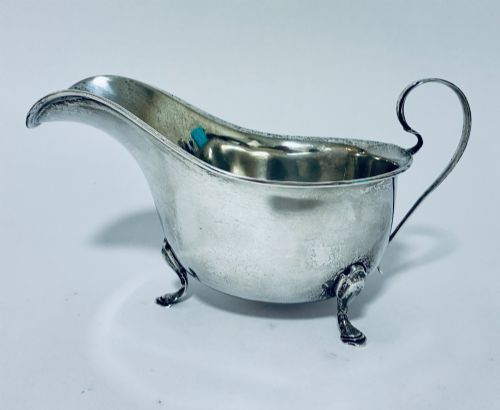
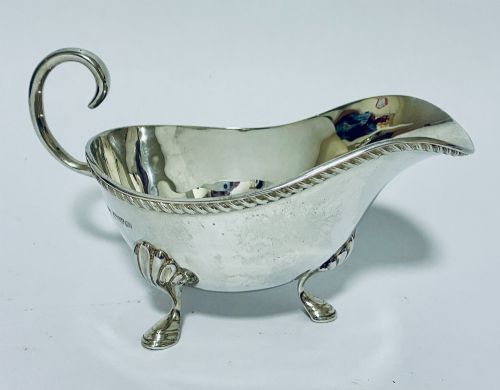


Georgian Style Silver Boat
When you search for georgian style silver boat, you are tracking down classic serveware modelled on eighteenth-century forms.
Georgian Style Silver Boat
The search phrase georgian style silver boat brings up a selection of nineteenth- and twentieth-century tableware, primarily sauce boats, gravy boats, and salt cellars. These items reflect earlier centuries through classic curved bodies, shaped rims, and supportive feet.
You will most frequently meet sauce boats and salt cellars shaped like boats, often produced during the Victorian, Edwardian, and later twentieth-century periods. Many examples adopt the revival aesthetic, copying eighteenth-century shapes in sterling silver, silver plate, and sometimes incorporating cobalt glass liners.
Alongside table serveware, the listings occasionally capture unrelated items sharing the boat shape or nomenclature, such as navette rings set with rose cut diamonds in gold and silver. Buyers seeking traditional dining items will find that sauce boats and table salts dominate the offerings.
How they were made
Makers utilised sterling silver and silver plate to shape these boat-formed vessels, hammering and casting metal into classical curves. Salt cellars frequently relied on contrasting materials, pairing silver frames with original blue cobalt glass liners.
Jewellery items in the listings apply similar silver and gold techniques at a smaller scale, combining silver with eighteen-carat gold and rose cut diamonds for navette-shaped cluster rings. Dining pieces focus on structural weight and smooth finishes suitable for sauce and gravy service.
A tiny boat shape bridges the gap between serving gravy at a Victorian Sunday roast and wearing a diamond-set navette ring on your finger.
What varies in quality
Quality in these pieces rests upon the crispness of the casting and the weight of the metal utilised in the body and feet. Heavier gauge silver and well-defined handles separate standard production items from finer dining silver.
The presence of original components, such as cobalt glass liners in salt cellars, adds distinction to a piece. Maker attribution, such as identified output from Sheffield firms, also shapes the standing of individual sauce boats.
WALKER AND HALL
The Georgian Style Silver Boat Glossary
- Sauce Boat
- A vessel with an oval or boat-shaped body, a spout, and a handle, used for serving sauces or gravies at the table. These items often feature three small feet or a stepped pedestal base.
- Cobalt Glass
- A deep blue glass frequently used to form removable liners inside open table salt cellars. It provides a striking visual contrast against silver frames.
- Navette
- A boat-shaped gemstone setting or ring design with pointed ends, translating the French word for little ship. This shape appears in both nineteenth-century rings and broader decorative motifs.
- Silver Plate
- A base metal coated with a thin layer of silver through electroplating or older techniques. It allowed makers to produce domestic serveware at a lower cost than solid sterling silver.
- Sterling Silver
- An alloy consisting of pure silver and other metals, usually copper, standardised for durability and use in silverware and tableware. It forms the primary metal standard found across these dining pieces.
Georgian Style Silver Boat: Frequently Asked Questions
What are silver boat sauce vessels used for?
These vessels were designed to hold and pour sauces, gravies, or melted butter at the dining table. Their spout and handle configuration allowed smooth pouring during meals.
Over time, many of these pieces transitioned from active dining service into display items or collections of antique table silver.
How do salt cellars differ from sauce boats?
Salt cellars are much smaller open vessels designed to hold loose salt for individual diners before the invention of the spring-loaded salt shaker. They frequently incorporate cobalt glass liners to protect the metal from corrosion.
Sauce boats are considerably larger serveware items intended to hold liquids for multiple guests at the table.
What does georgian style mean on these items?
The term indicates that the pieces were manufactured later, during the Victorian, Edwardian, or twentieth-century periods, but copied the design vocabulary of the eighteenth century. Makers drew upon earlier proportions and decorative motifs.
This revival approach allowed households to acquire classical dining aesthetics using the manufacturing techniques of their own era.
Are these pieces made of solid silver?
The listings include a mix of solid sterling silver and silver plate, alongside occasional gold and silver jewellery items. Hallmarks and metal stamps help identify solid silver construction.
Silver plate items utilise a base metal core beneath a thin outer layer of silver, offering a similar visual appearance to solid pieces.