

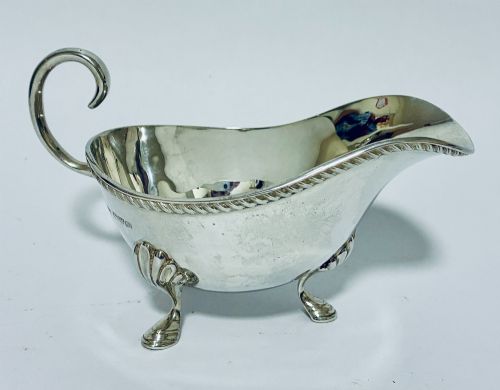
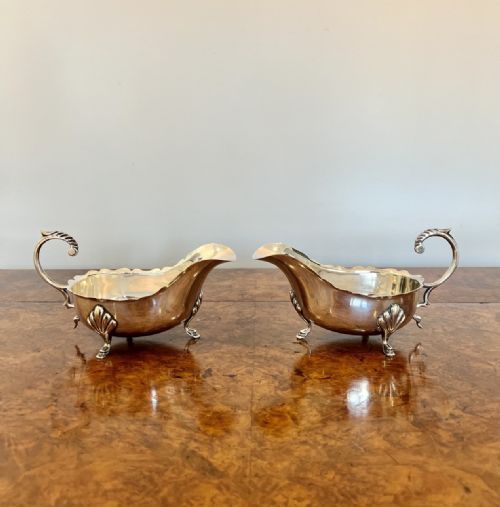
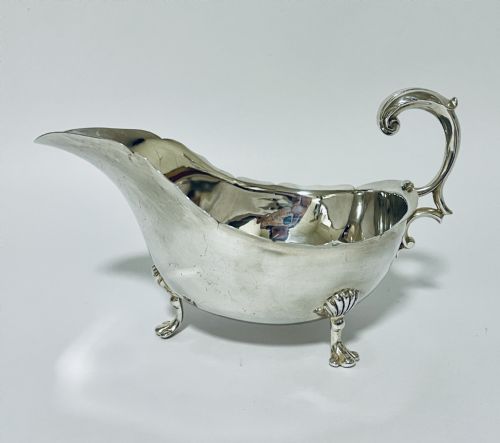
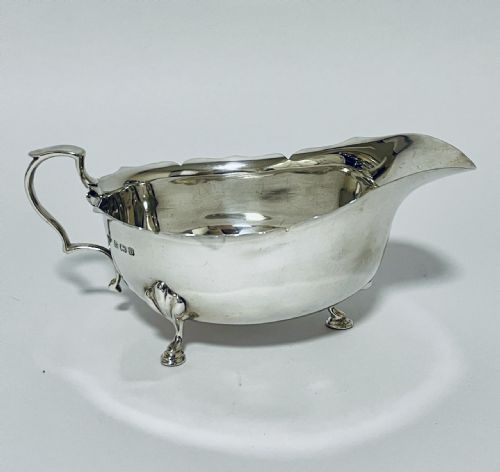




Silver Sauce Boat
A silver sauce boat brings formal dining history directly to the table, offering a graceful vessel for gravies and dressings.
Silver Sauce Boat
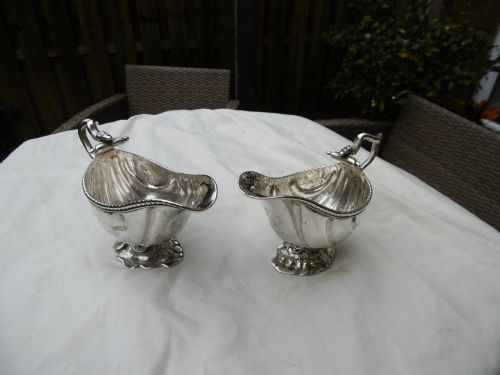
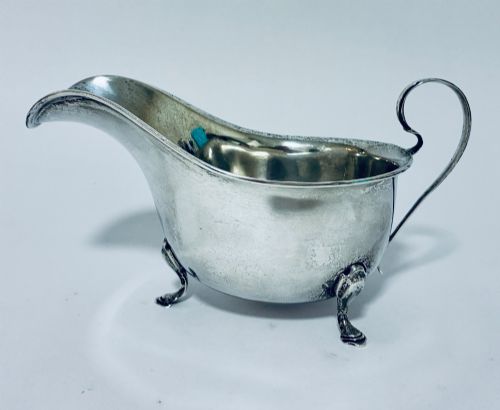
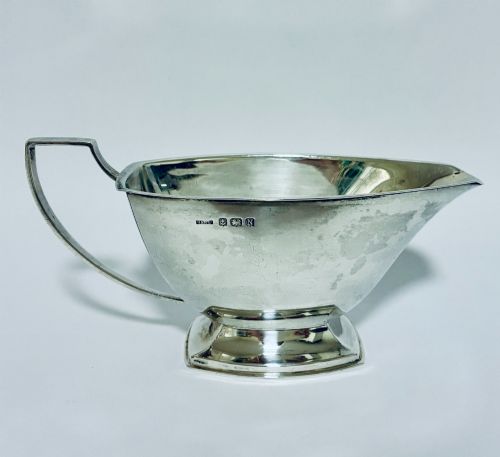
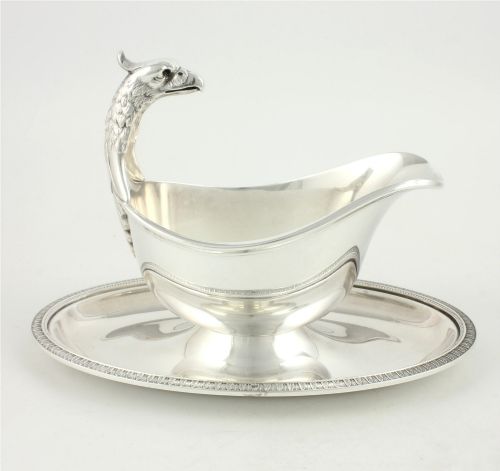
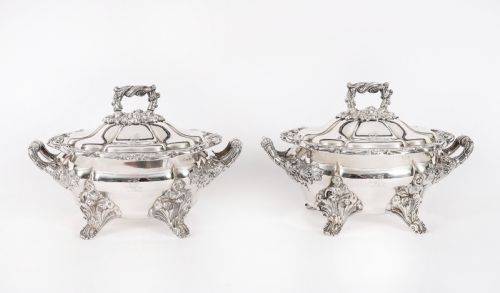
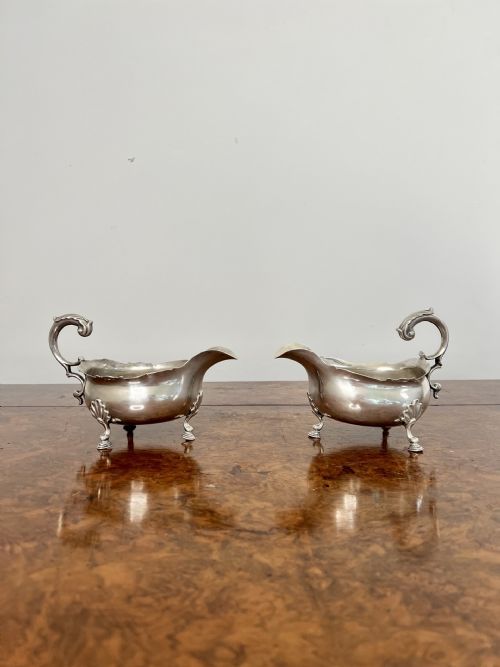
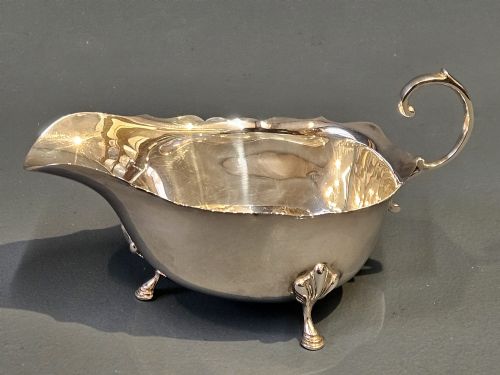
A silver sauce boat is a handled jug designed specifically for serving gravies, sauces, and melted butter during formal meals. The pieces recorded here range widely in form, from open vessels with distinct pedestals to covered tureens and specialised warming vessels.
Examples on this page span several centuries, with particular representation from the Georgian, Victorian, and Edwardian eras alongside later 20th-century modernist designs. Buyers frequently encounter both solid sterling silver versions and plated alternatives originating from British, Irish, and continental workshops.
Materials and construction methods
Makers utilised sterling silver and various plated compositions, including Old Sheffield Plate and electroplated nickel silver, giving each piece a distinct weight and surface character. Solid silver items often display hallmarks stamped directly into the metal, indicating the assay office, year, and silversmith.
Construction techniques shifted over time, moving from hand-raised sterling bodies with applied cast feet and handles during the 18th century to industrial electroplating methods and streamlined Art Deco stamping in later decades. Ornamental details such as embossed flora, Celtic motifs, and family crests were applied by hand or cast separately before being soldered to the main body.
Silver Sauce Boat Retail Price Guide 2026
Typical asking prices for silver sauce boat among the pieces listed under this phrase on Sellingantiques today, from the lower quarter to the upper quarter. They describe what is for sale here now, not the wider market.
Victorian silversmiths occasionally modelled vessels directly on the natural geometry of acorns and winter sleighs.
Distinguishing quality across examples
Quality rests heavily on the crispness of the chasing, the balance of the handle, and the structural integrity of the base or feet. Superior pieces exhibit seamless joints, balanced weight distribution in the hand, and finely detailed ornamentation rather than shallow, mass-produced stamping.
The reputation of the maker or retailer also influences distinction, with pieces bearing marks from recognised silversmiths or high-end establishments commanding attention. Preservation of original surface engraving, crisp hallmarks, and unaltered forms separate standard utility items from exceptional collector pieces.
Christofle Gallia·Padley Parkin & Staniforth·James Welch·William Grundy·Tiffany & Co·Theodore B. Starr·William Comyns·William Skeen·Walter Brind·Ambrose Boxwell·S. Blackensee & Son·Viner's·Abraham Portal·Harrods Ltd·Langlands & Robertson·Asprey·Mappin & Webb
The Silver Sauce Boat Glossary
- Sterling silver
- A silver alloy containing 92.5 percent pure silver and 7.5 percent other metals, usually copper, chosen for durability.
- Old Sheffield plate
- An early fusing technique where a thin sheet of silver is fused to a thicker copper base before shaping.
- Sauce tureen
- A covered vessel designed to keep liquids warm at the table, often accompanied by a matching undertough or stand.
- Argyll
- A specialised gravy warmer featuring an internal compartment for hot water to prevent sauces from cooling during meals.
- Pedestal
- A raised foot or column supporting the main body of the vessel above the table surface.
Silver Sauce Boat: Frequently Asked Questions
How do I clean a silver sauce boat?
Maintenance requires specialised silver polish applied with a soft cloth to remove tarnish without wearing down raised details or hallmarks. Rinsing thoroughly in warm water afterwards prevents chemical residue from settling in crevices.
Harsh abrasives and dipping solutions should be avoided, particularly on plated items where the base metal might become exposed through aggressive scrubbing.
Were these always used for gravy?
While primarily termed gravy or sauce boats, these vessels accommodated melted butter, cream, and thin fruit syrups during formal dining occasions. Lidded tureens and specialised warmers held liquids that required temperature retention throughout longer courses.
Smaller variants also functioned as cream jugs or condiment holders depending on the household requirements of the period.
How do I date an unmarked piece?
Dating relies heavily on stylistic indicators such as the shape of the rim, the curvature of the handle, and the presence of pedestal feet versus three-legged cabriole supports. Georgian pieces typically display simpler, robust casting, while Victorian and Edwardian examples often incorporate elaborate naturalistic flora or revivalist styling.
Comparing construction seams and weight distribution against documented examples from specific decades aids further in placement.
What is the difference between solid silver and plate?
Solid sterling silver contains a standardised high purity of silver throughout the entire structure, whereas plated items apply a thin layer of silver over a base metal such as copper or nickel silver. Hallmarks usually indicate solid silver status through specific lion or purity symbols, while plated goods display maker marks denoting alternative manufacturing processes.
Over time, heavy polishing on plated pieces can reveal the darker base metal underneath, a characteristic absent in solid items.