
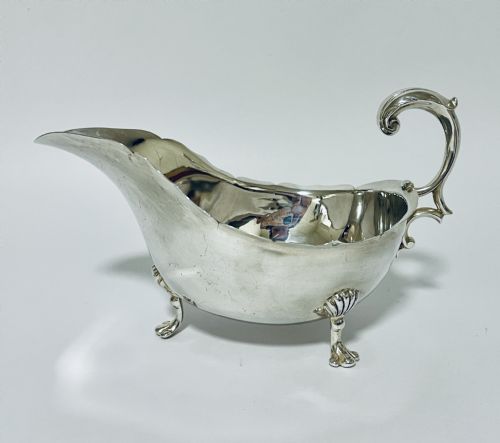
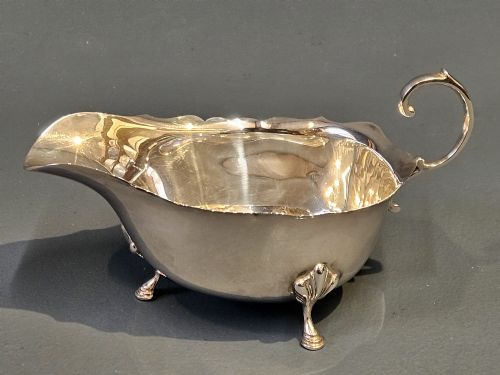



Antique Silver Sauceboat
An antique silver sauceboat brings true Georgian elegance to the dining table, offering timeless form and gleaming metal for serving gravies and sauces.
What They Are
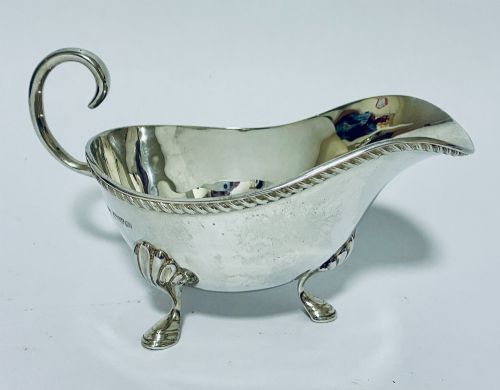
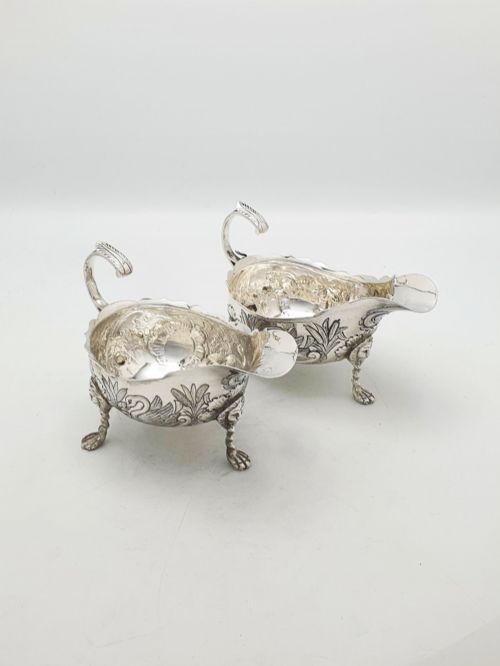
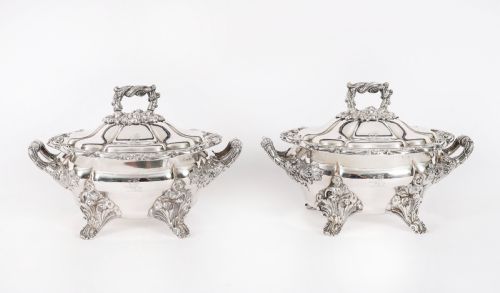
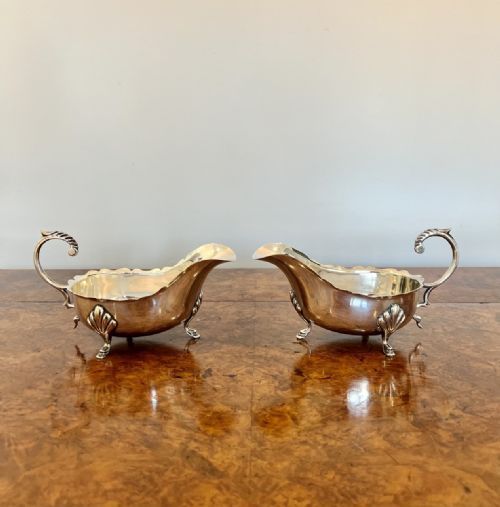
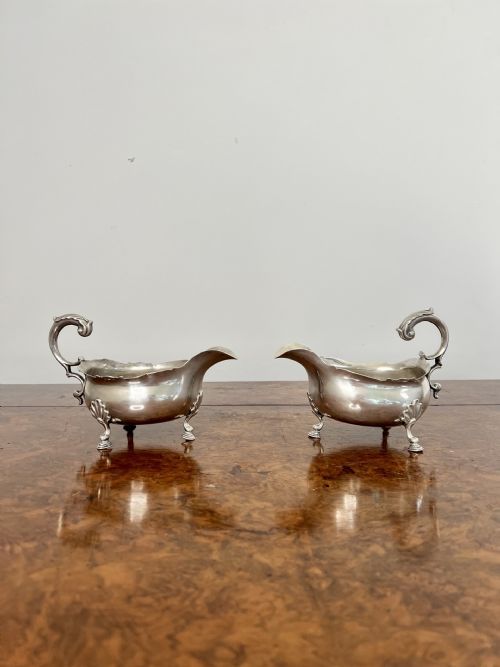
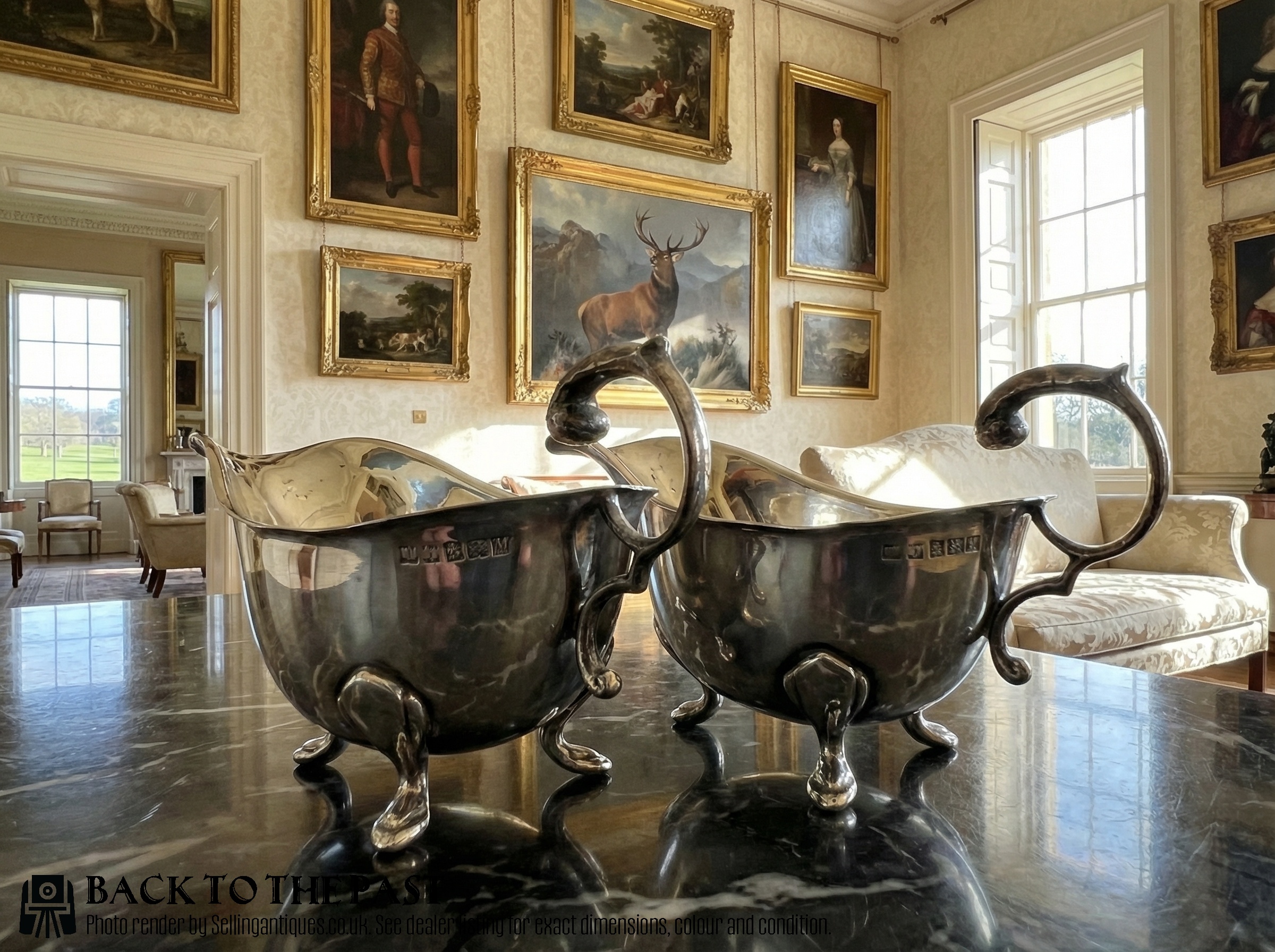
An antique silver sauceboat is a serving vessel designed for gravies, dressings, and sauces, typically featuring a single handle and a distinct pouring spout. When exploring an antique silver sauceboat, a buyer encounters pieces originating from the Georgian period through the nineteenth and twentieth centuries. These vessels appear singly, as matched pairs, or as lidded tureens.
The selections available on this page include sterling silver examples and silver plate constructions. Formats range from pedestal sauceboats to oval lidded tureens, with decorative touches such as Celtic style ornamentation. Pieces span eras including the nineteenth century, nineteen twenty, the Georgian period, and nineteen sixty.
How They Were Made
Makers fashioned these vessels using sterling silver and silver plate, sometimes incorporating copper beneath the plated surface. Construction techniques included raising and shaping metal into pedestals, oval bodies, and integrated spouts.
Craftsmen applied surface decoration by hand, seen in examples featuring Celtic style engraving and detailed handles. Lidded tureens required precise fitting of covers alongside matching bases to create cohesive serving sets.
Retail Price Guide 2026
Typical UK retail prices for silver sauceboat, calculated from the Sellingantiques database of over a million retail prices indexed since 2003. This retail price guide relies exclusively on Sellingantiques data; no external sources or auction records are used, so the figures do not describe the wider market.
The inventory includes pedestal sauceboats, oval lidded tureens, and items bearing Celtic style decoration.
What Varies in Quality
Quality in an antique silver sauceboat rests on the weight of the metal and the balance of the handle against the spout. Heavier gauges of sterling silver provide a more substantial feel in the hand compared to lighter plated alternatives.
The refinement of the decorative work, such as crispness in Celtic style engraving or smooth casting on pedestal bases, distinguishes finer examples. Matched pairs and lidded tureens demonstrate superior craftsmanship through uniformity and careful proportion.
The Antique Silver Sauceboat Glossary
- Sauceboat
- A small open vessel with a lip and handle, used for serving sauces at the table.
- Pedestal
- A raised foot or base that elevates the body of the sauceboat above the surface.
- Sterling Silver
- An alloy consisting of ninety-two point five percent silver by mass, standard for quality British wares.
- Silver Plate
- A base metal, such as copper, coated with a thin layer of silver.
- Tureen
- A deep covered bowl used for serving soups, gravies, or sauces to groups.
Frequently Asked Questions
What is an antique silver sauceboat used for?
These vessels serve gravies, melted butter, and table sauces during formal dining. They hold liquids for pouring at the table.
Today, collectors also display them on sideboards or utilise them for holding small floral arrangements.
How do I clean my silver sauceboat?
Clean sterling silver and silver plate using a soft cloth and a dedicated silver polish designed to remove tarnish without scratching. Avoid harsh abrasives that wear away thin plating.
Wash the vessel in warm soapy water and dry thoroughly after use to preserve the shine.
Are silver sauceboats sold in pairs?
Many examples are offered as matched pairs, particularly those intended for large dining tables during the Georgian and nineteenth-century periods. Single vessels also appear frequently.
Pairs often command higher interest from collectors seeking symmetry for a dining setting.
What is the difference between sterling silver and silver plate?
Sterling silver is solid precious metal throughout, marked by a high silver content standard. Silver plate consists of a base metal coated with a thin outer layer of silver.
Solid silver pieces retain their material value over time, whereas plated items show base metals if the outer layer wears through.