


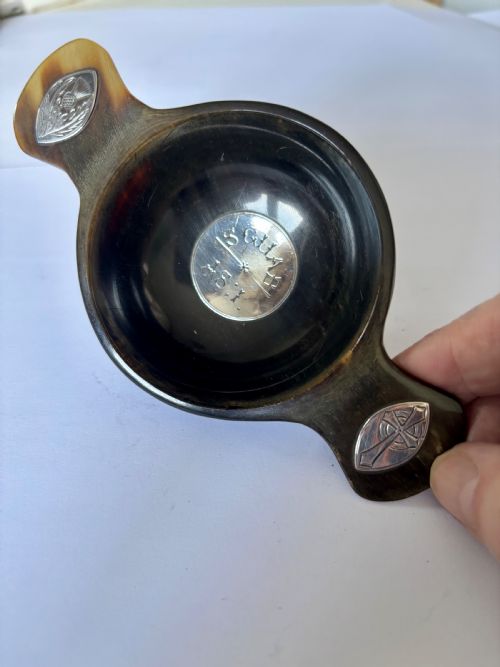


Celtic Revival Silver
Celtic revival silver brings together ancient interlaced motifs and precious metalwork, offering striking pieces that draw the eye with traditional knotwork and heraldic forms.
Celtic Revival Silver
Celtic revival silver encompasses a rich variety of decorative objects, from traditional Scottish quaichs and Irish methers to modernist brooches and desk accessories. These items span multiple decades, drawing heavily on historic Gaelic artistry.
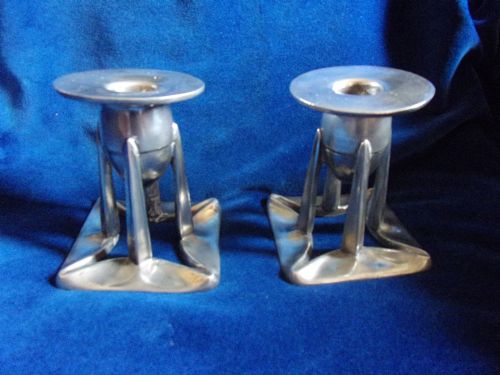
Buyers will most frequently encounter brooches, candlesticks, and tableware produced during the Victorian and Edwardian eras, alongside later Arts and Crafts interpretations. The designs often incorporate familiar symbols such as swords, shields, and interlaced ribbonwork.
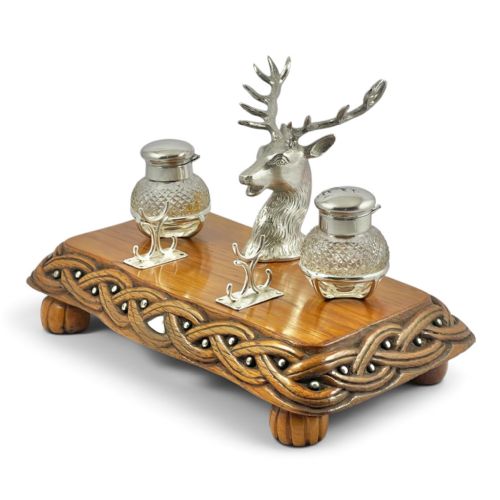
Pieces range from small personal items like trinket boxes and kilt pins to larger functional vessels including sauce boats and inkstands. Many examples blend sterling silver with regional materials such as natural horn, oak, and amber.
Materials and construction
Silversmiths utilised sterling silver alongside base metals like pewter, often applying intricate chasing, engraving, and repoussé to render the characteristic knotwork patterns. Enamel work frequently appears to add vivid patches of colour to brooches and candlesticks.
Organic elements such as Scottish agate, citrine, amber, and natural horn are regularly mounted in silver settings to complement the dark patination and polished highlights of the metal. Oak and glass also serve as structural or decorative components in desk wares.
Celtic Revival Silver Retail Price Guide 2026
Typical asking prices for celtic revival silver among the pieces listed under this phrase on Sellingantiques today, from the lower quarter to the upper quarter. They describe what is for sale here now, not the wider market.
Listings feature periods spanning from the Victorian era through the mid-century, incorporating sterling silver, pewter, enamel, and natural horn.
Assessing quality and craftsmanship
Quality rests primarily on the crispness and depth of the chased or engraved decoration, where sharper interlacings and well-defined terminals distinguish superior workshops. The integration of auxiliary materials, such as closely fitted stone cabochons or horn mounts, further separates standard production from finer output.
Proportion and structural integrity play a significant role, particularly in functional objects like inkstands, quaichs, and candlesticks where balance and weight demonstrate the maker's competence.
Archibald Knox·Liberty and Co·Elkington·Celtic Art Industries·John Hart of Iona
The Celtic Revival Silver Glossary
- Quaich
- A traditional Scottish two-handled drinking vessel used for toasts. These are commonly formed from staves of wood or horn with silver mounts.
- Mether
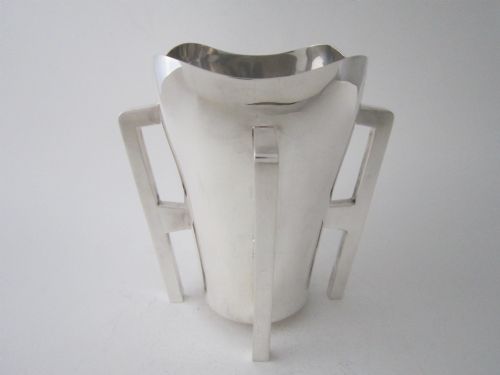
- A traditional Irish drinking vessel usually featuring multiple handles and a square or rectangular base. They are often rendered in solid silver during the Edwardian period.
- Repoussé
- A metalworking technique where the artisan hammers the design from the reverse side to form a raised relief on the front. This method creates the tactile surface texture seen on many pieces.
- Cabochon
- A gemstone shaped and polished with a smooth, rounded dome rather than faceted edges. These stones frequently anchor brooches and trinket boxes.
- Chasing
- The complementary process to repoussé, executed from the front to sink the metal and refine the details of the interlaced patterns.
Celtic Revival Silver: Frequently Asked Questions
What is a quaich used for?
A quaich is a traditional Scottish drinking vessel designed with two or sometimes three handles for communal sharing. Historically employed for welcoming toasts or parting drinks, they hold a central place in Scottish hospitality.
Today, these vessels function primarily as decorative display pieces or symbolic gifts, though they remain usable for traditional toasts at gatherings.
How do I date these silver items?
Dating relies heavily on official hallmarks stamped into the metal, which indicate the assay office, the specific year, and the maker's mark. Stylistic clues, such as the heavy ornamentation of Victorian pieces versus the clean lines of mid-century brooches, also help establish the era.
Examining secondary materials like oak bases or enamel accents provides additional context for when an object was manufactured.
What is an Irish mether?
An Irish mether is an ancient form of communal drinking vessel characterised by a square or rectangular wooden or metal body supported by multiple handles. Edwardian silversmiths reinterpreted these archaic shapes in sterling silver.
They stand apart from standard cups due to their distinct geometric proportions and deep historic roots in Celtic culture.
How do I care for antique silver and pewter?
Regular dusting with a soft cloth keeps silver and pewter free from surface grime without wearing down the delicate details of the chasing. When cleaning is necessary, use a mild polish formulated specifically for the metal, avoiding abrasive materials that can damage softer stones like amber or agate.
Store pieces in a dry environment away from direct sunlight to protect organic elements like horn and wood.