
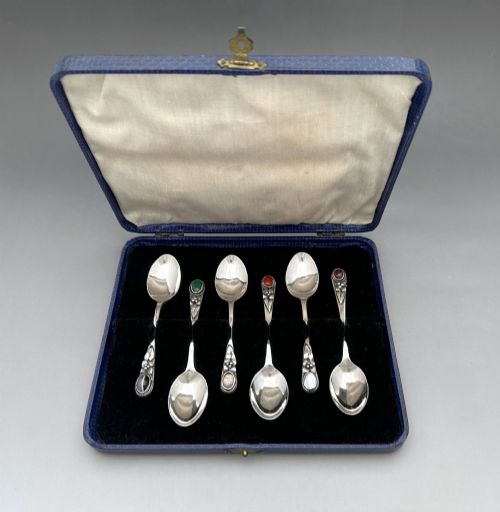


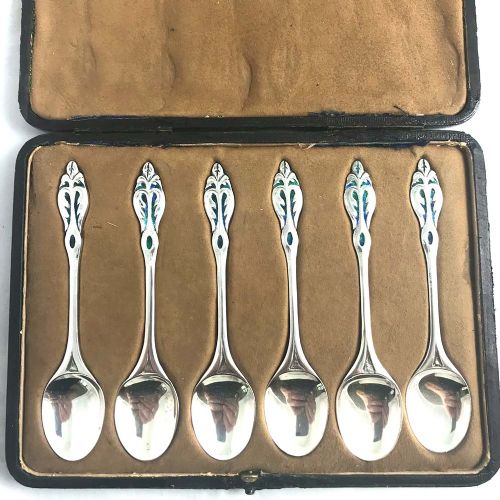
Arts and Crafts Spoon
An arts and crafts spoon brings tactile metalwork and hand-raised forms straight to the tea table.
Identifying an arts and crafts spoon
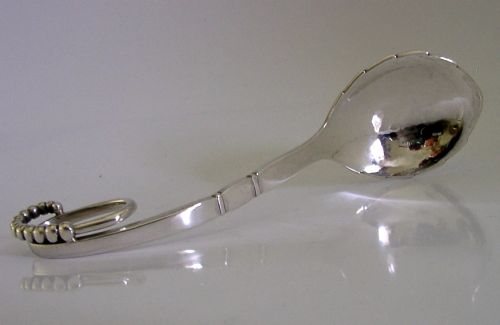
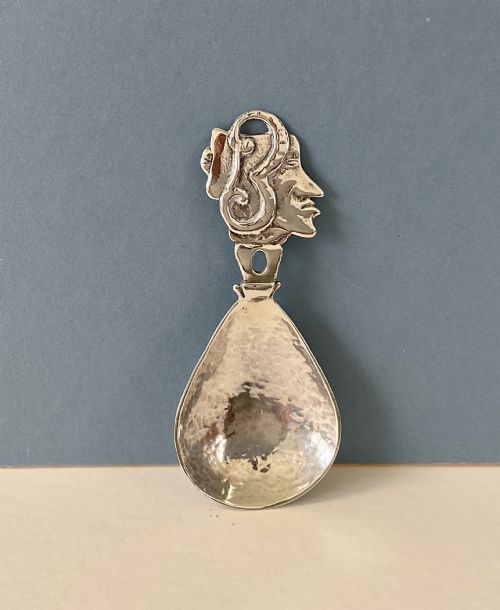
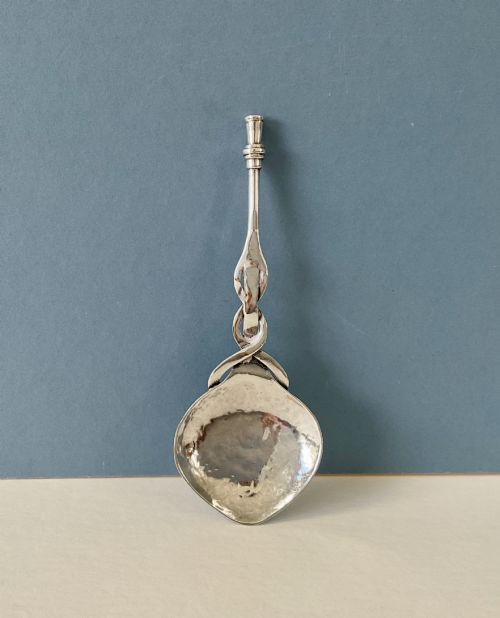
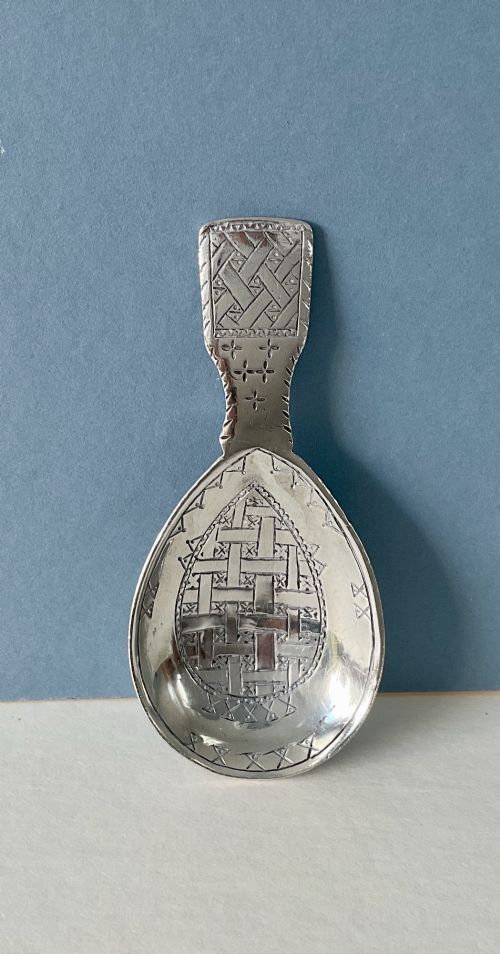
An arts and crafts spoon represents a deliberate shift away from factory mass production towards studio craft and manual skill. These pieces appear primarily as caddy spoons, teaspoons, coffee spoons, serving utensils, and preserve spoons made during the late nineteenth and early twentieth centuries.
The aesthetic draws heavily on the Arts and Crafts movement, prioritising visible human effort over machine-polished perfection. The items seen here span the Edwardian period, the 1910s, the 1920s, and the wider nineteenth century.
Forms include single specialist pieces as well as matched sets of six, sometimes housed in original presentation boxes. Regional variations encompass English workshops, Scottish makers, and international examples from Australia and Denmark.
Materials and construction
Every spoon recorded in this category is formed from sterling silver, executed in solid gauges that give a reassuring weight in the hand. The metal is shaped through traditional hammering and manual raising rather than industrial stamping.
Makers utilised planished surfaces where the rhythmic marks of the hammer are deliberately left visible across the bowl or stem. Other techniques involve hand-cut details, soldered reinforcements, and surface textures unique to individual studio practices.
Retail Price Guide 2026
Typical UK retail prices for arts and crafts spoon, calculated from the Sellingantiques database of over a million retail prices indexed since 2003. This retail price guide relies exclusively on Sellingantiques data; no external sources or auction records are used, so the figures do not describe the wider market.
Cows appear in the metadata: highland cattle decorate a specific Scottish set.
Distinguishing quality
Quality rests in the distinctiveness of the hand-working and the weight of the silver. A heavier gauge metal combined with crisp, intentional planishing separates workshop pieces from standard commercial production.
The presence of a clear maker mark or documented studio provenance elevates an individual spoon. Pieces associated with notable designers or specific London and regional studios demonstrate greater artistic ambition in their handle geometry and bowl shaping.
Oliver Barker·Amy Sandheim·Archibald Knox·Henry George Murphy·Linton
The Arts and Crafts Spoon Glossary
- Planishing
- Hammering the surface of metal with a flat-faced hammer to smooth it while leaving a textured, light-reflecting pattern. This technique shows the direct involvement of the silversmith.
- Caddy Spoon
- A short-handled spoon specifically designed for measuring loose tea leaves from a caddy. These often feature decorative bowls and unusual handle designs.
- Sterling Silver
- An alloy consisting of silver and other metals, usually copper, containing 92.5 percent silver by mass. This standard is marked on British silver to guarantee purity.
- Preserve Spoon
- A specialist utensil with a shallow bowl used for serving jam or fruit preserves. The design often includes a hooked or shaped handle to rest on the edge of a jar.
Frequently Asked Questions
What is an arts and crafts spoon?
An arts and crafts spoon is a hand-made silver utensil produced during the late nineteenth and early twentieth centuries under the influence of the Arts and Crafts movement. These items emphasise manual skill, visible hammer marks, and traditional smithing techniques.
They diverge from Victorian ornamentation by focusing on the natural qualities of sterling silver and the character of individual studio production.
How do I clean an antique silver spoon?
Antique silver requires gentle maintenance using a soft cloth and a mild, non-abrasive silver cleaner when necessary. Avoid harsh scrubbing that can wear away original hand-hammered surface textures and maker marks.
Natural tarnish often accumulates in the recesses of planished surfaces and adds depth to the design, so aggressive polishing is generally discouraged by collectors.
How do I identify the maker?
Makers and studios stamped their initials or full names into the sterling silver alongside standard assay office hallmarks. Researching these punch marks helps connect a spoon to specific workshops or known designers.
Unsigned pieces rely on stylistic indicators, such as particular handle motifs and planishing methods, to suggest a period or regional origin.