



Silver Toast Rack
A silver toast rack holds morning slices crisply upright on the table, turning breakfast into an occasion of metalwork and ritual.
Silver Toast Rack
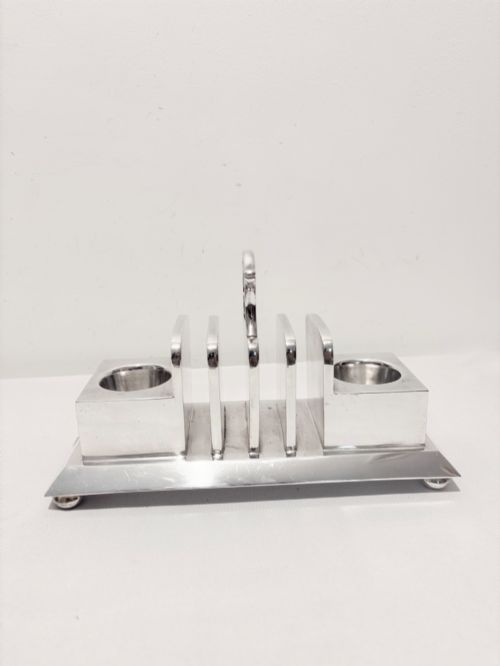
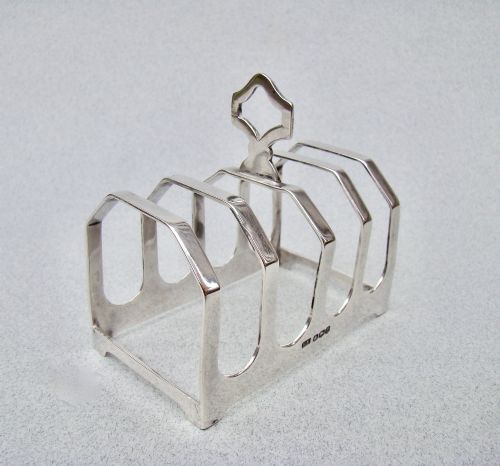
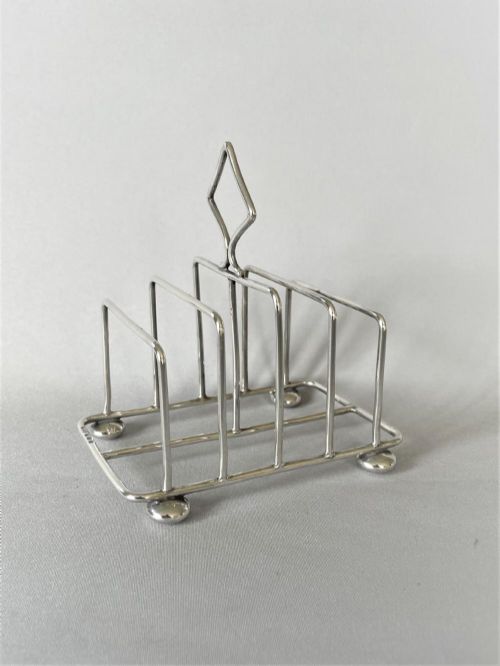
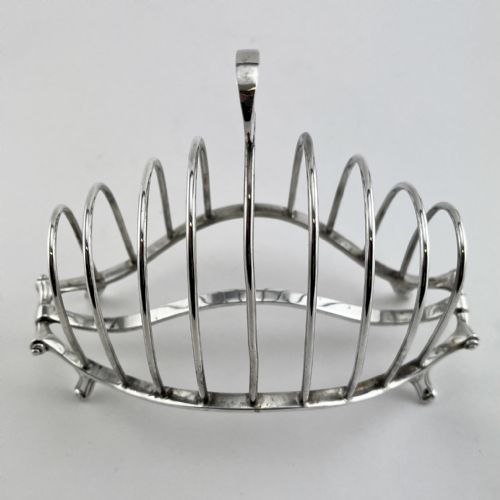
When you search for a silver toast rack, you encounter tableware designed specifically to keep warm toast from sweating before buttering. The pieces appearing here span from the Georgian and Victorian eras through Edwardian designs, Art Deco creations, and George V periods.
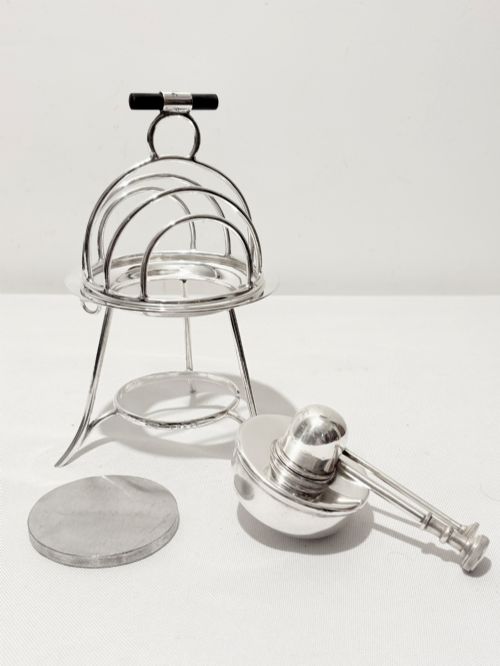
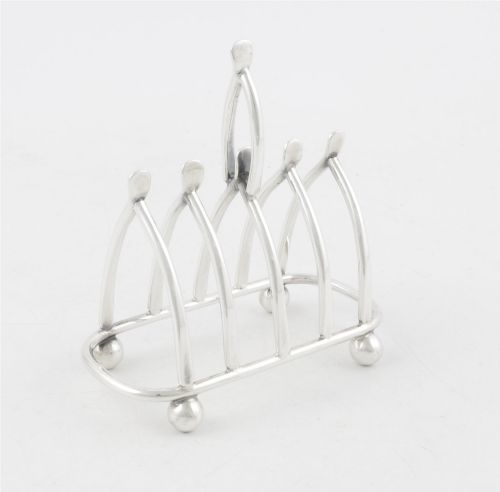
You are most likely to meet conventional multi-slice frameworks mounted on small feet or spreading bases, though novelty forms shaped like wagons, horseshoes, golf clubs, and wishbones also surface. These items utilise materials ranging from solid sterling silver to silver plate, electroplated nickel silver, and base metal combinations.
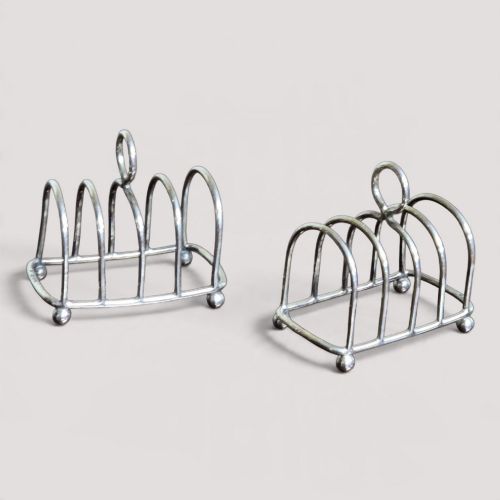
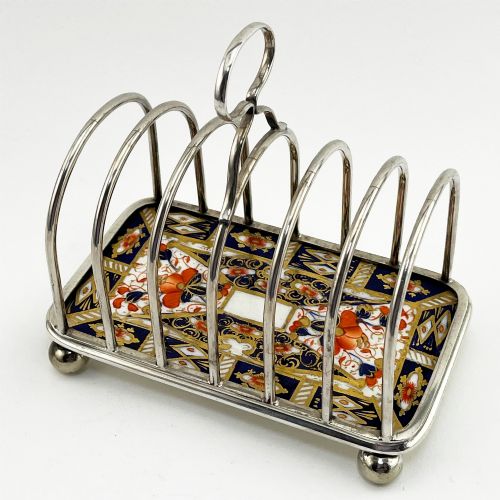
Makers fashioned them to sit centrally on the breakfast board, utilising arched wire dividers to separate the slices. Whether you require a modest four-slice model or a large six-slice version, the forms reflect the changing dining habits of past centuries.
Materials and construction methods
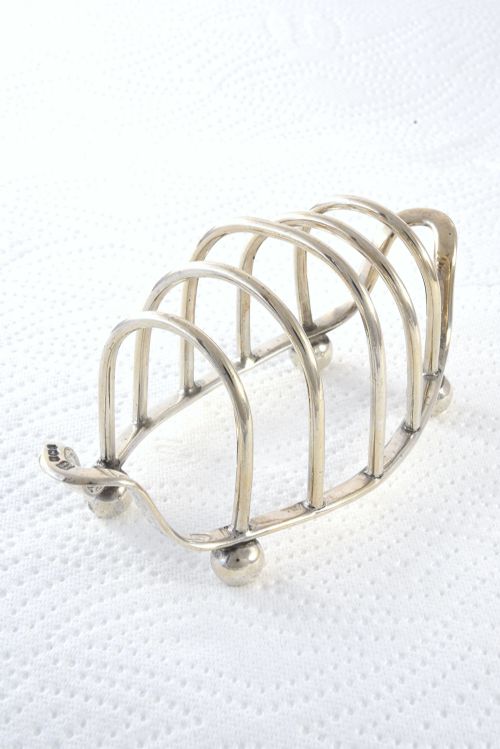
Silversmiths constructed these objects using sterling silver or applied silver plating over base metals like electroplated nickel silver. Workshops shaped wire, flat sheet, and cast elements into looping arches and sturdy central carrying handles.
Techniques involved soldering individual wire loops to a pierced or engraved base plate, often supported by ball or bracket feet. Expanding mechanisms utilised sliding joints that allowed the rack partitions to collapse or extend according to table needs.
Silver Toast Rack Retail Price Guide 2026
Typical asking prices for silver toast rack among the pieces listed under this phrase on Sellingantiques today, from the lower quarter to the upper quarter. They describe what is for sale here now, not the wider market.
The archive and active selections feature pieces spanning from the Georgian era through the Victorian, Edwardian, and Art Deco periods.
Distinctions in execution
Quality separates through the weight of the silver and the rigidity of the wirework rather than mere size. Finer examples display crisp hallmarking, balanced proportions, and substantial gauge metal that resists bending during daily use.
Artisanal execution shows in the neatness of the soldering joints and the refined shaping of novelty details such as equestrian gear or stylized handles. Simpler plated pieces rely on the uniformity of the electroplating layer across the base metal structure.
Elkington·Mappin and Webb·Roberts and Belk·Hukin and Heath·Nathan and Hayes·Joseph Gloster·Thomas Campion and Sons·William Hutton
The Silver Toast Rack Glossary
- Sterling silver
- A standard of silver alloy containing ninety-two point five percent pure silver by weight. This material provides the primary medium for high-end Georgian and Victorian examples.
- Silver plate
- A manufacturing method where a thin layer of silver coats a base metal such as copper or nickel silver. It offered a durable domestic alternative to solid silver.
- Electroplated nickel silver
- Commonly abbreviated as EPNS, this composite material served as a popular foundation for plated tableware from the nineteenth century onward.
- Hallmark
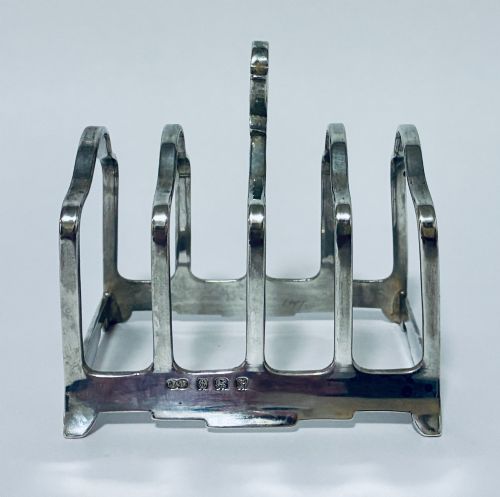
- An official stamp indicating the metal purity, assay office, and year of manufacture. These marks help date pieces accurately to periods like the Victorian or Edwardian eras.
- Novelty rack
- A piece shaped to represent an object, animal, or theme unrelated to standard tableware. Examples take the form of golf clubs, horseshoes, and railway carriages.
Silver Toast Rack: Frequently Asked Questions
What is a silver toast rack used for?
These items serve to hold slices of toast vertically at the breakfast table so air circulates around the bread. This prevents the warm toast from becoming soggy before it reaches the plate.
Historically, they formed a standard part of formal morning tableware for upper and middle-class households. Today, collectors utilise them for toast or repurpose them to hold letters and napkins.
How do I clean a silver toast rack?
Maintenance requires gentle washing with warm soapy water and a soft cloth to remove everyday dust and oils. Avoid abrasive cloths that scratch the soft metal surface.
For tarnish removal, apply a specialised silver polish using straight strokes rather than circular motions. Rinse thoroughly and dry with a lint-free cloth to maintain the shine.
How can I tell the period of my toast rack?
Dating relies primarily on identifying the stamped hallmarks, which include maker marks, date letters, and assay office symbols. These stamps provide precise years for sterling silver items.
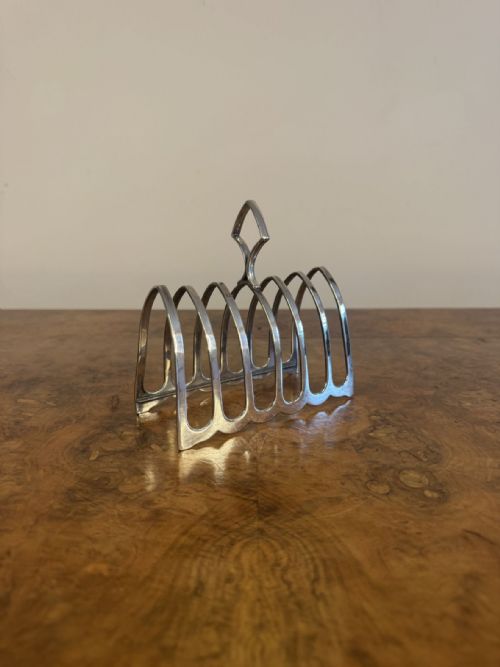
Stylistic indicators also help assign periods when marks are absent. Heavy Gothic revival wirework points to the Victorian era, while geometric frameworks suggest Art Deco influences from the interwar years.