

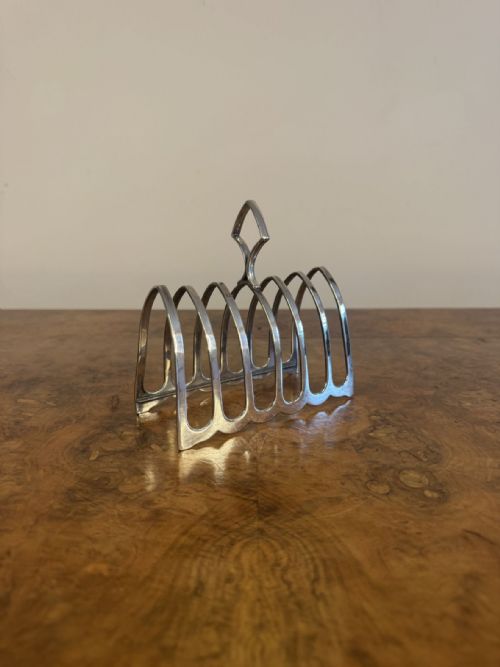
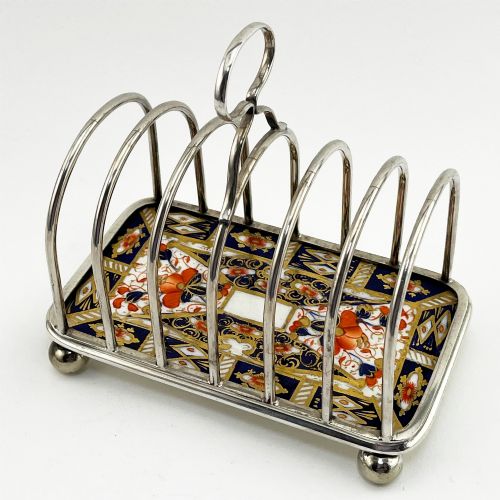


Silver Plated Toast Rack
A silver plated toast rack keeps slices crisp at the breakfast table, bringing sculptural form and utility together in polished metal.
Silver Plated Toast Rack
A silver plated toast rack is a desktop or breakfast table accessory designed with vertical dividers to hold slices of toast upright, preventing condensation from making the bread soggy. When you search this phrase, you encounter pieces spanning the Victorian, Edwardian, and Art Deco periods, alongside Georgian designs and later modernist interpretations.
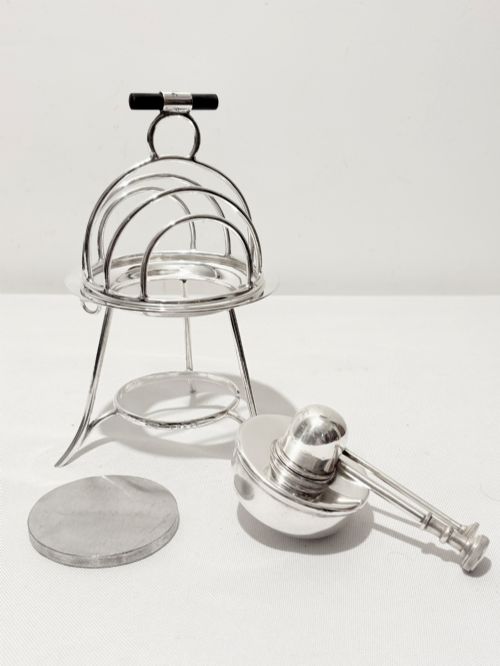
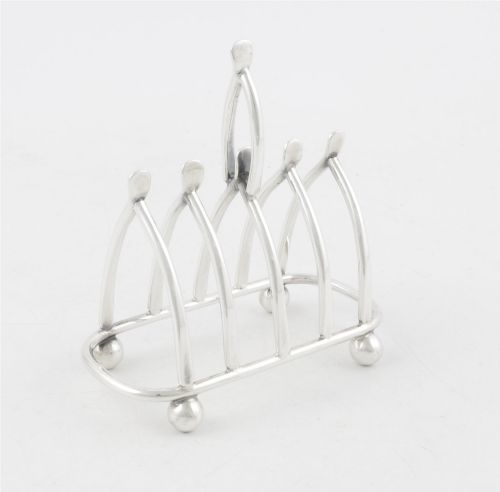
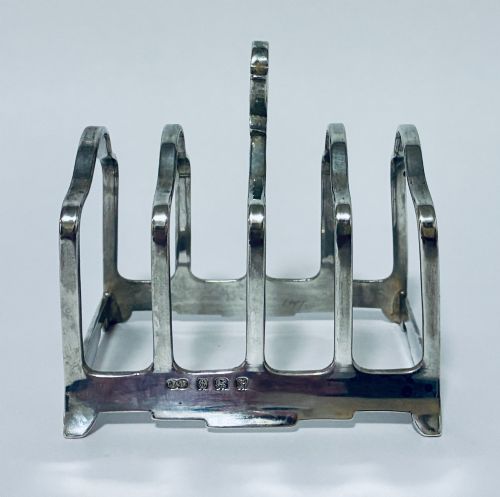
The most common examples on this page are Victorian iterations shaped with arch-shaped dividers, rectangular tray forms, or inventive folding mechanisms. Makers utilised silver plate, electroplated nickel silver, and base metals to achieve a polished finish without the cost of solid silver.
Beyond standard architectural divisions, the selection includes novelty shapes such as swans, wagons, horseshoes, and sporting motifs like rifles and cricket bats. These varied forms reflect domestic habits and breakfast rituals across the nineteenth and early twentieth centuries.
Construction and plating
Silversmiths and manufacturers formed the frames of these pieces using base metals or nickel silver, which provided a sturdy armature for the individual wire dividers and handles. These components were soldered together before undergoing the plating process.
Electroplating baths applied a thin layer of silver over the base metal or electroplated nickel silver, bonding the precious metal to the substrate through electrical current. This technique allowed workshops to produce bright, reflective tableware on a commercial scale.
Silver Plated Toast Rack Retail Price Guide 2026
Typical asking prices for silver plated toast rack among the pieces listed under this phrase on Sellingantiques today, from the lower quarter to the upper quarter. They describe what is for sale here now, not the wider market.
Listings feature expanding mechanisms, modernist wirework by Christopher Dresser, and whimsical novelty forms spanning the Victorian and Edwardian eras.
Judging the execution
Quality in a silver plated toast rack rests on the crispness of the soldering at the joints and the integrity of the applied plating over the base metal. Substantial weight in the frame and base indicates sturdiness, whereas lighter pieces often bend under daily use.
Design ambition separates standard utility pieces from exceptional examples, particularly in mechanical expanding models and novelty forms like birds or transport. The precision of the moving hinges or the sculptural modelling of animal and sporting motifs dictates the standing of the piece.
Elkington·Hukin & Heath·Mappin & Webb·William Hutton·Asprey & Co·Thomas Campion & Sons·Pridham & Sons·Lockwood of Bond Street
The Silver Plated Toast Rack Glossary
- Electroplated Nickel Silver
- A copper, nickel, and zinc alloy coated in a thin layer of silver through electrolysis, commonly abbreviated as EPNS. It provided a durable and bright alternative to solid silver.
- Expanding
- A collapsible mechanism utilising a concertina or sliding linkage that allows the dividers to draw apart or fold together. This adjustable design accommodated varying quantities of toast.
- Novelty
- An object shaped to resemble an animal, vehicle, sport, or inanimate item rather than adopting a standard architectural form. These whimsical pieces served as conversation pieces at the breakfast table.
- Trefoil
- A decorative motif composed of three overlapping leaf or foil shapes, often seen in the punched openings or feet of Victorian metalwork. It brings geometric symmetry to the base or handle.
- Base metal
- Any common metal such as brass, copper, or Britannia metal that forms the underlying structure of plated items. The silver coating conceals this cheaper material beneath.
Silver Plated Toast Rack: Frequently Asked Questions
How do I clean a silver plated toast rack?
Use a soft cloth and a gentle, non-abrasive silver polish formulated specifically for plated items to maintain the shine. Avoid harsh scrubbing that can wear through the thin silver layer down to the base metal.
Wash the piece in warm, soapy water immediately after use and dry it thoroughly with a lint-free cloth. Storing the rack in a dry environment helps prevent tarnishing.
Were these racks used exclusively for toast?
While primarily designed to hold warm toast upright at the breakfast table, these versatile frames also held letters, napkins, or business cards on a desk. The evenly spaced dividers made them suitable for organising thin paper goods as well as baked slices.
Domestic storage practices in the nineteenth century often saw tableware repurposed for stationery once dining habits shifted. The rigidity of the wire dividers lent itself well to keeping correspondence sorted.
How do expanding toast racks work?
Expanding models feature a pivoting scissor action or sliding rail mechanism that allows the vertical bars to compress or extend uniformly. This mechanical linkage let diners adjust the spacing between dividers depending on the thickness of the bread.
Collectors prize these concertina designs for their ingenious nineteenth-century engineering and clever use of moving joints. They require careful handling to ensure the tiny pivot pins remain aligned.
What indicates a Victorian date?
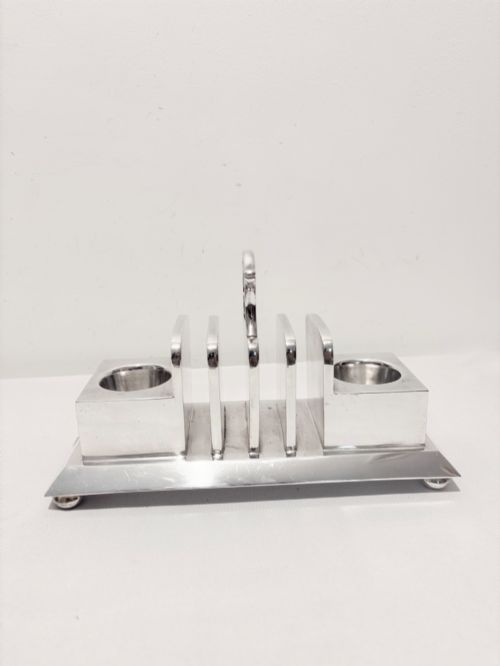
Victorian examples frequently display registration marks, specific gothic lettering styles, or hallmarks associated with mid- to late-nineteenth-century manufacturers. Heavy architectural divisions and combination pieces, such as those incorporating egg cruets, are typical of the era.
The presence of registered design numbers stamped into the metal provides a precise year of manufacture. Stylistic cues like Aesthetic Movement engraving or naturalistic leaf motifs also point securely to this period.