



Antique Toast Holder
An antique toast holder brings a touch of breakfast table history to your home, holding slices upright to keep the crusts crisp.
Antique Toast Holder
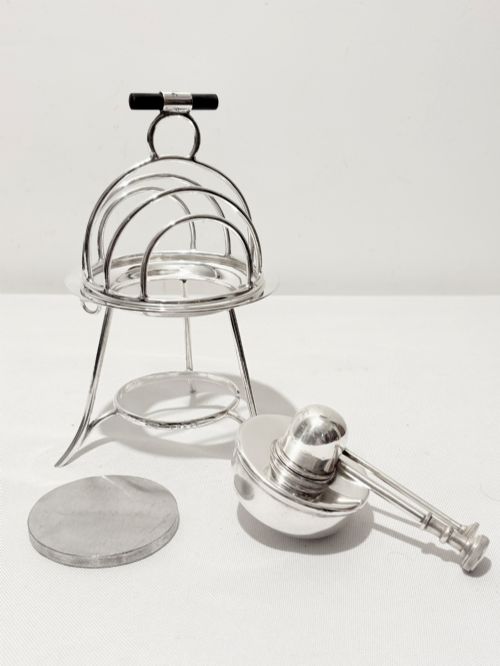
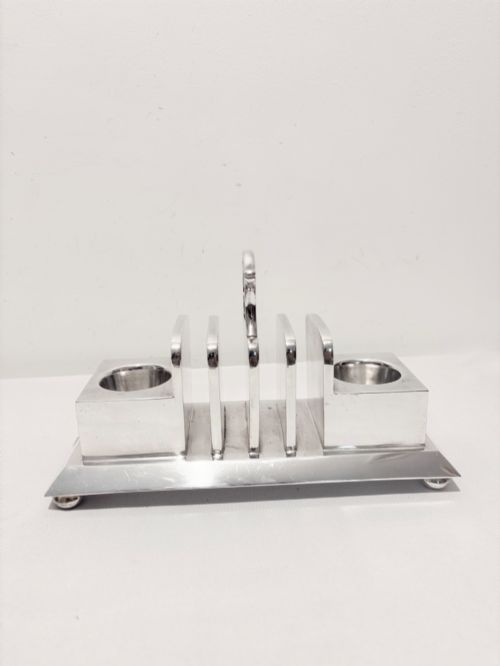
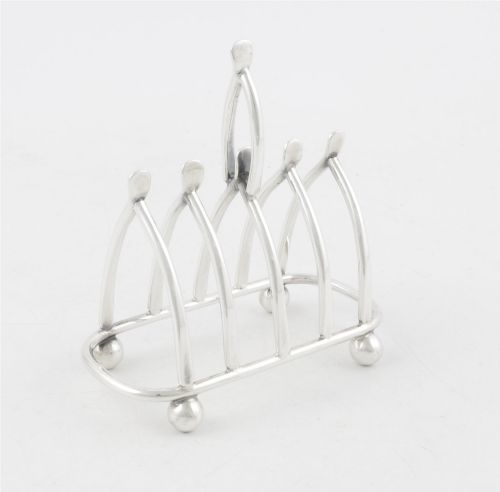
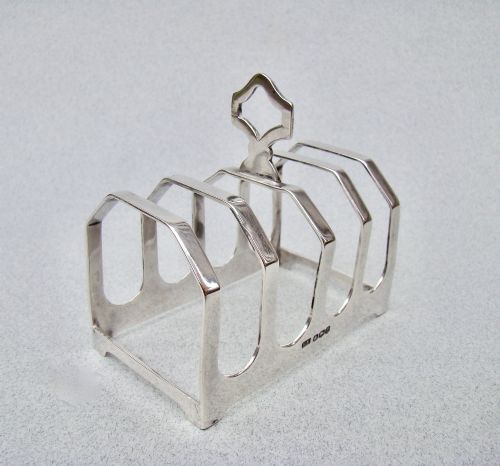
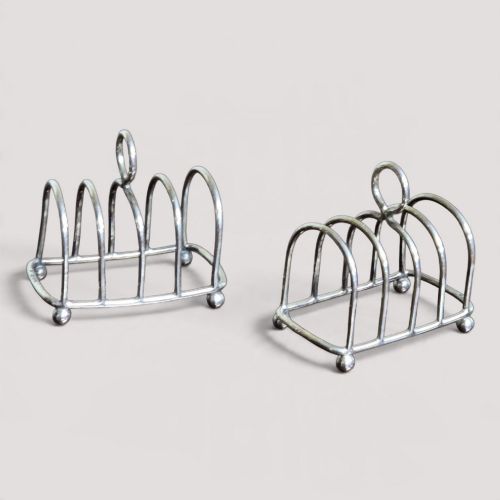
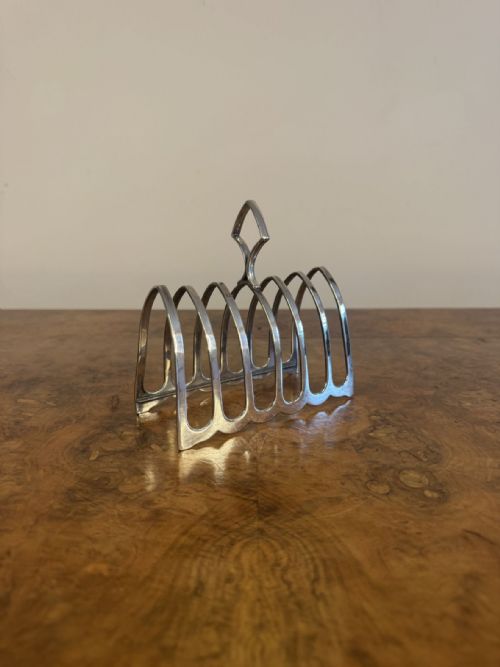
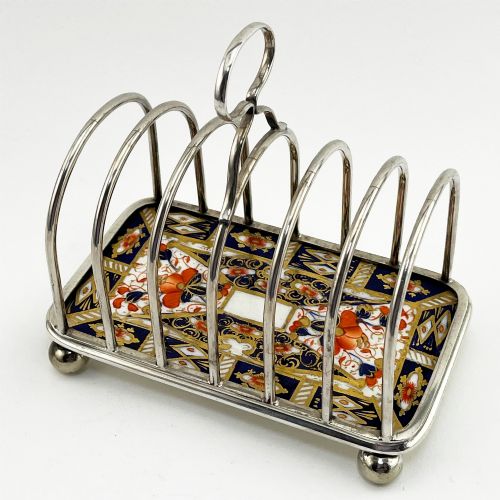
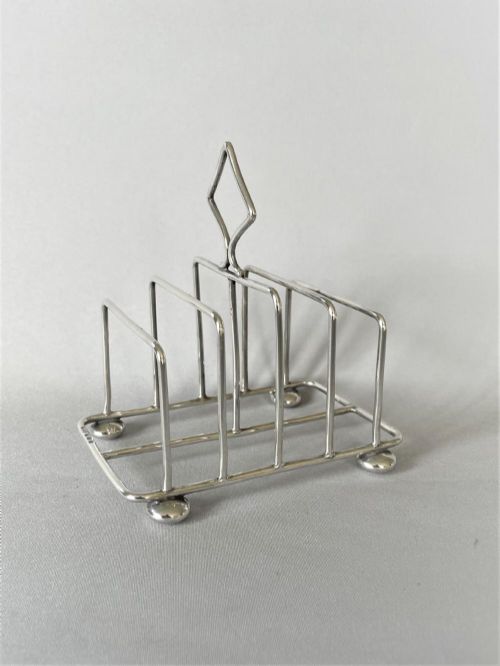
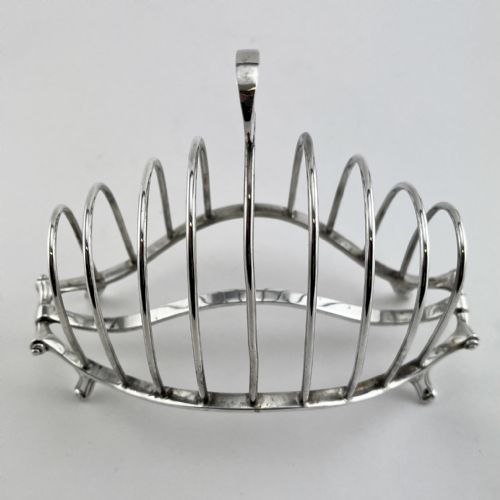
An antique toast holder is a domestic piece of tableware designed with vertical dividers to keep warm slices separate on the breakfast table. When searching for an antique toast holder, you encounter forms ranging from simple four-slice wire frames to elaborate novelty designs.
The pieces appearing on this page span several eras, with Victorian, Edwardian, and Georgian examples forming the core of the selection. Alongside standard arched frames, many double as letter holders, incorporating oak bases, heart shapes, or sporting motifs such as golf and equestrian themes.
Sterling silver and silver plate dominate the material record, accompanied by occasional base metal and solid oak variants. Makers such as Elkington, Walker & Hall, and Roberts & Belk produced everything from extending racks to modernist designs by Christopher Dresser.
How they were made
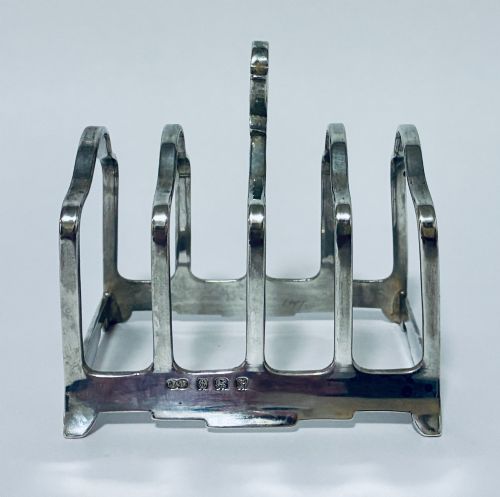
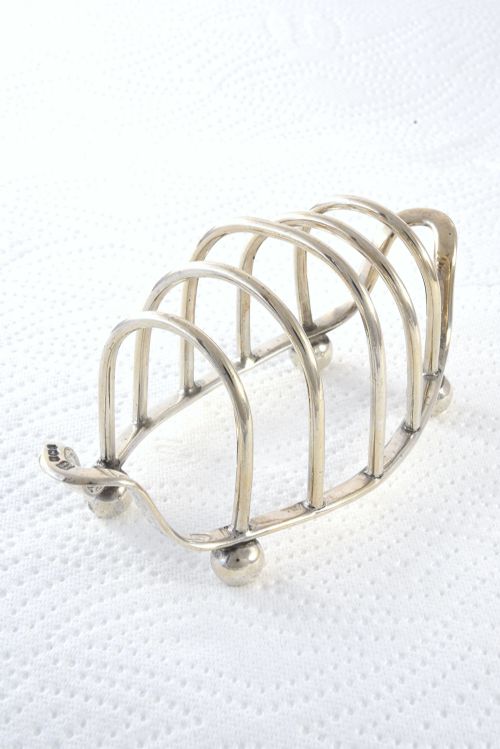
Silversmiths shaped sterling silver into wirework, bars, and trefoil loops, soldering the individual dividers to a central base raised on small feet. Sheffield and London assay offices stamped these pieces with hallmarks indicating the year and maker.
Silver plating on copper, base metal, or electroplated nickel silver provided a durable alternative to solid silver for many Victorian and Edwardian examples. Manufacturers utilised specialised plating vats to apply silver layers that endured daily use.
Makers integrated solid oak bases with silver-plated wirework in specific designs, combining timber and metal for weight and contrast. Novelty frames incorporated cast elements like horseshoes, stirrups, or wishbones to form the structural dividers.
Antique Toast Holder Retail Price Guide 2026
Typical asking prices for toast holder among the pieces listed under this phrase on Sellingantiques today, from the lower quarter to the upper quarter. They describe what is for sale here now, not the wider market.
Victorian breakfast tables welcomed miniature railway wagons and golf bags holding morning toast.
What varies in quality
The calibre of design separates standard utilitarian pieces from exceptional examples, particularly in novelty work shaped as wagons, golf clubs, or hearts. Detail in the casting and hand-piercing of the metal define the upper tier of the range.
Materials create a clear distinction, with solid sterling silver pieces carrying full hallmarks holding greater intrinsic substance than silver-plated base metal versions. Maker attribution to distinguished firms like Elkington or designers like Christopher Dresser elevates the standing of a piece.
Condition and structural integrity matter significantly, especially for fragile wire dividers and extending mechanisms that require precise engineering to function properly. The preservation of original silver plating without heavy base metal exposure distinguishes well-kept examples.
Elkington·Mappin and Webb·Roberts & Belk·Hukin & Heath·Martin Hall·Atkin Brothers·Walker & Hall
The Antique Toast Holder Glossary
- Sterling silver
- A silver alloy containing 92.5 percent pure silver by mass, standard for quality British tableware. Pieces carry assay marks to verify their standard.
- Silver plate
- A layer of silver applied to a base metal core such as copper or nickel silver. This technique offered accessible elegance for middle-class breakfast tables.
- Novelty toast rack
- A piece shaped to represent an object or theme, such as a caravan, a golf bag, or a wishbone. These playful designs date predominantly to the Victorian period.
- Trefoil
- A three-lobed shape resembling a clover leaf, frequently used in the design of wirework loops on toast racks. It provides both decorative charm and rigid support for slices.
- Electroplated nickel silver
- A base metal alloy of copper, nickel, and zinc coated with a thin layer of silver via electricity. It became a dominant manufacturing method in the nineteenth century.
Antique Toast Holder: Frequently Asked Questions
How were toast holders used?
They sat on the breakfast table to serve freshly made toast directly to diners, keeping each slice separate and crisp. Many examples from the nineteenth century doubled as letter or card holders when not in breakfast use.
Victorian households often owned multiple variants, matching the formality of the morning meal or displaying specific sporting hobbies like golf or equestrian pursuits.
How do I clean silver toast holders?
Silver pieces require gentle cleaning with a specialised silver cloth or mild liquid polish to remove tarnish without stripping the underlying metal. Silver-plated items demand particular care to avoid wearing through the thin silver layer to the base metal underneath.
Routine dusting and occasional careful washing in warm soapy water keep the wirework bright and free from crumbs.
How do I identify silver from silver plate?
Solid sterling silver pieces usually bear a complete set of British hallmarks including a lion passant, a city mark, and a date letter. Silver-plated items display maker marks associated with electroplating firms rather than official assay office stamps.
Silver plate may also show base metal grinning through where heavy polishing has worn away the top coat over generations.