





Sterling Silver Toast Rack
A sterling silver toast rack brings morning ritual to the breakfast table, combining structural wirework with gleaming metal to keep toast crisp.

Sterling Silver Toast Rack
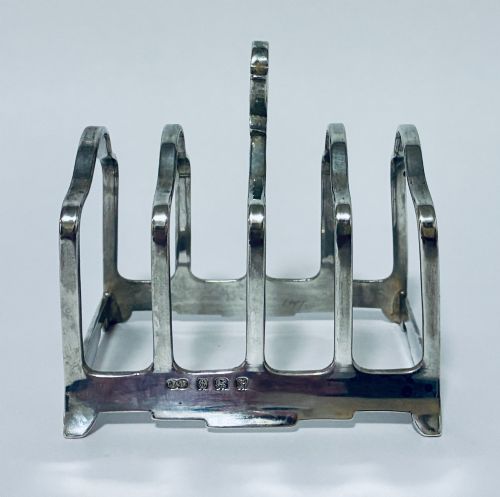
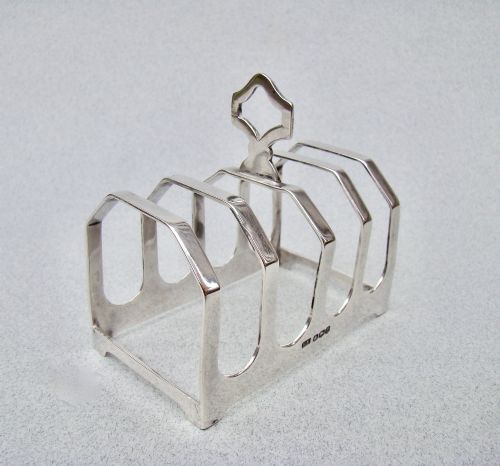
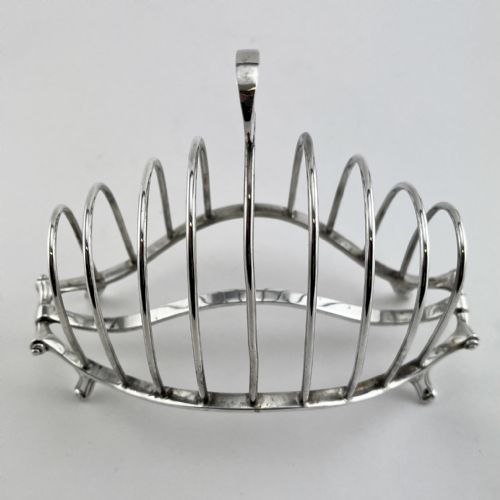
A sterling silver toast rack is a specialised piece of tableware designed to hold slices of hot toast upright so the steam escapes rather than making the bread soggy. When searching this phrase, buyers encounter examples spanning from the Georgian and Victorian eras through the Edwardian period and into Art Deco designs of the twentieth century.
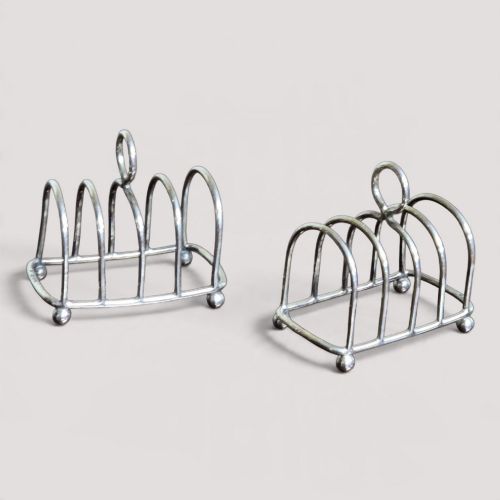
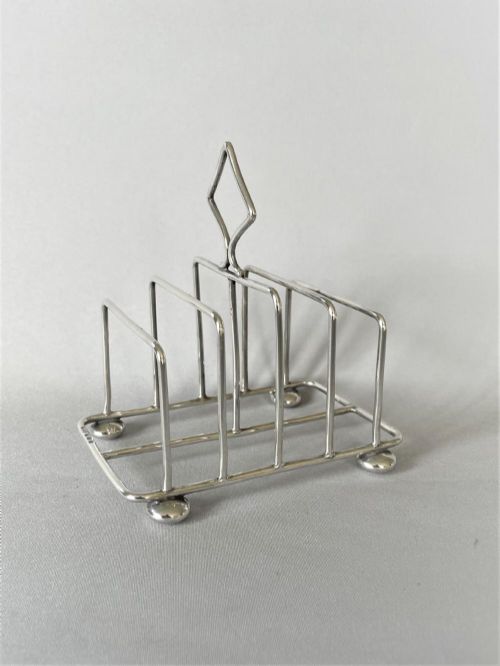
The most common forms on this page include standard wire-arch dividers holding four to six slices, alongside novelty configurations shaped like wishbones, golf clubs, letter racks, backbones or equestrian themes. Pieces emerge from major silversmithing centres such as London, Birmingham and Sheffield, carrying hallmarks that date their exact year of assay.
Materials and Construction
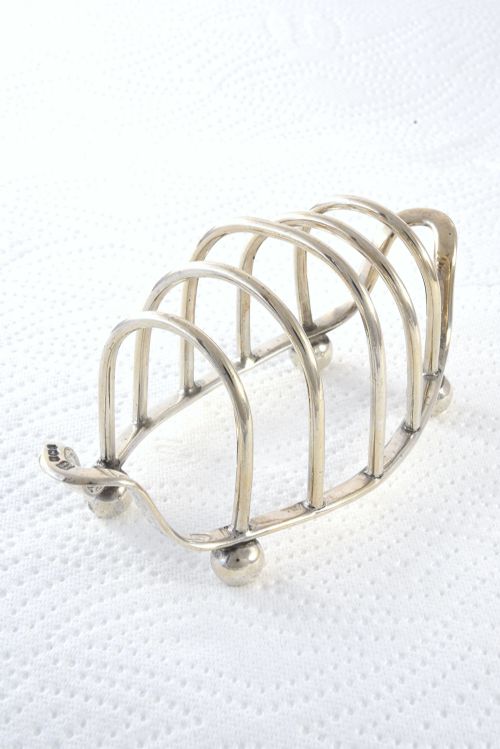
These items are constructed predominantly from solid sterling silver or silver plate, utilising drawn wire, cast bars and pierced sheet bases soldered together with precision. Individual loop dividers are shaped by hand or die-stamped before being attached to a heavy rectangular or shaped base, often supported on four small ball or bracket feet.
Makers integrated functional central carrying rings at the top of the arch framework to allow the hot rack to be moved safely from sideboard to table. Surface decoration varies from plain polished finishes to chased borders, engraved details and pierced galleries reflecting prevailing Georgian, Victorian and Art Deco design movements.
Sterling Silver Toast Rack Retail Price Guide 2026
Typical asking prices for sterling silver toast rack among the pieces listed under this phrase on Sellingantiques today, from the lower quarter to the upper quarter. They describe what is for sale here now, not the wider market.
Listings feature sterling silver and silver plate toast racks spanning the Georgian, Victorian, Edwardian, and Art Deco periods.
Distinguishing Quality
Quality in a sterling silver toast rack rests upon the gauge of silver used for the base and loops, dictating the overall weight and rigidity of the piece. Superior examples maintain firm, unbent divider wires securely anchored to a substantial base that resists tipping when loaded with uneven slices.
The distinction between standard utility items and finer pieces lies in the crispness of the hallmarks, the elegance of the wire profiles, and whether the maker incorporated novelty motifs or specialised architectural symmetry rather than simple mass-produced wire loops.
Mappin and Webb·Roberts and Belk·Hukin and Heath·Christopher Dresser
The Sterling Silver Toast Rack Glossary
- Hallmark
- A set of official marks stamped on precious metal items indicating the maker, standard of purity, assay office, and year of manufacture. These small punch marks allow collectors to trace the exact lineage of the piece.
- Sterling silver
- An alloy of silver containing 92.5 percent silver by mass and 7.5 percent other metals, usually copper. This standard composition provides the durability required for functional tableware.
- Novelty toast rack
- A specialised decorative design where the wire framework mimics objects such as wishbones, golf clubs, or animal skeletons. These whimsical pieces were particularly popular during the late Victorian and Art Deco periods.
- Pierced detail
- Openwork patterns cut or pierced through the silver base plate of the rack. This technique reduced metal weight while adding intricate visual ornamentation.
- Silver plate
- A layer of silver applied to a base metal core such as copper or Britannia metal. Many breakfast pieces were produced in plated variants alongside solid sterling silver.
Sterling Silver Toast Rack: Frequently Asked Questions
How many slices do they hold?
Most standard domestic toast racks are designed to accommodate between four and six slices of bread in individual vertical wire divisions.
Smaller examples intended for individual table settings or guest trays frequently feature three or four slices, whilst larger examples built for larger Victorian and Edwardian households extend to six or more partitions.
Were they used for anything else?
While primarily manufactured to hold hot breakfast toast upright, similar frames were occasionally adapted on the breakfast table for dry biscuits or rusks.
Some specialised Victorian variations with closely spaced vertical dividers were also utilised as letter racks or desk organizers for correspondence and envelopes.
How do I clean silver toast racks?
Maintenance involves washing the silver gently in warm soapy water with a soft cloth to remove grease from morning toast, followed by careful drying with a lint-free towel.
Polishing should be done sparingly using a reputable proprietary silver polish, taking care to avoid abrasive cloths that might wear down delicate hallmarks or thin wire joins.
How do I identify the date?
Dating relies upon reading the date letter punch and assay office mark within the stamped hallmarks located on the base or ring of the rack.
Stylistic indicators also help narrow the period, such as the heavy geometric symmetry of Art Deco pieces compared to the flowing wirework of the Edwardian era or the neoclassical restraint of Georgian designs.