



Vintage Toast Holder
A vintage toast holder keeps crisp slices upright at the breakfast table, combining practical design with period silverwork.
Vintage Toast Holder
A vintage toast holder is a specialised piece of tableware designed to keep slices of toast crisp by allowing air to circulate around them. These items appear across multiple periods, including the Georgian, Victorian, Edwardian, and Art Deco eras, reflecting shifting domestic habits and dining customs.
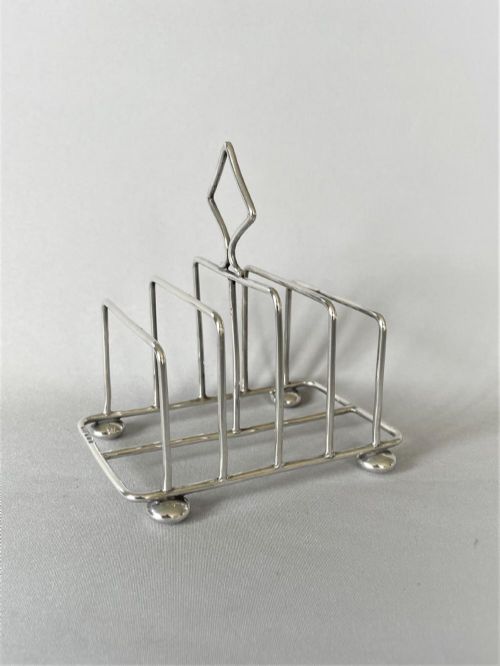
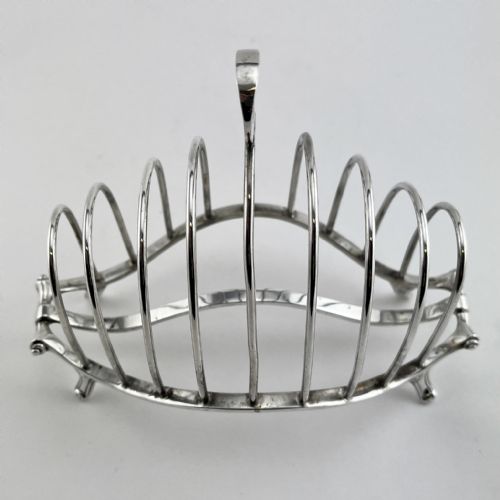
Most examples found here take the form of toast racks featuring arched dividers welded to a base, often fitted with a central loop handle for carriage. Buyers frequently encounter silverplate and sterling silver versions, spanning from compact four-slice formats to larger dining table variants.
How they were made
Silversmiths constructed these pieces primarily using sterling silver or through electroplating techniques on base metals like nickel silver. Wirework and shaped bars formed the individual toast dividers, which were soldered securely to a matching tray base supported by feet.
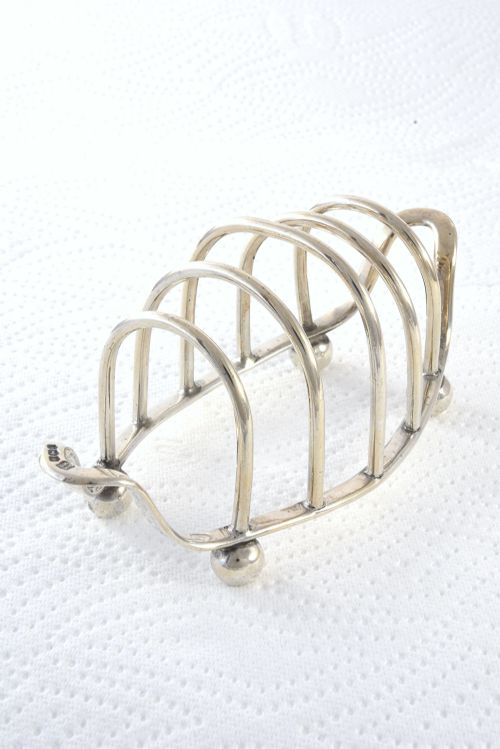
Makers applied various finishes and decorative elements depending on the period, ranging from plain functional wire frames to Aesthetic Movement engraving or modernist Christopher Dresser designs. Hallmarks stamped into sterling silver pieces provide clear records of assay offices, dates, and makers.
Listings feature sterling silver and silver plate materials across Victorian, Edwardian, and Art Deco styles.
What varies in quality
Quality in these pieces rests upon the weight of the metal, the rigidity of the divider bars, and the crispness of the original silversmithing work. Heavier gauge sterling silver constructions maintain their structural integrity better over generations compared to thinner base metal alternatives.
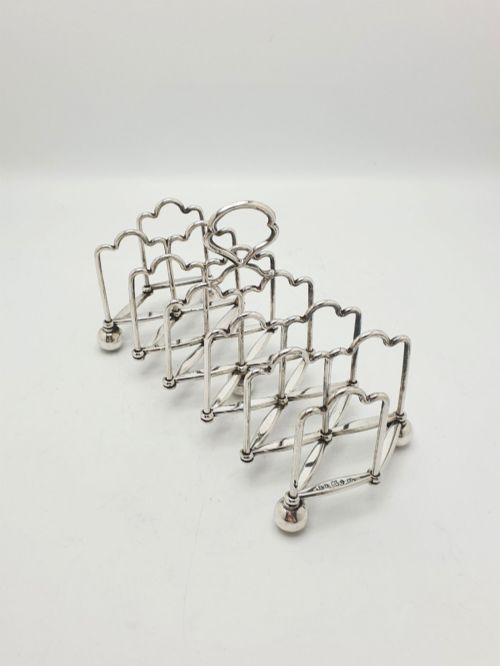
Design ambition also separates standard production items from distinguished examples, such as extending mechanisms or pieces created by notable designers and firms. The clarity of maker marks and hallmarks adds significant weight to an object's standing.
Elkington·Mappin and Webb·Roberts and Belk·Hukin and Heath
The Vintage Toast Holder Glossary
- Toast rack
- A table accessory formed of parallel metal loops designed to hold slices of toast upright. This form prevents condensation from making the toast soggy before it reaches the table.
- Electroplated Nickel Silver
- A base metal alloy coated with a layer of pure silver through an electrical process. This material offered a durable alternative to solid silver for middle-class households.
- Sterling silver
- An alloy containing a high proportion of pure silver combined with other metals to increase durability. Items made from this material usually bear official hallmarks indicating their standard and origin.
- Trefoil
- A three-lobed decorative shape often seen in the handle design or base configuration of Victorian silver pieces. This architectural motif nods to Gothic Revival tastes.
- Hallmark
- A series of official marks stamped onto precious metal items to guarantee the purity of the metal, the maker, and the year of assay. These stamps serve as the primary tool for dating British silver.
Vintage Toast Holder: Frequently Asked Questions
What is a vintage toast holder used for?
These items were designed specifically to hold hot pieces of toast upright at the breakfast table. Keeping the slices separated allowed steam to escape so the toast remained crisp rather than becoming soggy.
In modern homes, they frequently serve their original purpose or find new roles holding letters, napkins, or toast on the breakfast tray.
How do I clean a silver toast rack?
Cleaning requires warm water, a mild soap, and a soft cloth to remove everyday dust and oils. Harsh abrasive cleaners can strip thin silver plating or damage antique surfaces.
For sterling silver pieces, a dedicated silver polish applied gently with a soft cloth restores the shine without wearing away the underlying metal details.
How do I tell Victorian from Edwardian pieces?
Victorian examples often display heavier, more ornate decoration reflecting historic revival styles, such as Gothic trefoils or elaborate floral engraving. They date from the nineteenth century.
Edwardian pieces tend to feature lighter wirework and simpler geometric or neoclassical motifs, pointing to changing tastes at the turn of the twentieth century.
Are these pieces made of solid silver?
These items appear in both solid sterling silver and silver plate over a base metal like nickel silver. Hallmarks stamped into the metal distinguish solid silver from plated items.
Sterling pieces carry assay office marks and date letters, whereas plated versions usually bear maker trade marks indicating electroplating methods.