



Edwardian Toast Rack
An edwardian toast rack holds crisp morning slices upright on the breakfast table, combining practical metal wirework with the refined domestic style of the early twentieth century.
Edwardian Toast Rack
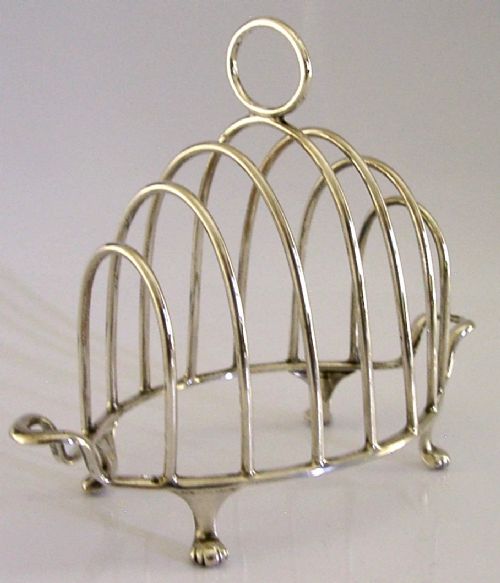
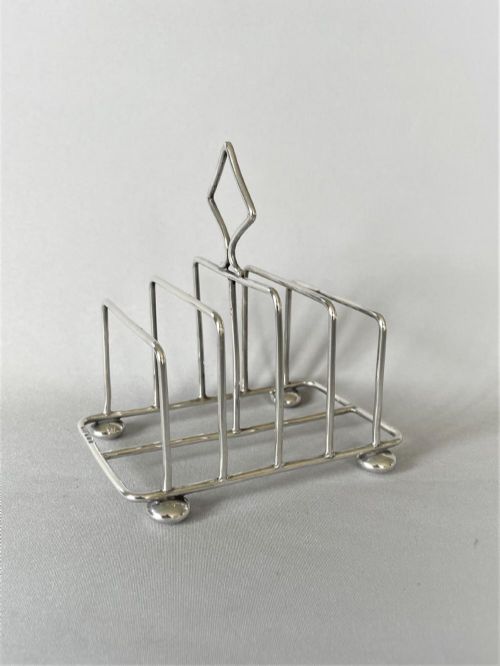
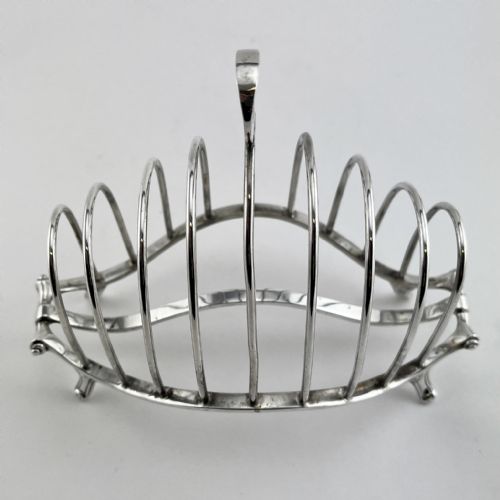
An edwardian toast rack serves a specific breakfast table function by keeping slices separate and crisp rather than letting them steam together on a flat plate. The forms range from straightforward four-slice and six-slice rectangular frames to novelty silhouettes shaped like hearts, golf themes, and galleons.
The pieces appearing most frequently belong directly to the Edwardian period and the early twentieth century, though examples stretch from the Georgian era through the Victorian period into the nineteen-thirties. Makers often utilised sterling silver or silver plate, sometimes pairing the metal framework with oak bases or brass elements.
Alongside standard domestic table forms, the wider category encompasses related items such as fireplace toasters and letter racks. The predominant surviving domestic examples remain silver wirework frames designed to sit beside the tea service.
How they were made
Silversmiths constructed the frames by soldering individual metal wires or bars to a central base plate, often supported by small feet. Sterling silver pieces bear hallmarks indicating the assay office and year, while electroplated nickel silver and silverplate provided a durable alternative for plated items.
Specialist makers introduced decorative elements through stamped designs, cast novelty shapes like swans or wishbones, and occasionally combined materials such as inlaid copper or wooden bases.
Listings span from the Georgian period through Victorian and Edwardian eras into the Art Deco nineteen-thirties, utilising silver, silverplate, brass, and oak.
What varies in quality
The distinction between standard production items and superior pieces rests on the weight of the silver, the crispness of the wirework, and the presence of registered hallmarks. Heavier solid silver items display substantial gauge metal rather than thin pressed wire.
Novelty shapes and pieces by recognised silversmiths demonstrate greater design ambition and precision in execution compared to plain utility items. The integration of alternative materials like oak bases further separates standard table pieces from elaborate workshop examples.
Mappin and Webb·Roberts and Belk·Christopher Dresser·Joseph Gloster·Goldsmiths and Silversmiths Company·S Garrard·Harrison Brothers and Howson·William Hutton and Sons·Atkins Brothers
The Edwardian Toast Rack Glossary
- Hallmark
- An official stamp applied to precious metals indicating the standard of purity, the assay office, and the date letter. These marks allow collectors to date sterling silver items precisely.
- Electroplated nickel silver
- A base metal alloy coated with a layer of silver through an electrolytic process. This technique offered the appearance of solid silver at a lower production cost.
- Novelty
- A piece designed in a playful or pictorial shape departing from standard geometric forms. Collectors prize novelty tableware for its imaginative execution.
- Base metal
- Any non-precious metal used as the foundation for plating or utilitarian objects. Such materials appear frequently in nineteenth-century and plated domestic items.
Edwardian Toast Rack: Frequently Asked Questions
What is an edwardian toast rack used for?
These metal frames keep freshly made toast upright at the breakfast table, allowing air to circulate so the bread stays crisp instead of soggy from condensation.
They sit beside the tea service or butter dish as a functional table accessory during the morning meal.
How do I clean antique silver toast racks?
Gentle washing in warm soapy water with a soft cloth removes everyday dust and grease without damaging the metal surface.
Harsh abrasive dips should be avoided to preserve any underlying plate and the definition of stamped hallmarks.
Are silverplate and sterling silver marked differently?
Sterling silver items carry official hallmarks including a lion passant and assay office symbols to prove the metal purity.
Silverplate pieces typically feature maker initials or trade abbreviations rather than standard government silver hallmarks.
Why are some toast racks shaped like hearts?
Makers introduced whimsical novelty silhouettes during the Edwardian period to appeal to buyers seeking decorative variety on the dining table.
These playful designs turned everyday functional items into conversational centerpieces.