


Antique Toast Caddy
An antique toast caddy sits on the breakfast table to hold slices upright, and you want one for the sheer charm of its silver bars.
Antique Toast Caddy
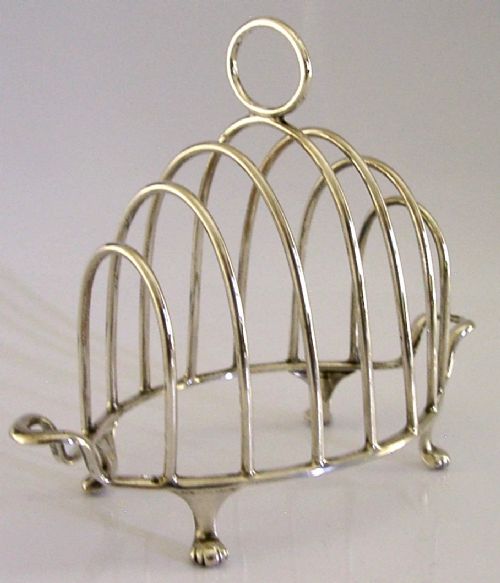
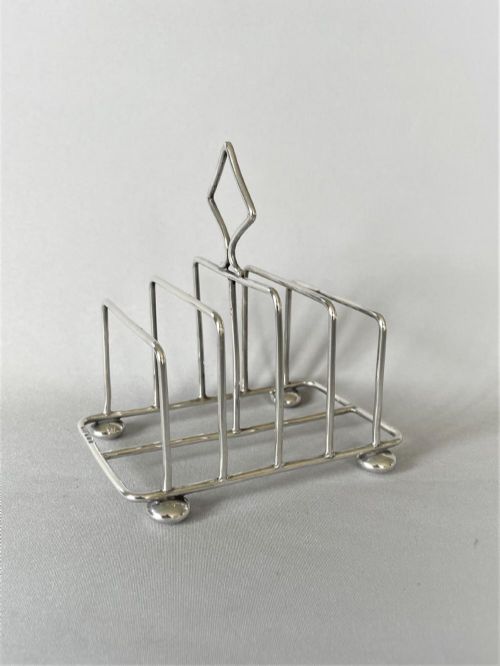
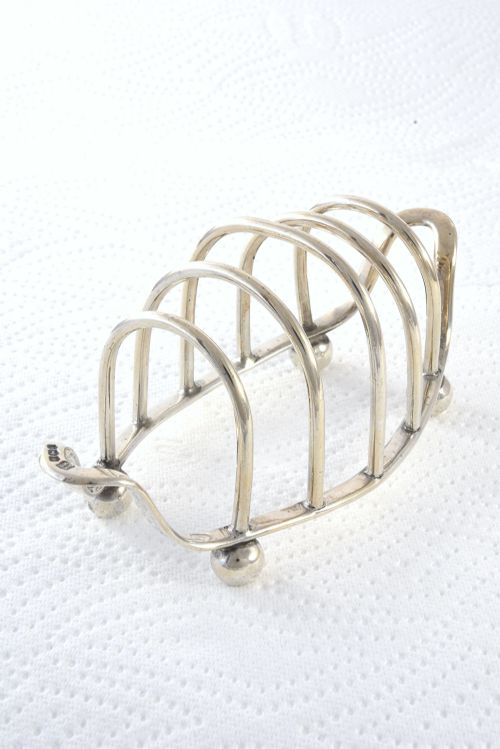
An antique toast caddy is a form of tableware designed specifically to keep crisp slices of toast dry and separated at the table. When you search for an antique toast caddy, you encounter silver and silver-plated examples spanning from the Georgian and Victorian eras through to the Art Deco period.
The pieces on this page appear in various shapes and capacities, ranging from simple four-slice racks to unusual novelty forms like wagons and caravans. You are most likely to meet traditional silver-plated or sterling silver versions from the Victorian and Edwardian periods.
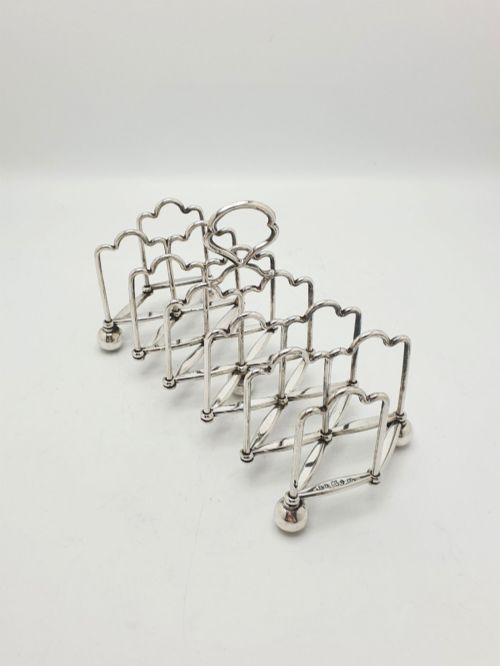
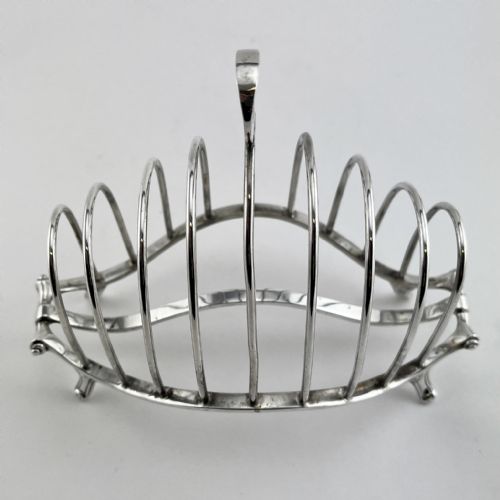
Makers produced these items to serve a domestic ritual that required individual metal divisions for each slice of bread. The forms vary from straightforward arched wirework to complex extending designs and trefoil arrangements.
Materials and construction
Silversmiths constructed these pieces primarily using sterling silver or silver plate over a base metal foundation. They shaped wire, sheet metal and cast elements into individual upright dividers soldered to a base or tray.
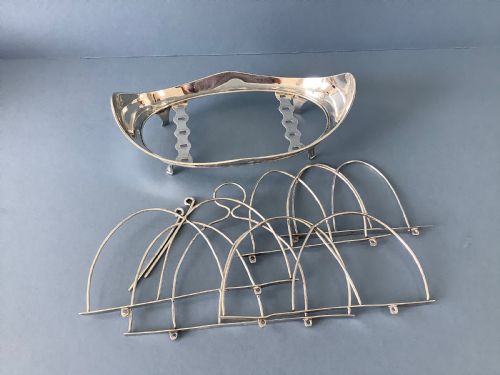
Techniques varied from simple hand-soldering of rounded wire loops to elaborate casting for novelty designs like the nineteenth-century caravan or wagon. Makers also utilised extending mechanisms in specific models to adjust the space between dividers.
Someone once patented a toast rack shaped like a railway wagon, ensuring breakfast could arrive with proper transport credentials.
Judging quality and workmanship
Quality rests upon the crispness of the wirework, the integrity of the soldered joints holding each divider, and the weight of the metal used in the base. Superior examples display balanced proportions and clean, unblemished surfaces across the silver or silver plate.
Novelty forms and extending mechanisms achieve distinction through clever engineering and detailed execution rather than standard utility. Maker marks and clear hallmarks also elevate the standing of a piece by confirming its period and origin.
Elkington
The Antique Toast Caddy Glossary
- Sterling Silver
- An alloy containing a high proportion of pure silver mixed with small amounts of other metals for strength. This material forms the body of many high-end table pieces.
- Silver Plate
- A thin layer of silver applied to a base metal core through various plating techniques. It provides the appearance of solid silver at a different cost.
- Trefoil
- A three-lobed decorative shape often seen in the layout of specific Victorian toast racks. The design creates a distinct geometric footprint on the breakfast table.
- Hallmark
- A series of official marks stamped onto precious metal items to indicate the standard of purity, the assay office, and the date letter. These marks authenticate the age and origin of the silver.
- Novelty
- An object shaped to resemble something other than its standard utilitarian form, such as a vehicle or animal. Collectors prize these whimsical interpretations for their imaginative design.
Antique Toast Caddy: Frequently Asked Questions
What is an antique toast caddy?
An antique toast caddy is a metal rack designed to hold slices of toast upright on the dining table. The individual divisions prevent the warm bread from becoming soggy by allowing air to circulate around each piece.
These items date from the Georgian, Victorian, and Edwardian eras, reflecting the domestic habits of those periods. They remain practical accessories for modern breakfast settings.
How do I date a silver toast rack?
You date a silver toast rack by examining the hallmarks stamped into the metal, which reveal the assay office and year of manufacture. Stylistic clues such as Victorian wirework or Art Deco geometric lines also help determine the period.
Unmarked silver-plated pieces rely on their overall design, construction methods, and any registry numbers stamped on the base.
What is the difference between silver and silverplate?
Solid silver pieces consist entirely of precious metal throughout their structure, usually marked as sterling silver with a lion passant or similar standard indicator. Silver-plated items feature a thin coating of silver applied over a cheaper base metal.
Both materials appear frequently across these listings, offering different weights and historical contexts for the collector.
How many slices do these racks hold?
The capacity of these pieces varies considerably, with four-slice and six-slice versions appearing regularly in the evidence. Some designs feature extending mechanisms that alter the distance and capacity between the upright bars.
Novelty models often accommodate fewer slices due to their sculptural shapes, prioritising visual appeal over large capacity.
How do I care for antique silver tableware?
Care for silver tableware requires gentle cleaning with appropriate silver polish and a soft cloth to maintain the shine without removing the plating. Avoid harsh abrasives that can scratch the delicate wire dividers or wear away thin silver-plated surfaces.
Store the pieces in a dry environment to minimise tarnishing between uses on the breakfast table.