

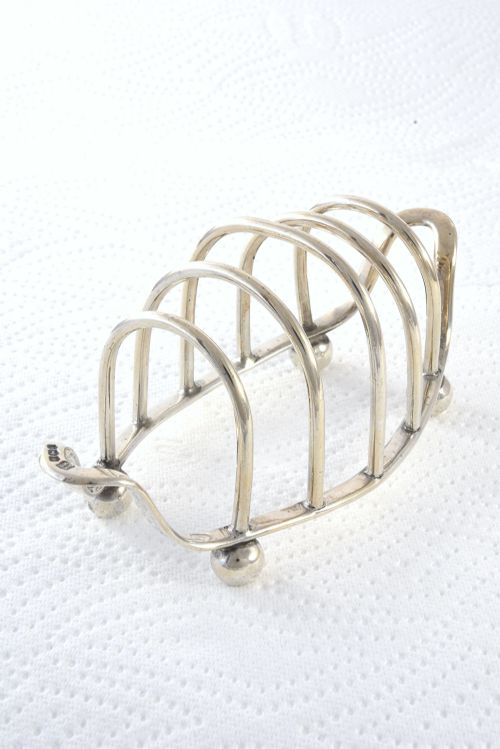


Tableware Toast Holder
These silver tableware toast holder pieces bring breakfast history to the table, offering a glimpse into centuries of morning dining customs.
Tableware Toast Holder
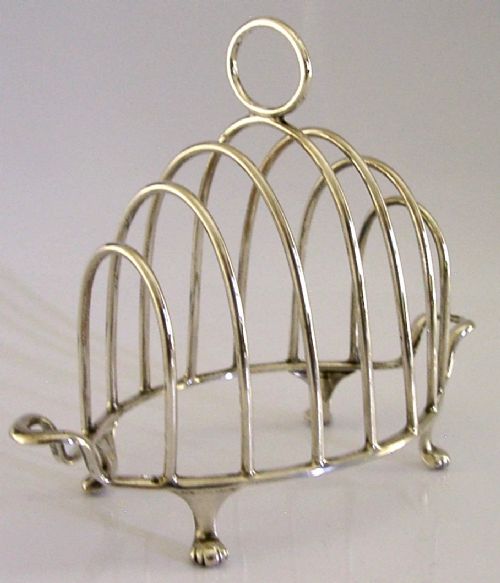
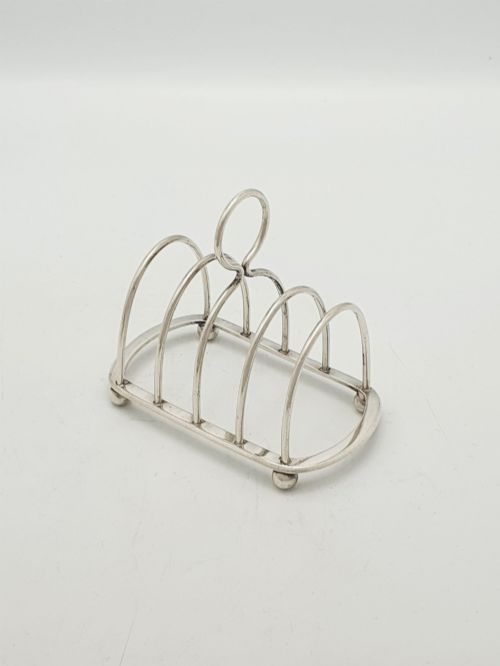
A tableware toast holder is a small rack designed to hold slices of toast upright at the breakfast table, preventing the hot bread from going soft by letting air circulate between the pieces. You will find these items ranging from Georgian and Regency eras through to the Victorian, Edwardian, and Art Deco periods.
Materials and construction methods
Makers utilised sterling silver and various forms of silver plate, including electroplated nickel silver and base metal, soldered and shaped into individual wire loops and bars. Silversmiths formed the dividing loops by hand, attaching them to a central base tray that often featured ball feet and carrying rings.
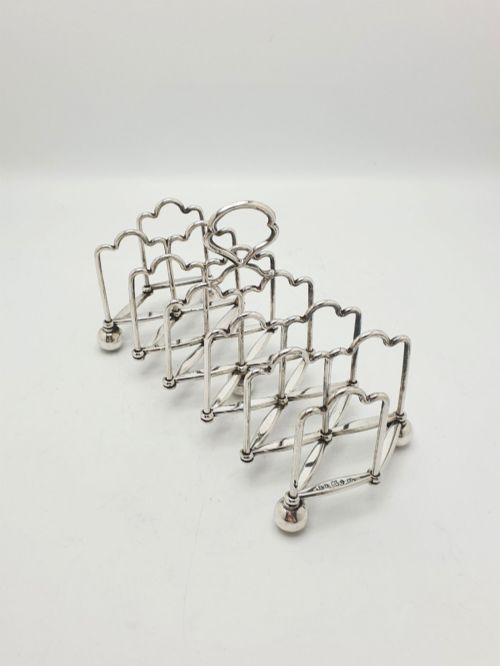
Makers also employed specialised mechanisms in specific examples, such as extending frames that adjusted the spacing between the dividers. Stamped hallmarks on sterling silver pieces provide assay office marks, date letters, and maker initials.
Listings feature items from the Georgian, Regency, Victorian, Edwardian, and Art Deco periods, created in sterling silver and silver plate.
What distinguishes finer examples
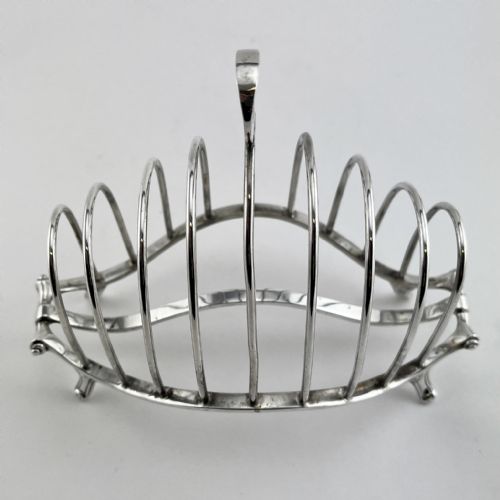
Quality in a tableware toast holder rests on the crispness of the wirework, the structural integrity of the solder joints, and the presence of legible hallmarks. Heavier gauge silver provides a more substantial feel in the hand compared to lighter plated base metals.
Design ambition separates standard models from exceptional pieces, with novelty shapes, figural elements, and work by notable designers or makers commanding greater attention. The preservation of the original plating or bright silver surface without excessive polish wear also dictates the desirability of the piece.
Elkington·Mappin and Webb·Roberts & Belk·Christopher Dresser for Hukin & Heath
The Tableware Toast Holder Glossary
- Sterling silver
- A silver alloy containing 92.5 percent pure silver and 7.5 percent other metals, usually copper, used extensively for quality tableware. This standard has been regulated by assay offices for centuries.
- Silver plate
- A base metal object coated with a thin layer of pure silver, often utilising electroplating techniques developed in the nineteenth century. This method offered a more affordable alternative to solid sterling silver.
- Hallmark
- A series of official marks stamped on precious metal items indicating the metal standard, assay office, maker, and year of manufacture. These marks allow collectors to trace the origin of antique silver pieces.
- Extending toast rack
- A mechanical design featuring a sliding mechanism that expands or collapses the distance between the toast divider loops. This functional variation allows the user to alter the spacing for different thicknesses of bread.
- Novelty toast rack
- A piece shaped to represent an object, animal, or scene, such as a railway wagon, caravan, or equestrian motif. These whimsical designs were particularly popular during the Victorian era.
Tableware Toast Holder: Frequently Asked Questions
What is a tableware toast holder used for?
These racks kept hot toast crisp at the breakfast table by holding individual slices upright, allowing steam to escape so the bread did not become soggy.
They were a standard fixture of formal and domestic morning dining throughout the Victorian and Edwardian periods.
How do I date a silver toast rack?
You date sterling silver pieces by examining the stamped hallmarks for assay office symbols, maker marks, and specific date letters corresponding to historical registry charts.
For silver plated items without official date letters, dating relies on the overall style, manufacturing techniques, and registered design marks.
What is the difference between silver and silver plate?
Sterling silver is a solid precious metal alloy of consistent composition throughout the entire object, marked with standard purity guarantees.
Silver plate consists of a core of base metal or nickel silver covered with a superficial coating of pure silver.
How do I clean an antique toast holder?
Cleaning requires a soft cloth and a gentle silver cleaning product suitable for the specific metal finish, avoiding harsh abrasives that can remove thin silver plate.
Careful removal of tarnish preserves the underlying detail of the wirework and any engraved decoration.