



Silver Plated Letter Holder
A silver plated letter holder organises correspondence with the bright utility and distinct craft of the nineteenth and twentieth centuries.
Silver Plated Letter Holder
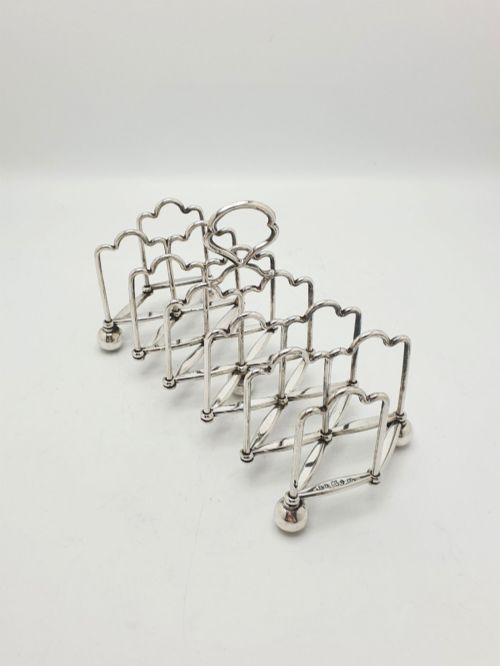
A silver plated letter holder appears across Victorian and later periods, serving desk and table with upright metal divisions. These items often double as toast racks in historical design, reflecting dual-purpose domestic metalware.
The inventory shows a strong presence of dual-function forms alongside dedicated letter and note holders. Examples span Victorian, Edwardian, and Art Deco styles, incorporating base metal, silverplate, and solid oak combinations.
Makers and designers range from large commercial firms to notable figures like Christopher Dresser. Collectors encounter heart shapes, lyre forms, and wishbone novelties among the surviving pieces.
How they were made
Makers utilised electroplated nickel silver and standard silver plate over base metal to achieve a durable metallic sheen. Solid oak provides a contrasting wooden base on several notable letter racks.
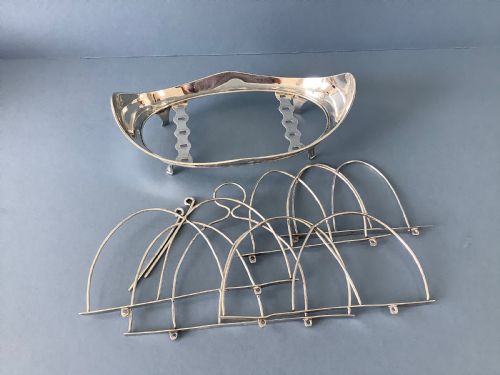
Metalwork techniques involve shaping wire and plate into upright divisions, arches, and structural frames. Plating applies a thin layer of silver over a durable white metal or nickel core.
Wishbone novelty frames bring a touch of Victorian superstition right to the desk.
What varies in quality
The distinction between ordinary production and finer work lies in the crispness of wire-work and the weight of the metal. Heavier gauge silver plate resists bending and holds its plating through decades of use.
Design ambition separates standard commercial items from pieces by notable makers or those featuring novelty forms such as lyres and hearts. Superior execution shows clean soldering joints and balanced proportions.
Elkington·Hukin & Heath·Padley, Parkin & Staniforth
The Silver Plated Letter Holder Glossary
- Electroplated nickel silver
- A base metal alloy of copper, nickel, and zinc coated with a layer of pure silver through an electrical process. This technique became widespread in the nineteenth century for producing durable tableware.
- Silverplate
- A thin layer of silver bonded to a base metal core such as brass, copper, or nickel silver. It provides the appearance of solid silver at a lower cost.
- Base metal
- Any non-precious metal used as the structural foundation for plating. Common examples include brass, copper, and various alloy mixtures.
- Toast rack
- A table accessory featuring upright metal bars designed to hold slices of toast upright. Many historical examples double as letter holders due to their parallel upright divisions.
Silver Plated Letter Holder: Frequently Asked Questions
Are these letter holders also toast racks?
Many Victorian and Edwardian examples were designed to serve both functions interchangeably, as the parallel metal dividers accommodate thin items like letters or toast equally well.
Collectors often find dual-purpose forms listed under both categories depending on the dealer's cataloguing approach.
What materials did makers use?
Most items consist of silver plate over nickel silver or base metal, occasionally combined with solid oak bases.
Electroplating allowed manufacturers to produce durable metalware with a bright silver surface without the cost of solid silver.
How do I identify the period?
Stylistic cues such as Aesthetic Movement engraving or Art Deco geometry point towards specific decades of manufacture.
Registration marks and maker stamps provide precise chronological clues when present on the metal frame.
Where should I place a letter holder?
These pieces sit well on a desk, hall table, or mantelpiece to organise daily correspondence and notes.
Their open metal wirework keeps papers visible while adding period character to a room.