



Large Silver Platter Handles
Large silver platter handles offer robust support for serving trays and heavy meat domes across Georgian, Victorian, and Edwardian dining tables.
Large Silver Platter Handles
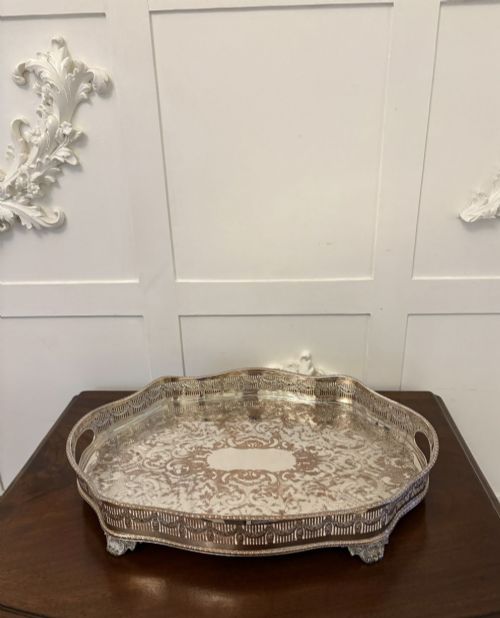
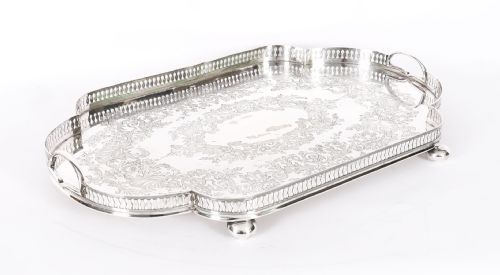
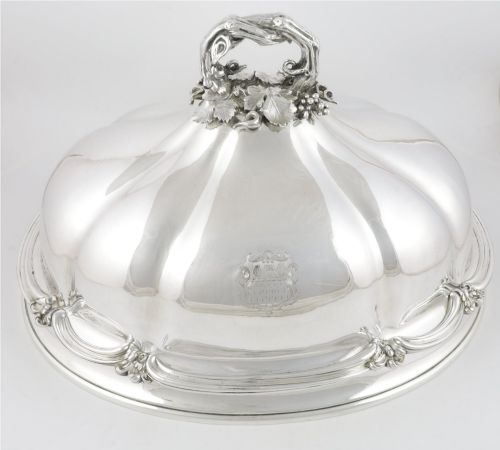
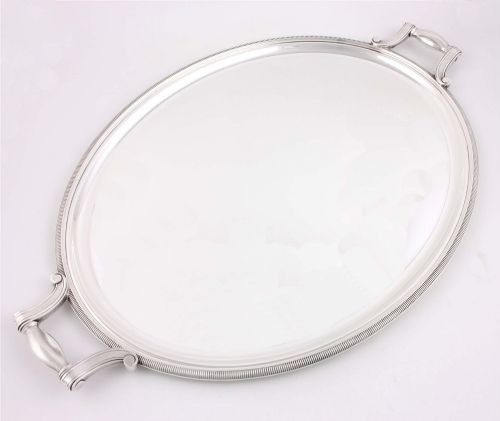
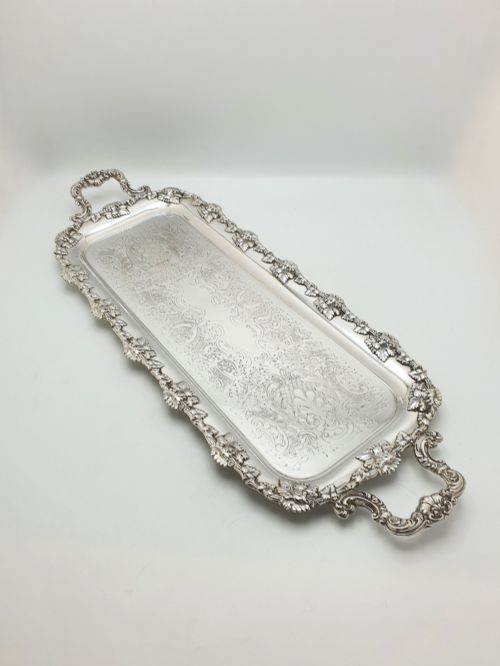
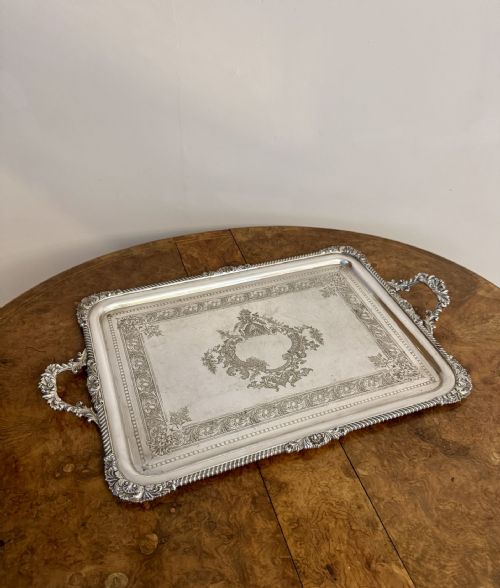
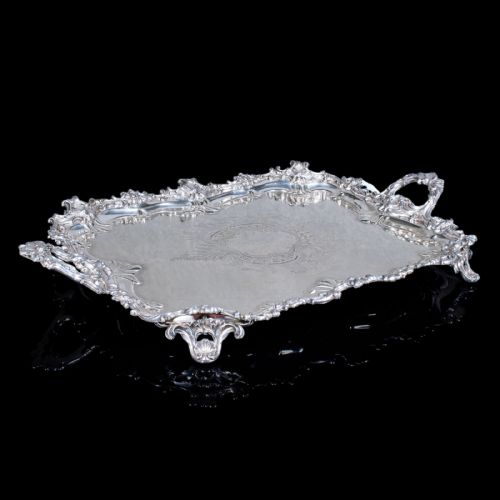
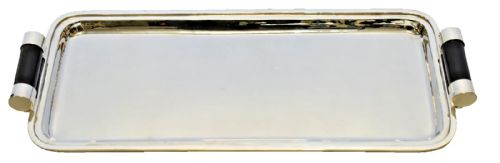
Large silver platter handles appear on substantial serving trays, tea trays, gallery trays, and meat domes found across this page. The forms span Georgian, Victorian, and Edwardian eras, reflecting heavy hospitality use.
Makers range from notable English firms to continental workshops, producing pieces with engraved borders, grapevine motifs, or openwork galleries. These robust fittings help manage heavy service pieces with ease.
Materials and Construction
Makers constructed these serving pieces using silver plate, Old Sheffield plate, and electroplated nickel silver over base metal or copper foundations, alongside occasional sterling silver. Handles were cast or forged separately and then securely attached to the main body to bear substantial weight.
Decoration relied on hand engraving, applied cast borders with grapevine or floral motifs, and pierced openwork galleries. Oak components also appear in specific tray bases to provide additional structural rigidity.
Listings span multiple eras including Georgian, Victorian, and Edwardian periods, utilising silver plate, copper, wood, and sterling silver.
Qualities of Distinction
Quality rests upon the thickness of the silver layer over the base metal and the crispness of hand-engraved details on the tray surface. Substantial weight in the metal body and sturdy handle attachment indicate superior manufacturing standards.
Maker marks from recognised workshops signify higher craftsmanship and better material selection compared to unmarked commercial wares. Well-preserved plating without base metal exposure distinguishes well-maintained pieces.
James Deakin·Roberts Cadman·Christofle·Harrison Bros·Mappin & Webb·Elkington & Co·Hukin & Heath·Atkin Brothers
The Large Silver Platter Handles Glossary
- Old Sheffield Plate
- A fused technique where a sheet of silver is melted onto a copper core before rolling. This method creates a durable material visible on older serving items.
- EPNS
- Electroplated Nickel Silver, a common base material used underneath a thin silver coating. It provides a sturdy structure for large serving items.
- Gallery Tray
- A serving tray featuring an upright pierced metal gallery or rim around the edge. This barrier prevents decanters and glasses from sliding off during service.
- Meat Dome
- A large domed cover used to keep roasts warm on the table. These heavy items frequently incorporate strong lifting handles.
- Salver
- A flat serving tray typically supported on small feet. They are designed for presenting drinks and calling cards.
Large Silver Platter Handles: Frequently Asked Questions
What are large silver platter handles made from?
These components are typically formed from silver plate, electroplated nickel silver, or solid sterling silver matching the body of the tray. The underlying metal beneath the plating is often copper or a copper alloy.
Heavier items rely on robust metal formulations to support the weight of loaded tea services and meat domes without bending.
How do I clean a silver plated tray safely?
Use a soft microfiber cloth and a mild silver cream formulated specifically for plated items. Avoid harsh scrubbing brushes that can wear through the thin silver layer to the base metal underneath.
Rinse the piece gently with warm water and dry it immediately with a soft cloth to prevent water spotting on the engraved surfaces.
Were these handles purely decorative or functional?
The handles served a vital practical purpose for carrying heavy loaded trays, large cocktail services, and substantial meat domes between rooms. Their robust construction was engineered to bear significant weight safely.
Makers often shaped them with ergonomic curves and decorative motifs to blend utility with period aesthetic standards.
How do I tell an Edwardian tray from a Victorian one?
Victorian serving trays often display heavier, ornate decoration with dense floral or grapevine borders and deep hand engraving. Edwardian pieces frequently lean towards lighter neoclassical revival styles or simpler gallery forms.
Maker marks and registration numbers stamped on the base can also help confirm the specific period of manufacture.