




French Solid Silver
When buying french solid silver, collectors acquire precious metal objects shaped by centuries of European craftsmanship and design.
French Solid Silver
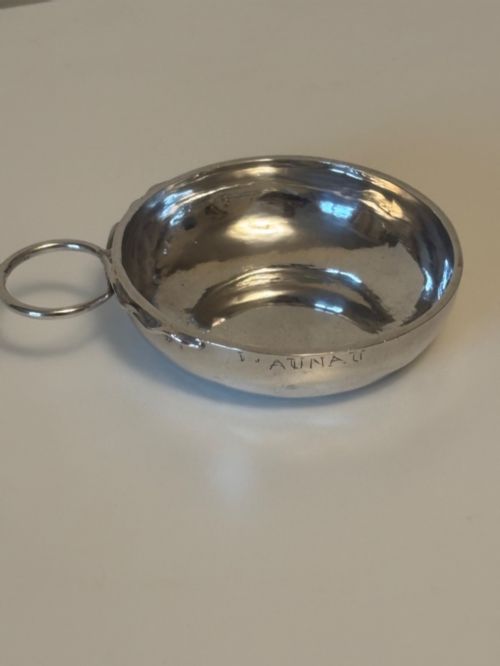
When exploring french solid silver, buyers encounter an array of domestic items, personal accessories, and dining wares originating from various periods. The selection spans utilitarian serving implements like fish slices and coffee pots alongside small decorative objects including pill boxes and wine tasters.
The pieces on this page originate predominantly from the nineteenth century, though earlier eighteenth-century examples and later twentieth-century items appear. Forms range from classical Empire and Louis XVI styles to organic Art Nouveau and decorative Rococo motifs.
Materials and construction methods
Makers utilised high-grade silver, frequently operating at the point nine five zero standard alongside standard sterling silver. Gilding, known as vermeil, appears regularly on boxes, chalcedony brooches, and table pieces, adding a layer of gold over the silver base.
Decoration relied on skilled hand techniques such as engine-turned guilloche engraving, niello inlay work, piercing, and detailed casting. Accents of enamel, ebony, glass, and paste stones supplement the silver structure in specific decorative items.
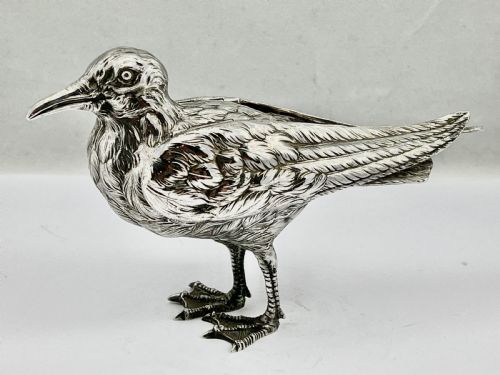
Among the functional tableware and elegant boxes, a silver bulldog pill box and a wading bird model wait to guard small treasures.
Distinctions in quality
Quality rests upon the crispness of hand-engraving, the depth of relief work on cast elements, and the preservation of original gilding. Items featuring complex engine-turned guilloche patterns or detailed figural motifs demonstrate superior artisan execution compared to plain or heavily worn counterparts.
The presence of clear maker marks and provincial or Parisian assay stamps anchors the authenticity and historical record of the object. Heavier gauge metal and structurally intact mountings separate standard utilitarian wares from the finest workshop productions.
Pierre Fournerot·W Comyns·Puiforcat·Alexandre Vaguer·Philippe Berthier·Louis Coignet·Emile Puiforcat·Henri Soufflot
The French Solid Silver Glossary
- Vermeil
- Silver gilt, comprising a thin layer of gold applied over solid silver. This finish provides the visual warmth of gold while maintaining a silver core.
- Niello
- A black metallic alloy used as an inlay on engraved silver. It creates sharp contrast against the bright metal background.
- Guilloche
- A decorative mechanical technique that etches precise, intricate repeating patterns into metal surfaces. It frequently appears beneath translucent enamel on boxes and etuis.
- Wine Taster
- A small, shallow silver bowl traditionally used for sampling wine. These pieces often feature dimpled sides to reflect light and maker marks near the rim.
- Pounce Pot
- A small container with a perforated lid used to sprinkle resin powder onto paper. This prepared rough paper surfaces for ink absorption before blotting paper became common.
French Solid Silver: Frequently Asked Questions
What is french solid silver?
French solid silver refers to objects manufactured in France using silver metal that meets legal fineness standards, commonly point nine five zero. These items range from functional tableware to intricate personal snuff boxes.
Makers stamped these pieces with official assay marks and maker marks, which help identify their origin and period of creation.
How do I clean french solid silver?
Cleaning requires a soft cloth and specialised silver polish applied gently to avoid removing fine engraving or vermeil gilding. Avoid harsh chemical dips that strip away the aged character of the metal.
Store pieces in dry environments away from direct sunlight to minimise tarnishing on exposed silver surfaces.
What are wine tasters used for?
Wine tasters served as portable vessels for merchants and connoisseurs to sample and evaluate wine directly from barrels. The concave indentations inside the bowl helped reflect candle light through the liquid.
Today, collectors appreciate these small bowls as tactile examples of historic silver smithing and domestic dining traditions.
How can I tell the age of a piece?
Age is determined by studying the stylistic design, construction methods, and official assay hallmarks stamped onto the metal. Different French standard marks and maker punches correspond to specific historical decades and reigns.
Comparing the decorative motifs, such as Empire wreaths or Art Nouveau curves, provides further context regarding when the object was produced.