




Sheraton Style Tray
These sheraton style tray examples offer neoclassical elegance for your home, bringing refined woodwork and classic marquetry into daily use.
Sheraton Style Tray
When you search for a sheraton style tray, you encounter serving trays, tray tables, and occasional furniture spanning the Georgian period to the Edwardian era. These pieces draw on the lightness and classical symmetry associated with late eighteenth-century design.
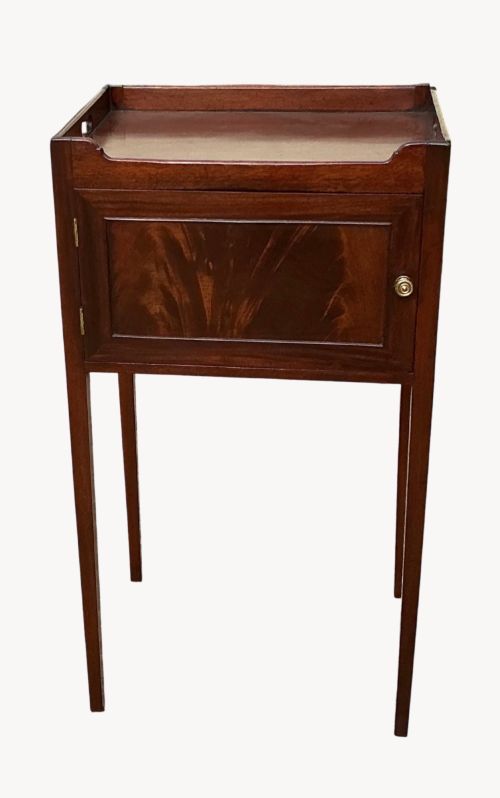
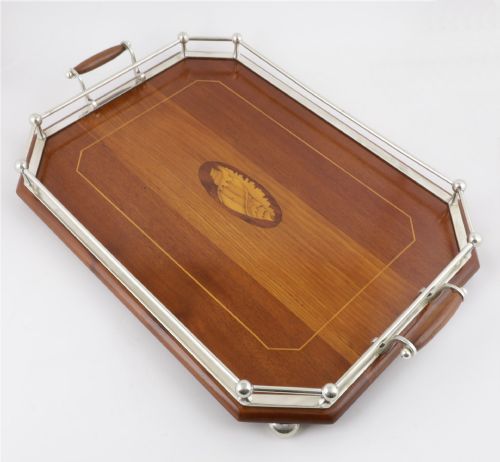
The most common forms on this page include mahogany and satinwood serving trays, sometimes mounted on folding or fixed stands to serve as side tables.
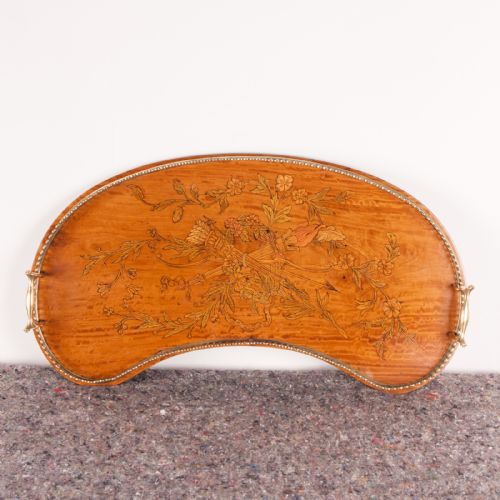
Makers working in the nineteenth and early twentieth centuries revived these neoclassical motifs, producing oval and kidney-shaped trays with delicate gallery edges.
Construction and materials
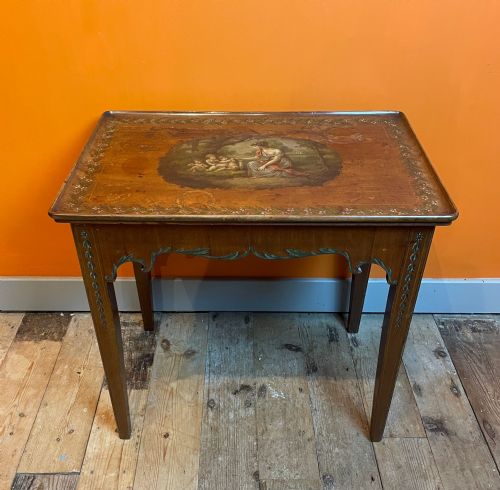
Makers built these pieces using solid mahogany and satinwood, frequently applying detailed wood veneers and contrasting boxwood stringing to create geometric or floral patterns. Hand-painted detailing and marquetry inlay provide the characteristic decorative surface.
The listings span the Georgian period, the nineteenth century, and the Edwardian era, utilising mahogany, satinwood, and walnut.
Judging quality in sheraton style tray items
Quality rests in the precision of the marquetry inlay and the crispness of the painted neoclassical scenes, where finer examples display exact alignment of contrasting timbers and delicate handwork.
The choice of primary wood and veneer selection determines the visual depth of the surface, with well-chosen satinwood and figured mahogany creating a richer contrast than plainer timber boards.
The Sheraton Style Tray Glossary
- Marquetry
- The art of applying decorative pieces of veneer to a structure to form intricate designs and pictorial scenes. This technique defines the patterned surfaces seen on many Edwardian and Georgian examples.
- Satinwood
- A durable timber with a natural golden sheen and satin-like texture. It serves as a principal contrasting wood for inlay and banding.
- Gallery
- A raised rim or border around the edge of a tray or table top, often pierced or fitted with brass handles. It prevents items from sliding off the surface.
- Neo-Classical
- A style inspired by the classical art and architecture of ancient Greece and Rome. This aesthetic influences the symmetrical layouts and decorative motifs found across these items.
Sheraton Style Tray: Frequently Asked Questions
How do I use a sheraton style tray today?
These pieces function well as traditional serving items for drinks or afternoon tea when fitted with proper handles. You can also place them on stands to serve as permanent side tables or coffee tables in a living room.
Their decorative surfaces make them suitable for display on sideboards or chests, where the inlaid marquetry and painted scenes remain visible.
Are these trays water resistant?
Most antique wooden trays feature traditional polish finishes that tolerate light, everyday use but require care around standing liquids. Using coasters and wiping up spills promptly protects the delicate satinwood veneer and hand-painted details.
Avoid placing wet glassware directly onto antique polished surfaces for extended periods to prevent water marking.
How do I tell an 18th century piece from an Edwardian revival?
Edwardian revival pieces often display lighter satinwood grounds and machine-sawn veneers compared to genuine eighteenth-century work. Examining the timber construction beneath the tray reveals the age of the wood and the joinery methods used by the maker.
Historical context and materials help distinguish original Georgian production from late nineteenth and early twentieth-century interpretations.
What is the difference between a tray and a tray table?
A standard tray is a portable serving piece with integrated or applied handles designed to be lifted and carried. A tray table combines that same removable surface with a dedicated folding or fixed stand to create a piece of occasional furniture.
Both forms share the same decorative marquetry and inlay techniques characteristic of this design tradition.