

Brown Wooden Tea Tray
A brown wooden tea tray brings tactile warmth to a room, offering a solid surface for afternoon hospitality.
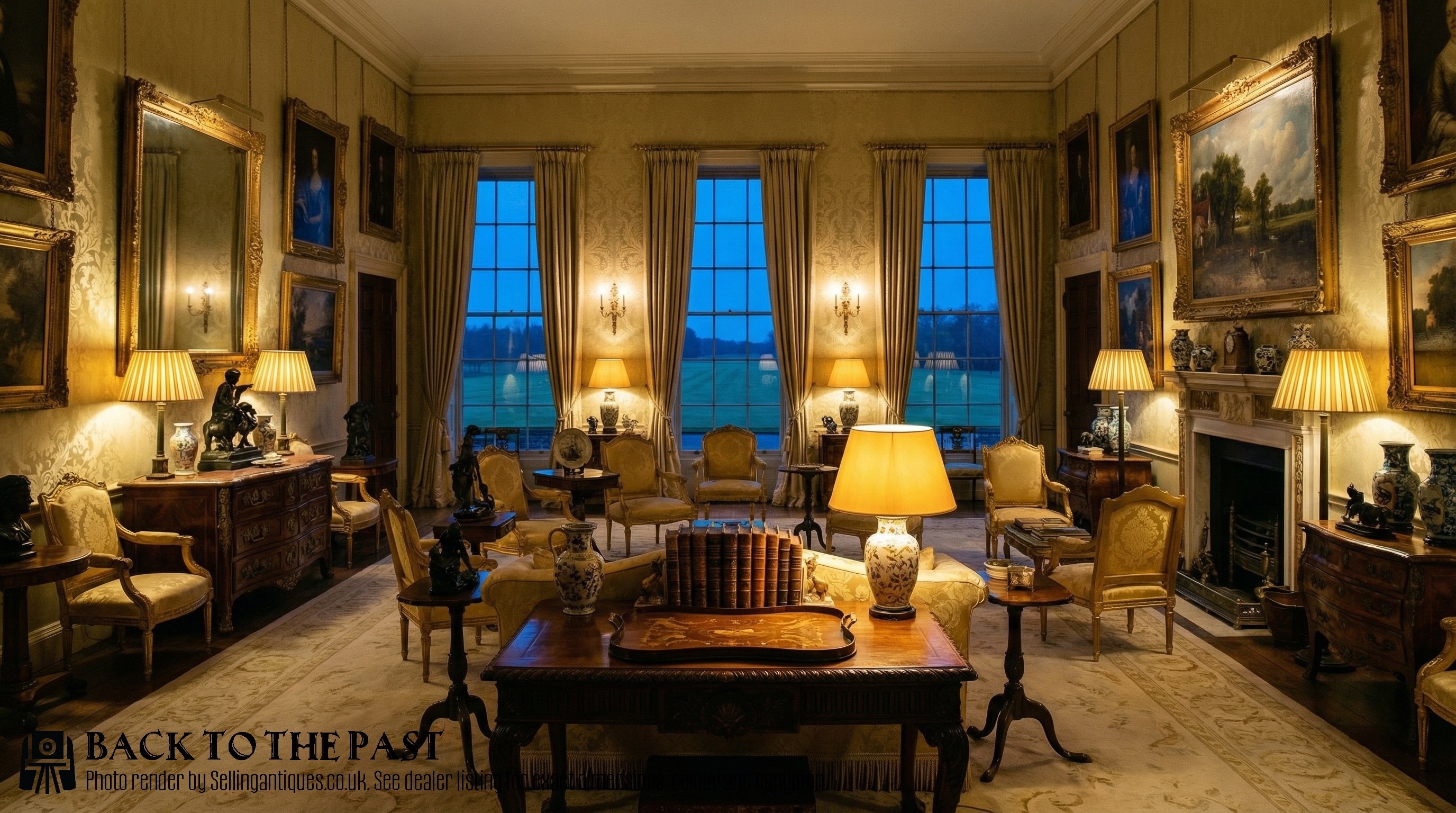
Brown Wooden Tea Tray
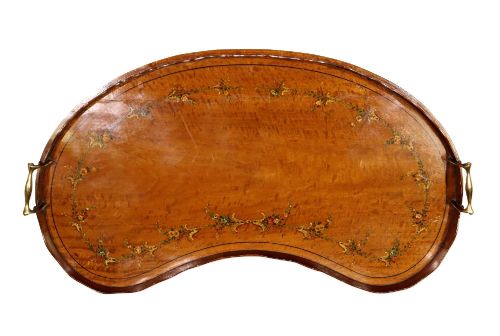
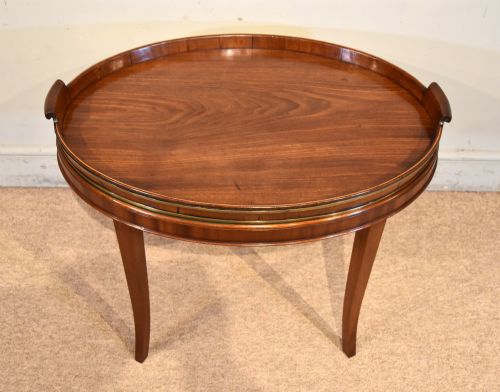
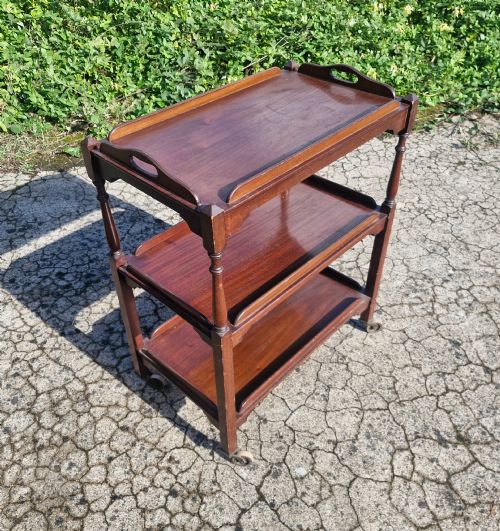
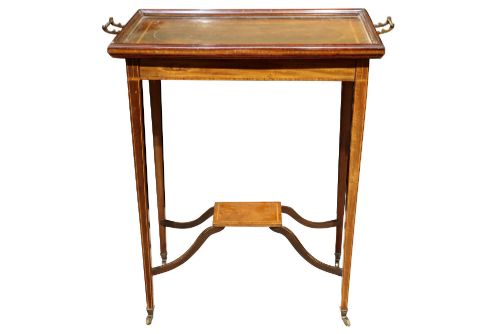
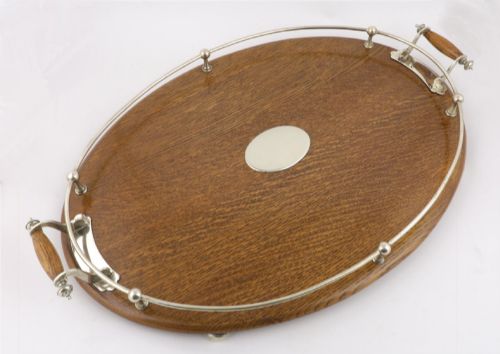
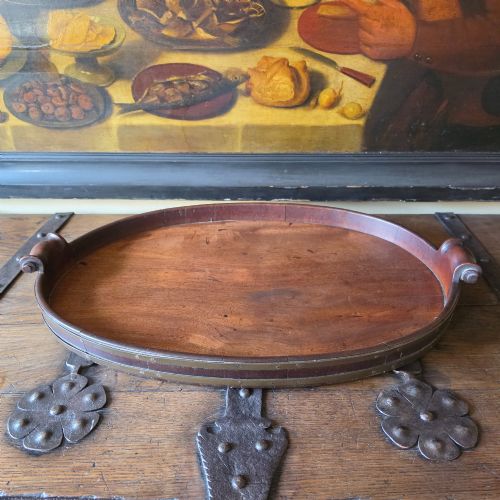
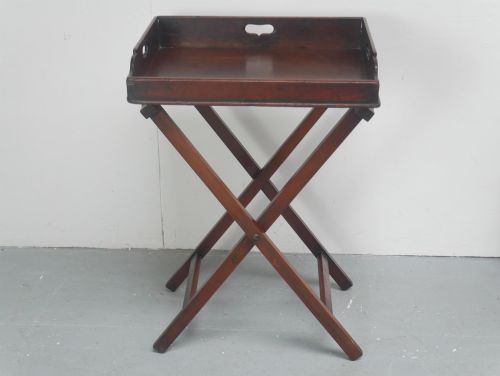
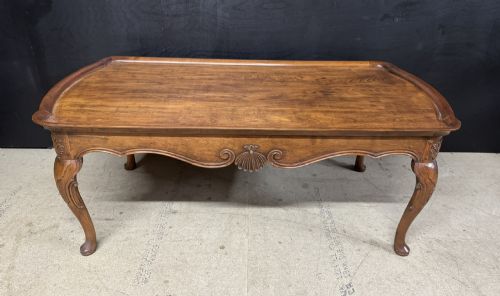
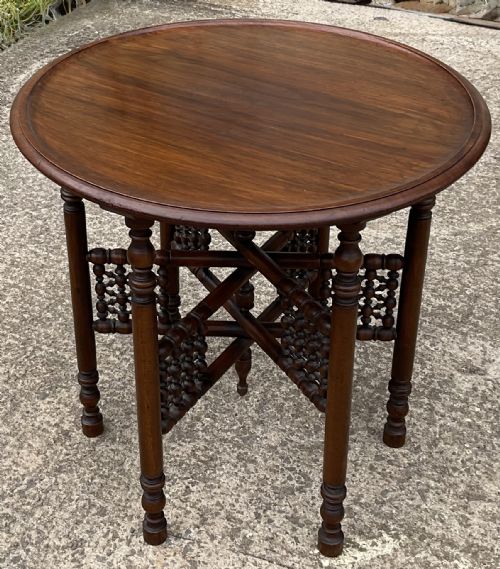
When you search for a brown wooden tea tray, you encounter serving trays, butlers trays on stands, and occasional tables with removable trays. The pieces span periods from the eighteenth century through the Victorian, Edwardian, and nineteen-twenties eras.
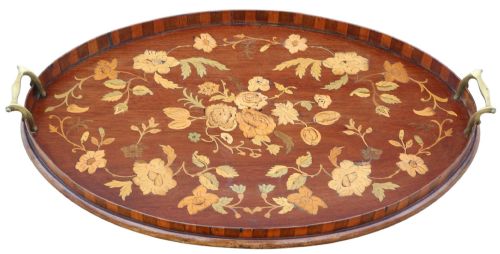
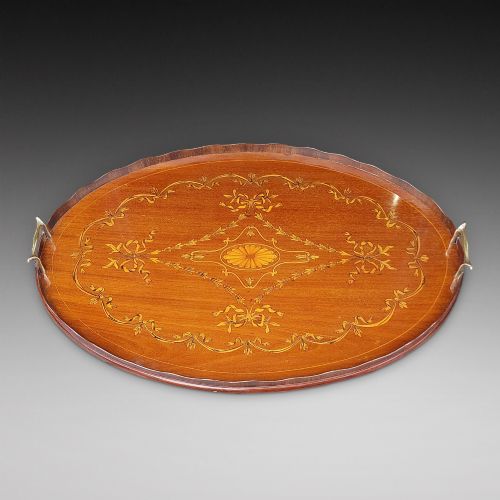
Mahogany forms the majority of these items, often shaped in ovals or kidney outlines with inlaid details. You also meet examples in walnut, oak, satinwood, and teak, reflecting styles from Georgian elegance to Anglo-Indian carving.
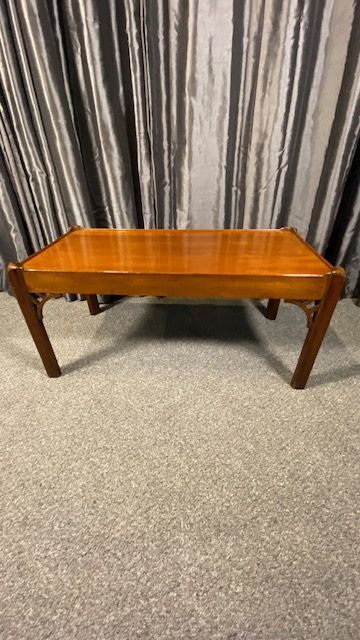
Serving trays appear alongside coffee tables, tea trolleys, and folding table combinations designed for afternoon service. The variety ranges from simple eighteenth century oval boards to elaborate Edwardian and Victorian inlaid serving pieces.
How they were made
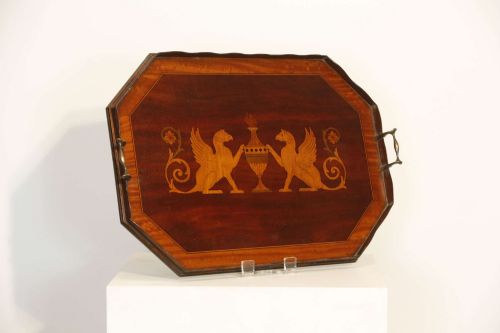
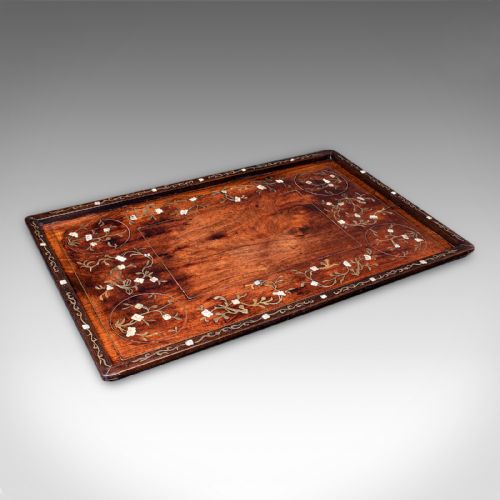
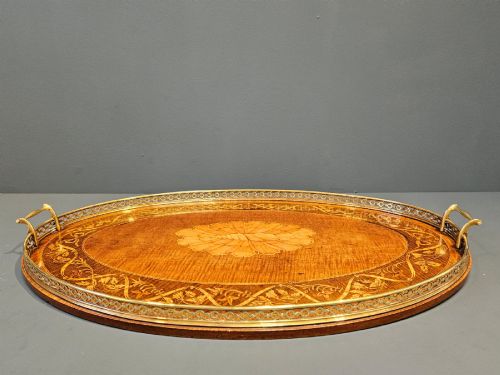
Cabinet makers utilised solid timbers alongside veneers, applying mahogany, walnut, and oak to construct the main bodies and lifting surfaces. Marquetry, oyster veneering, and contrasting string inlay decorate the flat panels of Victorian and Edwardian examples.
Carving and turning shape the edges, galleries, and supporting stands, sometimes incorporating brass handles or silver-plated mounts. Joinery methods connect raised rims to baseboards securely for carrying heavy tea services.
Brown Wooden Tea Tray Retail Price Guide 2026
Typical asking prices for brown wooden tea tray among the pieces listed under this phrase on Sellingantiques today, from the lower quarter to the upper quarter. They describe what is for sale here now, not the wider market.
Some trays hide drop sides and tea trolleys that turn an afternoon snack into a rolling procession.
What varies in quality
The crispness of the marquetry and the precision of the inlay determine the refinement of a mahogany or walnut tray. Sharp hand-carving on wooden galleries and neat dovetail joints indicate superior workshop standards.
The selection of timber grain, particularly in burr walnut or figured mahogany, separates standard production from finer decorative pieces.
The Brown Wooden Tea Tray Glossary
- Marquetry
- Decorative woodwork where pieces of veneer are fitted into a ground to form floral or geometric patterns. This technique appears frequently on Victorian and Edwardian trays.
- Galleried tray
- A serving tray featuring a raised wooden edge or rim around the perimeter. This edge prevents cups and teapots from sliding off during transport.
- Butlers tray
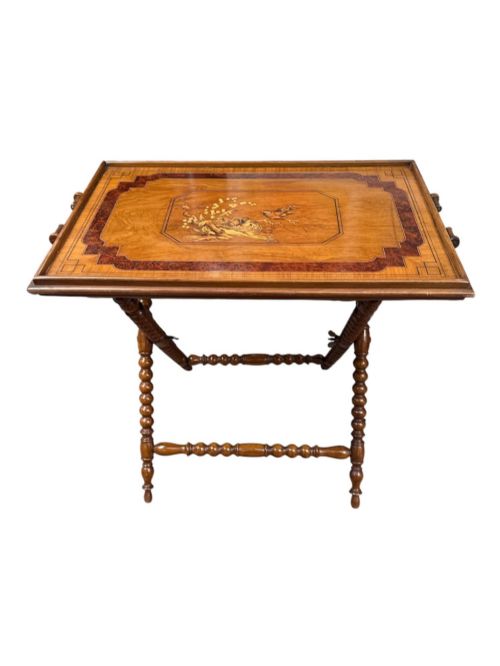
- A removable wooden tray designed to rest upon a folding wooden stand. These pieces served functional roles in period dining rooms.
- Oyster veneer
- Cross-sections of branches sliced to show circular wood rings, arranged to form decorative patterns. You see this on specific Edwardian serving trays.
- Kidney-shaped
- A curved, asymmetrical outline resembling a bean, popular in fine eighteenth century and Edwardian serving trays.
Brown Wooden Tea Tray: Frequently Asked Questions
How do I use a brown wooden tea tray today?
These trays function practically for carrying afternoon tea or drinks from the kitchen to the living room. Many people also place them on coffee tables or ottomans as permanent display surfaces.
Trays fitted onto folding stands double as side tables or lamp tables in smaller sitting rooms. Their sturdy wooden construction easily supports daily domestic use.
Are these trays heavy to carry?
Weight depends entirely on the timber used and whether the piece includes a folding stand. Solid mahogany and oak trays with brass handles offer a sturdy grip for carrying heavy tea services.
Smaller Edwardian and Georgian inlaid trays remain light and manageable for serving. Pieces combined with heavy table stands are generally meant to stay stationary.
How do I tell an 18th century tray from a later one?
Eighteenth century trays often display simpler Georgian proportions, using solid mahogany with understated galleried edges. The grain patterns and timber wear show genuine age accumulated through domestic service.
Later Victorian and Edwardian pieces frequently introduce elaborate marquetry, satinwood inlay, and shaped kidney outlines. Manufacturing techniques on nineteenth century items show more mechanical precision in the cutting of veneers.
What is Sorrento Ware?
Sorrento Ware describes marquetry items produced in the Italian town of Sorrento during the nineteenth century. These pieces feature intricate wood-mosaic pictures depicting figures, buildings, or natural scenes.
When applied to butler trays and table tops, this technique creates a distinct Mediterranean decorative style distinct from standard British cabinet making.