






Antique Chinoiserie Tray
An antique chinoiserie tray brings painted orientalist landscapes and gilded motifs into domestic spaces, functioning as both a portable server and a decorative table top.
Antique Chinoiserie Tray
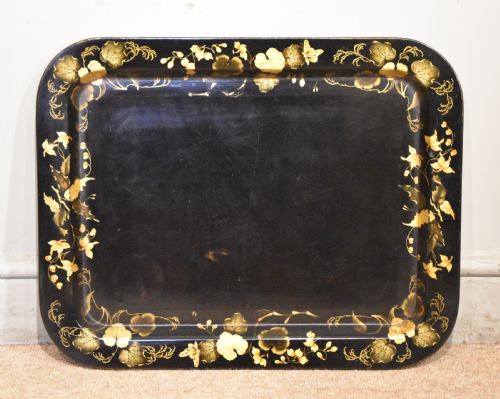
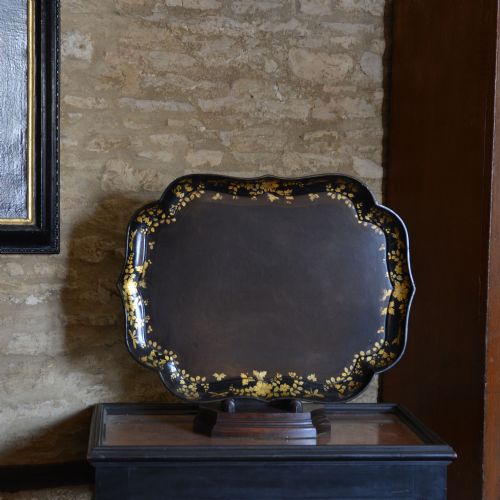
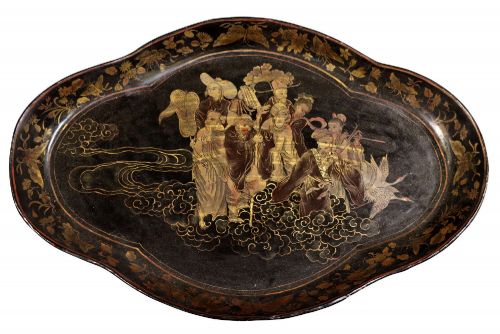
An antique chinoiserie tray combines utility with decorative hand-painted scenes inspired by East Asian art, frequently taking the form of large serving dishes or surfaces mounted onto folding stands. The examples on this page span the Georgian, Regency, and Victorian periods, alongside Edwardian interpretations.
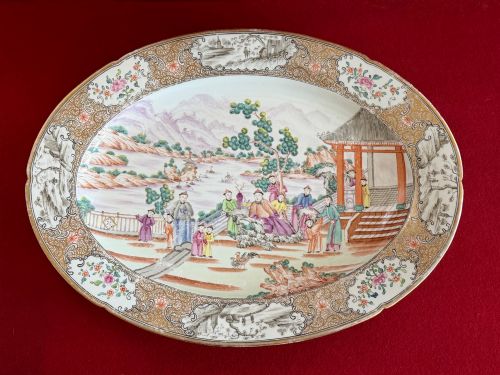
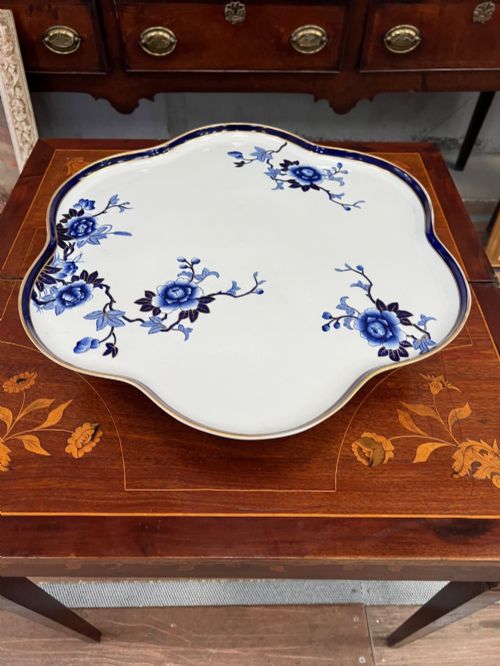
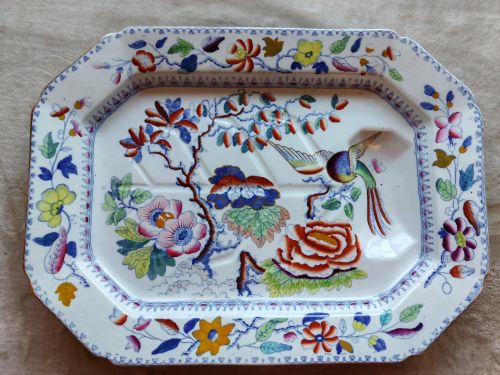
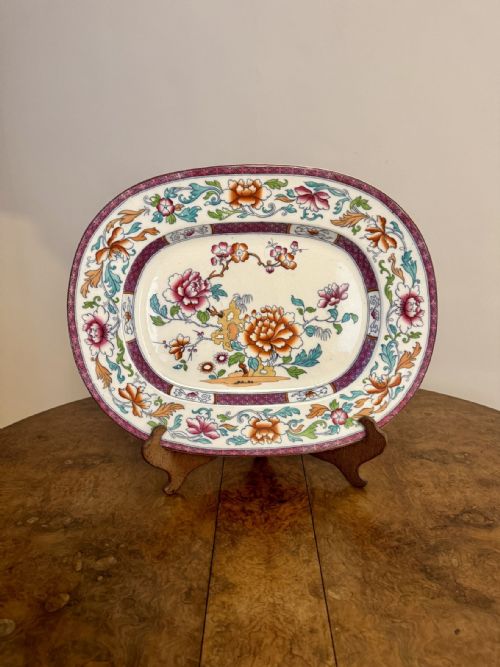
The most common formats encountered here include deep papier-mâché platters and ebonised serving trays, often elevated onto bamboo-turned or wooden occasional stands to function as coffee tables. Flat wooden and toleware variants also appear alongside ceramic pickle dishes and platters bearing similar stylistic motifs.
Origins stretch across English workshops from the eighteenth through to the early twentieth century, with occasional continental pieces included. Buyers encounter both standalone serving platters intended for dining use and complete tray tables designed for the drawing room.
Materials and construction methods
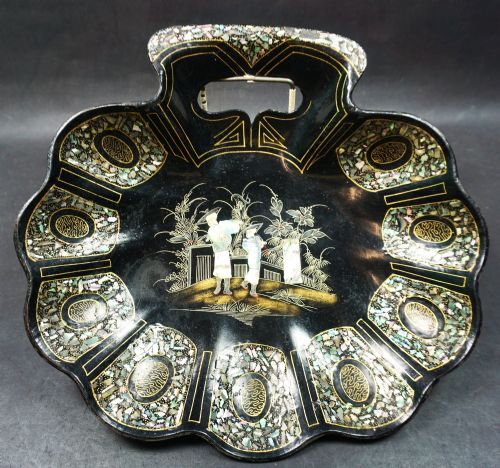
Papier-mâché serves as the primary structural material for many of the finest serving surfaces, formed from layered paper pulp and size compressed under heavy pressure before being baked and smoothed. This creates a remarkably robust, lightweight board that resists warping.
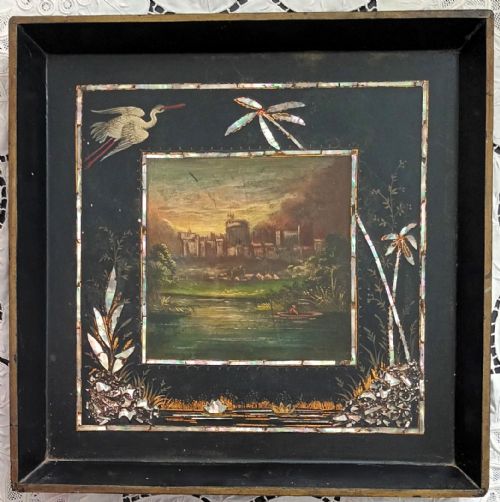
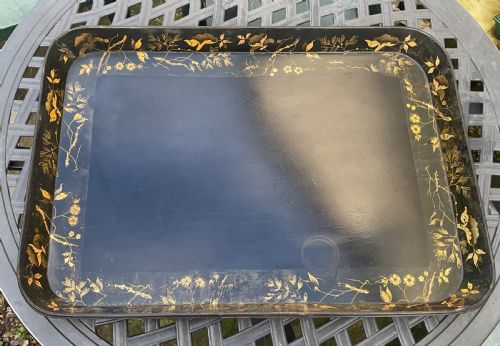
Surfaces are finished with dark lacquer or ebonisation, providing a glossy dark ground for intricate hand-painted designs executed in gold leaf, enamel, and metallic pigments. Gilded details and polychrome brushwork define the decorative schemes across wood, papier-mâché, and ceramic pieces.
Antique Chinoiserie Tray Retail Price Guide 2026
Typical asking prices for chinoiserie tray among the pieces listed under this phrase on Sellingantiques today, from the lower quarter to the upper quarter. They describe what is for sale here now, not the wider market.
The listings feature papier-mâché, wood, ceramic, and toleware across Georgian, Regency, and Victorian periods.
Factors of quality and execution
Quality rests heavily upon the crispness and complexity of the hand-painted decoration, where master work displays fine detailing in the figures, pavilions, and foliage rather than repetitive stencilling. The depth of the lacquer finish and the preservation of the original gilding dictate the overall visual impact.
Structural integrity of the base material matters greatly, particularly around the rim edges of papier-mâché trays where chipping can occur over time. Pieces retaining their matching original stands or retaining unblemished painted surfaces sit at the upper end of the scale.
The Antique Chinoiserie Tray Glossary
- Papier-mâché
- A composite material made from paper pulp, waste paper, or layers of paper bonded with glue, used to create durable lightweight trays.
- Ebonised
- Wood or papier-mâché treated with a black finish to imitate expensive ebony, commonly used as a dark background for gold decoration.
- Toleware
- Painted or lacquered metalware, typically tin or iron, shaped into domestic items such as trays and boxes.
- Chinoiserie
- European decorative art style reflecting Chinese artistic influences, characterised by fantastical landscapes, figures, and pavilions.
- Gilt
- Covered thinly with gold leaf or gold paint to impart a metallic sheen to the decorated surface.
Antique Chinoiserie Tray: Frequently Asked Questions
Can I use an antique chinoiserie tray for serving food?
While many historical examples functioned as butlers' trays for drinks or dishes, modern use usually requires care to protect the delicate lacquer and gilt surfaces from moisture and heat.
Displaying them on stands or mounting them as coffee tables safely preserves the painted decoration while keeping the piece functional within a room.
How do I clean an old lacquer tray?
Dusting gently with a soft, dry cloth is generally sufficient for maintaining the surface without risking abrasion to the aged varnish or gold leaf.
Harsh chemical cleaners, water, and modern polishes must be strictly avoided because they permanently damage fragile nineteenth-century finishes.
Were these trays originally made with stands?
Many papier-mâché and wooden trays were produced as standalone serving pieces intended for use on tables or carried by hand.
Stands were frequently added later during the Victorian era or in subsequent decades to convert the platters into convenient occasional and coffee tables.
How do I distinguish Regency pieces from Victorian ones?
Regency examples typically date from the early nineteenth century, displaying classical motifs and restrained gilt compositions on deep papier-mâché bodies.
Victorian and later pieces often feature denser ebonised finishes with more elaborate floral and architectural chinoiserie arrangements dating towards the late eighteen-hundreds.