


Papier Mache Tray Table
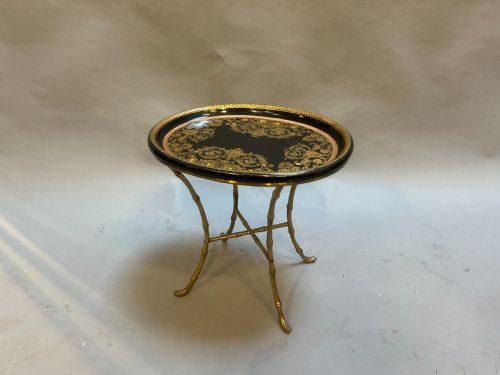
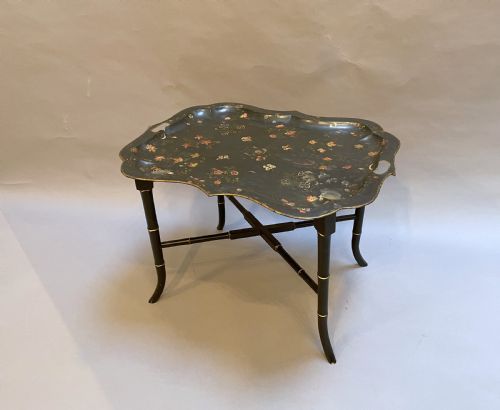
These papier mache tray tables combine deep lacquer and painted scenes with folding or fixed stands, bringing portable serving surfaces into the sitting room.
Papier Mache Tray Table
When you search for papier mache tray table, you enter a field dominated by nineteenth century Victorian and Regency pieces that rest upon wooden or metal stands. These tables usually pair a detachable or fixed serving tray with a folding base, turning a traditional dining accessory into a permanent piece of furniture for the room.
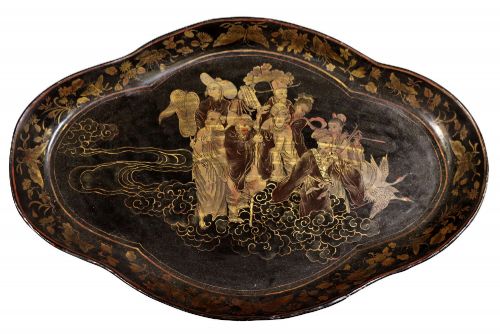
Most examples you will encounter on this page date from the nineteenth century, including Victorian and Regency periods, often finished with Chinoiserie motifs or floral details. Some trays sit on later stands created long after the original base was lost.
Beyond the standard serving tray forms, the selection encompasses occasional tables, side tables, and coffee tables adapted from earlier trays. Their origins span Georgian and Victorian workshops, utilising lacquer and gold leaf to create polished surfaces.
Materials and Technique
The primary foundation relies on papier mache, built up from layers of paper pulp or sheets pressed and treated to form a rigid, durable board. Artisans then applied multiple coats of dark lacquer to seal the surface before adding intricate hand painted decoration.
Gilt, gold leaf, and occasionally mother of pearl inlay highlight the decorative schemes, particularly across Chinoiserie and floral designs. These elements are set against the dark lacquer background, often complemented by brass fittings or mounted on wooden and iron stands.
Several trays feature mother of pearl inlay that catches the candlelight just as it did in Victorian drawing rooms.
Judging Quality
The distinction between standard examples and the finest work lies in the depth of the lacquer and the precision of the hand painted details. Superior pieces display crisp brushwork and original gilding that has survived generations of use without heavy restoration.
Another factor is the integration of the tray with its stand, where period correct or original bases command greater regard than later replacements. The inclusion of signed maker details or specialised inlay work further elevates the standing of an individual piece.
Jennens & Bettridge·Henry Clay
The Papier Mache Tray Table Glossary
- Papier Mache
- A composite material made from paper pulp or reinforced paper sheets pressed and varnished into a sturdy form. It provides a lightweight yet durable base for painted and lacquered furniture.
- Japanned
- A European imitation of Japanese and East Asian lacquerwork, created using layered varnishes and heat curing. This finish gives trays their characteristic dark, glossy surface.
- Toleware
- Metalware, usually iron or tin, painted and lacquered in imitation of imported lacquer goods. These items share visual traits with papier mache pieces of the period.
Papier Mache Tray Table: Frequently Asked Questions
How are these tables used today?
These tables function well as decorative side tables or coffee tables in living spaces, holding books, lamps, or drinks.
Their portable origins mean the top can often be lifted off the stand, though most owners keep them assembled as permanent furniture.
Are the trays removable from their stands?
Many historical trays were designed to lift off their folding or rigid stands, serving a dual purpose for hosting.
On this page, some examples feature fixed tops while others retain the traditional removable tray format.
How do I date a papier mache table?
Dating relies on stylistic clues like Regency or Victorian motifs, alongside the construction methods of the tray and stand.
Signatures from prominent makers or specific patent marks also help pinpoint the exact era of production.
What is the difference between lacquer and toleware?
Lacquer is applied to a papier mache or wooden core, whereas toleware uses a metal base such as iron or tin.
Both finishes achieve a dark, glossy surface, but the underlying material dictates the weight and rigidity of the piece.