
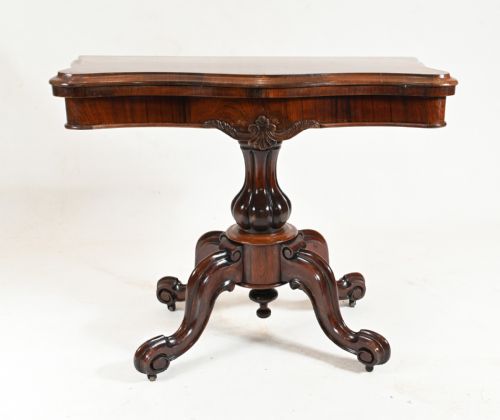


Mid Victorian Tea Table
These mid victorian tea table pieces bring warmth and refined utility to a room, offering adaptable surfaces built by skilled nineteenth-century cabinet makers.
Mid Victorian Tea Table
A mid victorian tea table serves as a versatile piece of furniture designed for hospitality and display, appearing frequently in forms such as card tables, games tables, and tilt-top tables. Buyers searching for a mid victorian tea table encounter examples originating predominantly from the nineteenth century, spanning decades from the eighteen-fifties through the eighteen-seventies.
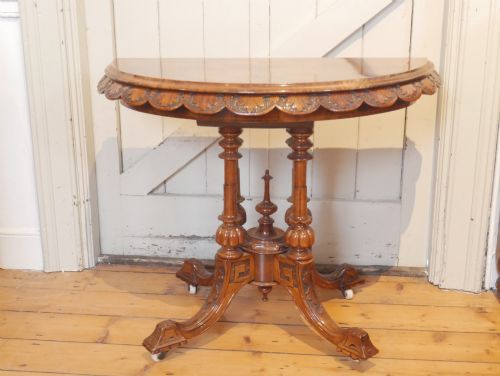
These tables often feature folding or turn-over tops that allow them to transform from compact console surfaces into generous spaces for evening gatherings. The construction reflects the domestic habits of the period, combining decorative presence with practical daily utility in entertaining guests.
How they were made
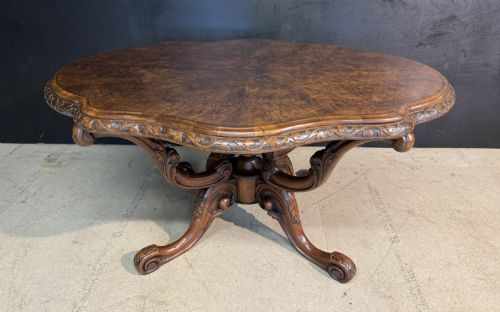
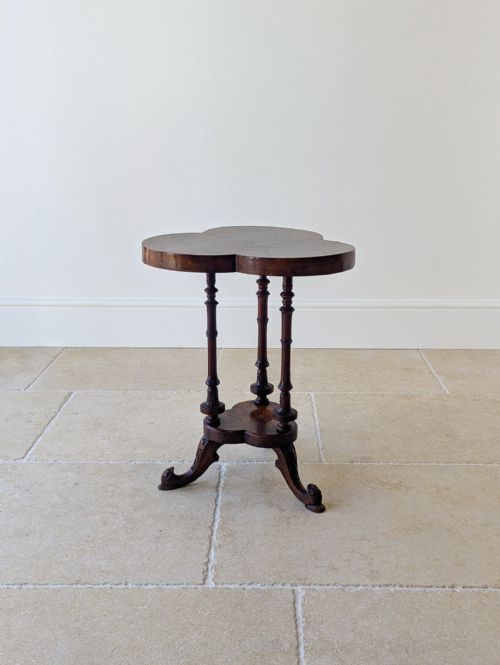
Cabinet makers constructed these tables using dense hardwoods including walnut, burr walnut, rosewood, mahogany, and kingwood, often enhanced by decorative veneers that highlighted the natural grain. Metal components such as brass fittings provided structural support and operational stability for folding leaves and pedestals.
Surface treatments ranged from polished timber finishes to japanned wood and painted oak, depending on the chosen regional style. Workshops also incorporated carved details and scalloped edges to articulate the Victorian Rococo Revival and Anglo-Indian aesthetics seen across the pieces.
Butterfly-shaped card tables give homeowners a lovely excuse to flap their furniture about.
What varies in quality
The selection of timber grain and veneer figure dictates much of the visual merit, with highly figured burr walnut commanding particular attention for its rich pattern. Precision in the joinery of folding mechanisms and turn-over tops ensures the table functions smoothly without sagging or misalignment.
Carving depth and the crispness of moulded details separate standard production from superior workshop output. The harmony of proportions between the top, pedestal, and base determines the overall elegance of each piece.
The Mid Victorian Tea Table Glossary
- Burr walnut
- A timber harvested from the wart-like growths on walnut trees, yielding intricate, swirling grain patterns highly prized for cabinet veneers.
- Tilt-top table
- A table designed with a hinged mechanism allowing the top to pivot into a vertical position when not in use.
- Turn over card table
- A dual-purpose table featuring a hinged leaf that folds out to double the surface area, often lined with baize for playing cards.
- Japanned wood
- European furniture finished with a glossy, dark lacquer technique mimicking traditional East Asian decorative lacquerware.
- Centre table
- A freestanding table finished on all sides intended to sit in the middle of a room rather than against a wall.
Mid Victorian Tea Table: Frequently Asked Questions
How do I use a tea table today?
These tables adapt easily to modern rooms as lamp tables, display surfaces, or occasional desks. Their folding leaves allow them to sit flush against a wall until extra surface area is needed.
In living spaces or hallways, they provide character and practical storage for small decorative objects without dominating the floor plan.
Were these tables only used for tea?
While tea service provided the primary name, many variants served multiple domestic functions including writing, reading, and playing card games.
Tables equipped with green baize or inlaid boards accommodated evening entertainment alongside their role in formal hospitality.
How do I identify the wood?
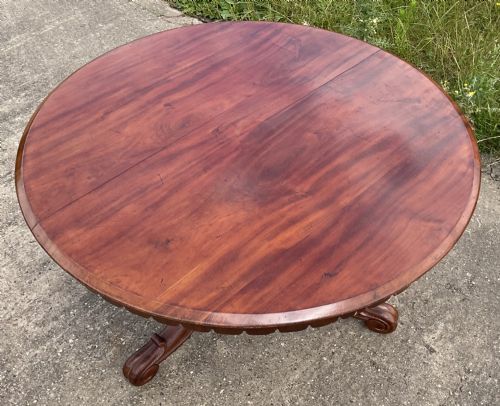
Examine the grain patterns and colour variations across the top and pedestal. Walnut displays deep brown tones with intricate figuring, while mahogany tends towards reddish-brown hues.
Burr walnut is instantly recognisable by its dense, swirling cluster patterns, whereas rosewood exhibits dark streaks against a warm reddish background.
What is a tilt-top mechanism?
A pivot hinge beneath the tabletop allows the surface to rotate from horizontal to vertical. This clever engineering saved valuable floor space in nineteenth-century homes when the table was not in active use.
It also made moving and storing the furniture much easier for servants and homeowners alike.