


Gilded Papier Mache Table
These gilded papier mache table pieces combine lacquer and gold leaf, offering practical surfaces that suit collectors of Regency and Victorian items.
Gilded Papier Mache Table
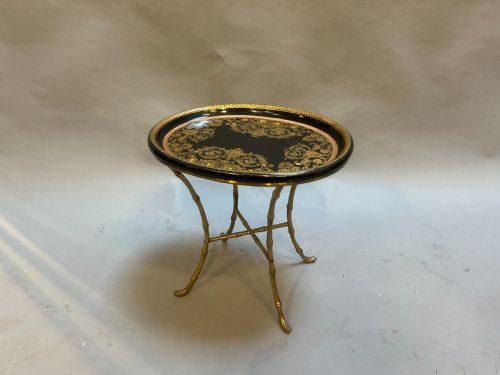
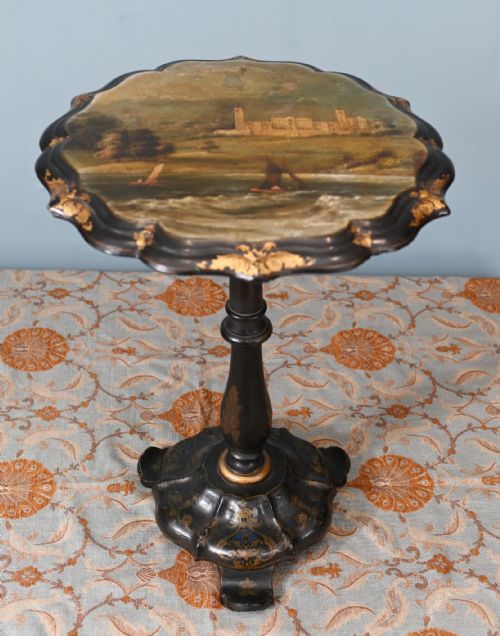
A gilded papier mache table brings together structural support and decorative surfaces created from compressed paper pulp. Buyers looking at this phrase most frequently encounter tray tables, side tables, and occasional tables dating from the Regency and Victorian periods.
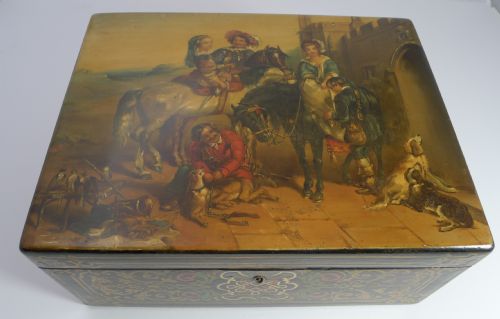
The objects stem from traditions spanning the eighteenth century through to the late nineteenth century. Alongside tables, related forms like wine coasters and small boxes appear within the material record.
Victorian examples often display Chinoiserie decoration, while Regency items lean towards refined classical lines. Each piece relies on a rigid paper substrate finished with lacquer and paint.
Materials and construction
Makers formed the core structure by pressing layers of paper pulp together with glue, creating a dense material that took strong lacquer finishes. Wood formed the underlying stands and supports for larger tables.
Surface decoration involved layers of oil paint and hand-applied gold leaf or gilt leaf. Artisans sealed these designs under clear varnish to protect the detailed imagery.
Even tiny snuff boxes and jewellery cases received the full golden Chinoiserie treatment alongside the large tables.
Assessing the work
Superior items separate themselves through the crispness and depth of the hand-painted details. Skilled workshops achieved intricate Chinoiserie motifs with precise brushwork rather than simple stencilling.
The application of gold leaf and the smoothness of the underlying lacquer finish dictate visual success. Well-preserved surfaces retain their original lustre without heavy modern intervention.
Jennens & Bettridge·Henry Clay
The Gilded Papier Mache Table Glossary
- Papier-mâché
- A composite material made from paper pulp or layers of paper mixed with glue, moulded and dried to form a rigid shape. It provides a lightweight yet durable base for decorative finishes.
- Gilt leaf
- Thin sheets of hammered metal, usually gold or a gold alloy, applied to surfaces for decoration. It creates a reflective, metallic highlight against dark lacquer grounds.
- Ebonised wood
- Timber treated to resemble ebony, providing a dark, uniform support structure for lighter or gilded table tops. This technique was common in nineteenth-century furniture design.
Gilded Papier Mache Table: Frequently Asked Questions
What is a papier mache table?
A papier mache table uses a pressed paper core finished with lacquer, paint, and gold leaf. These pieces date from periods like the Regency and Victorian eras.
Craftsmen mounted decorative trays onto wooden stands or built sturdy occasional tables suited for drawing rooms.
How do I date a table?
Dating relies on stylistic clues like Chinoiserie motifs, construction methods, and period-specific painting techniques. Regency items often show refined classical influence.
Victorian pieces frequently display more exuberant ornamentation and darker ebonised wood supports.
Are these tables sturdy?
The compressed paper core provides surprising rigidity, though these tables were designed for light domestic use. They serve well as side tables for holding small decorative items.
Care should be taken to keep them away from excessive moisture and direct heat sources.
Who made these pieces?
Renowned makers like Jennens and Bettridge, along with inventors such as Henry Clay, produced high-quality papier-mâché goods. Their workshops set the standard for lacquer and gilt decoration.
Marked pieces often bear signatures or stamps associated with these prominent nineteenth-century firms.