





Hand Painted Tea Tray
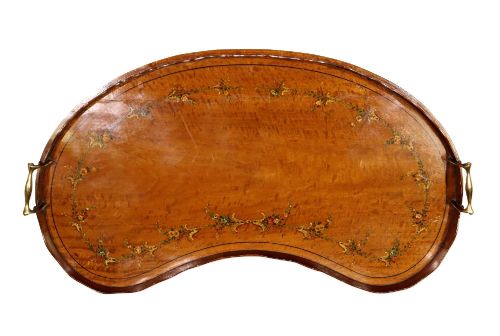
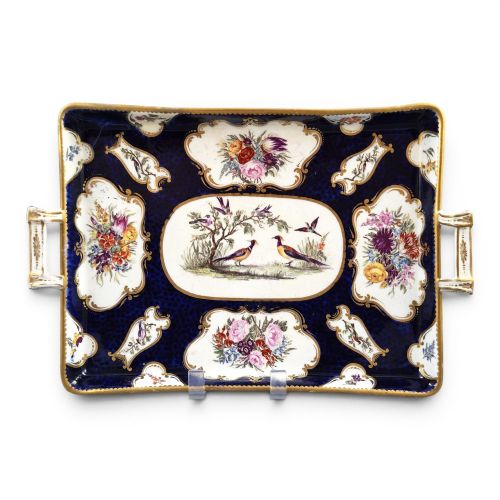
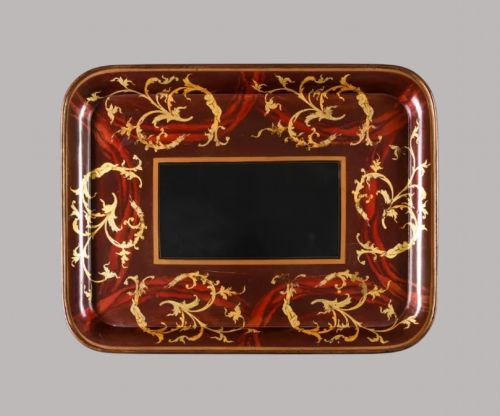
A hand painted tea tray brings surface art into daily service, combining utility with pictorial decoration from the Georgian era through to the Edwardian period.
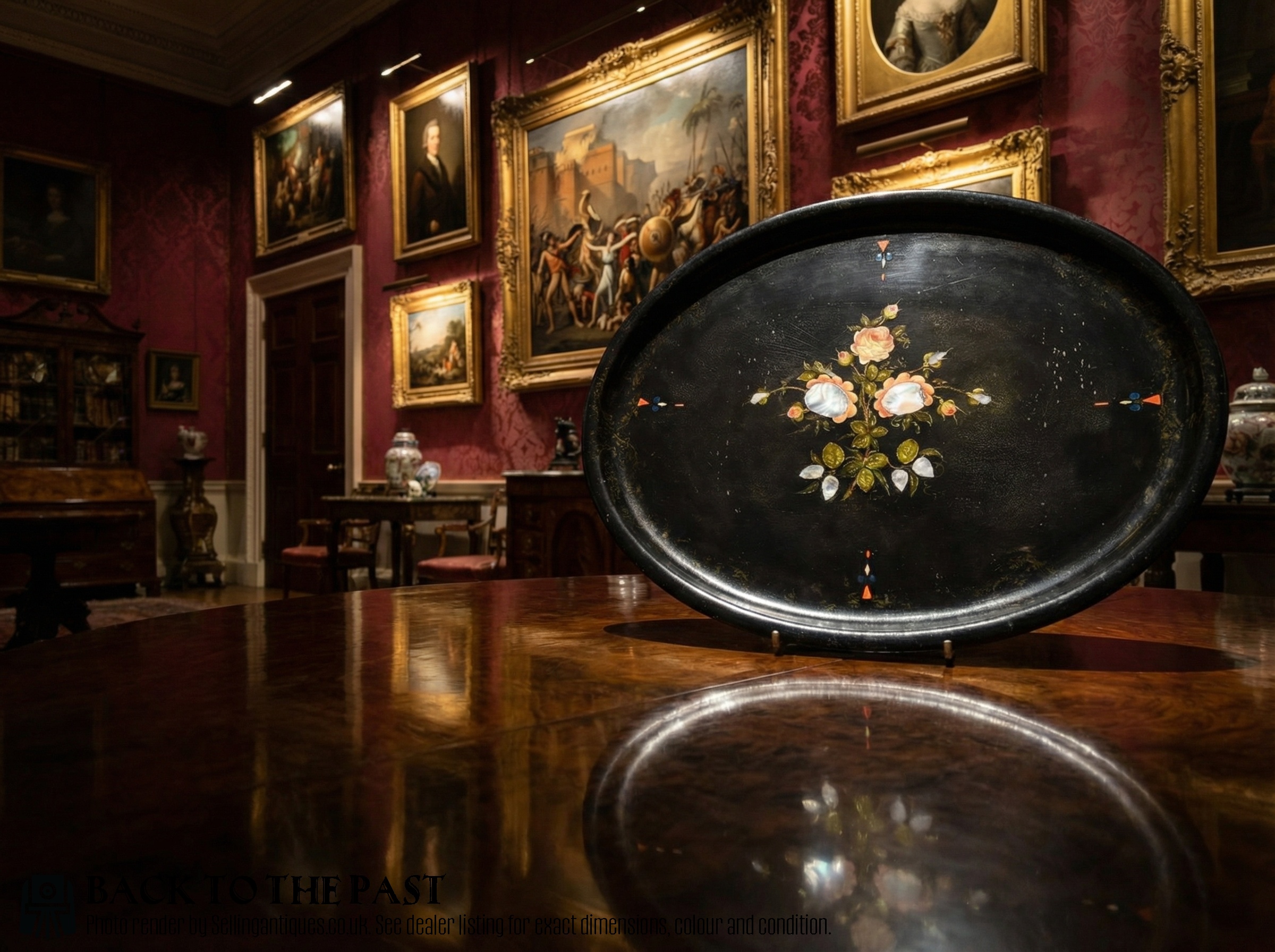
Hand Painted Tea Tray
A hand painted tea tray is a functional serving piece that doubles as a canvas for detailed artistic expression. When exploring this selection, buyers encounter serving pieces designed for social rituals or adapted as occasional coffee tables.
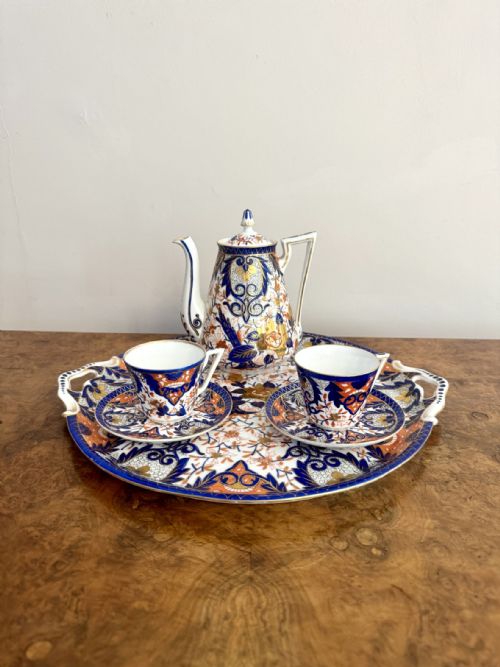
The most common examples on this page date from the nineteenth century, encompassing Georgian, Regency, and Victorian periods. These range from heavy papier-mâché and japanned metal toleware to wooden and porcelain items.
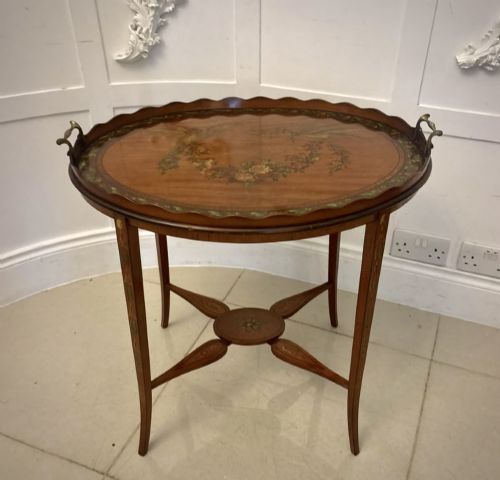
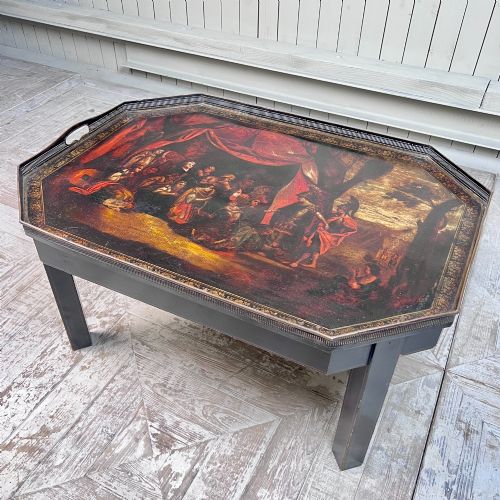
Originating as practical accessories for carrying cups and teapots, many survivors now rest on custom stands to function permanently as side tables or coffee tables in a room.
How they were made
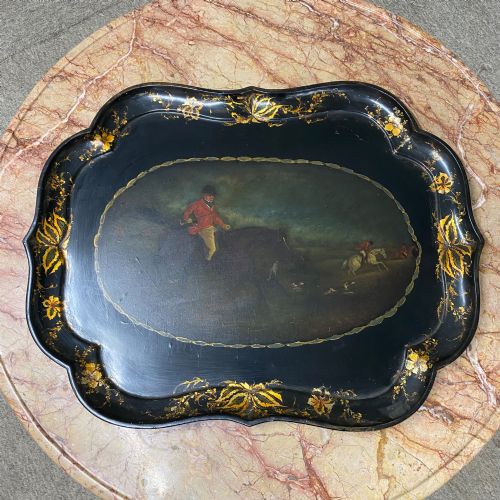
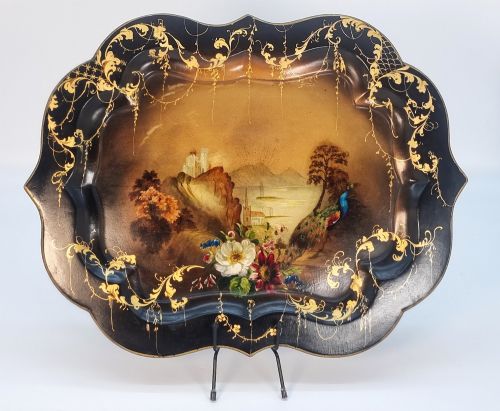
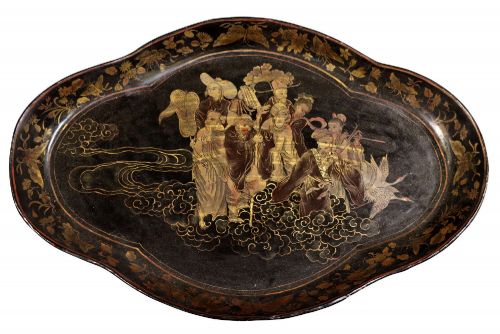
Papier-mâché served as a primary base, formed by pressing layers of paper pulp and glue into sturdy boards before hardening and smoothing. Artisans then applied dark lacquers or japanning finishes to create deep, glossy backgrounds.
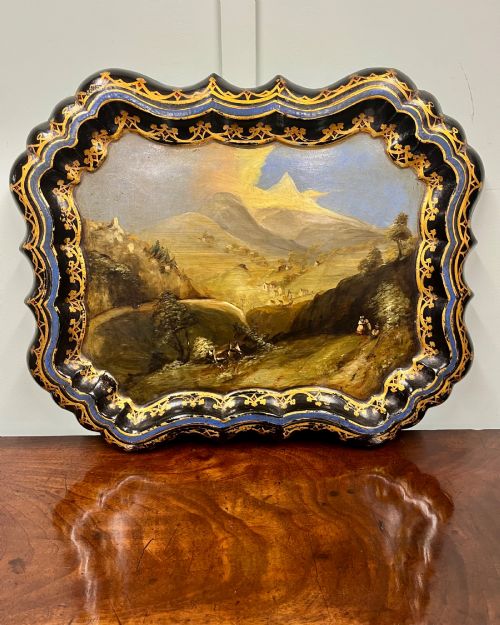
Metal toleware trays utilised sheet iron coated in protective enamels, providing a durable surface for intricate pigment work. Painters built up scenes using oil paints, gold leaf, and delicate gilding.
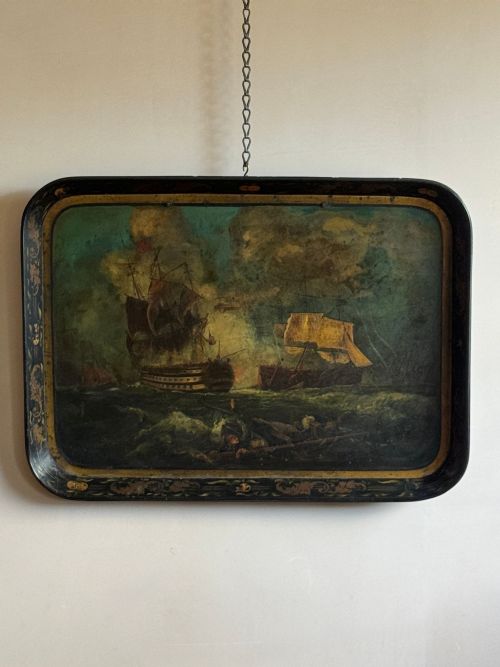
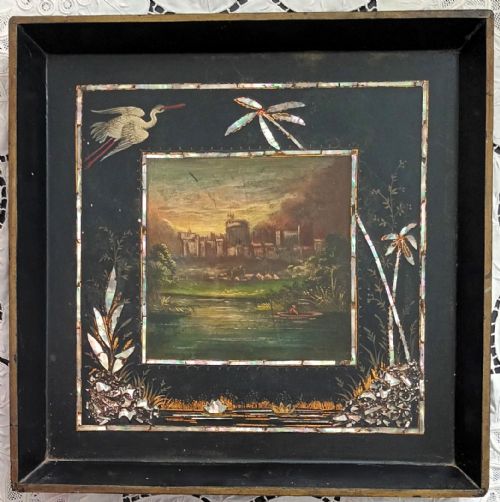
Decoration relied on skilled brushwork rather than mechanical printing, often depicting landscapes, literary scenes, or Chinoiserie motifs. Specialised makers sealed these painted surfaces with clear varnishes to protect against moisture.
Hand Painted Tea Tray Retail Price Guide 2026
Typical asking prices for hand painted tea tray among the pieces listed under this phrase on Sellingantiques today, from the lower quarter to the upper quarter. They describe what is for sale here now, not the wider market.
One remarkably honest eighteenth-century papier-mâché tray proudly depicts a naive fishing scene, proving that even early makers enjoyed a quiet day by the water.
What varies in quality
The distinction between standard domestic items and superior examples lies in the precision and depth of the painted artwork. Master painters executed complex historical scenes and nuanced landscapes with fine brush control, whereas lower tiers show naive or repetitive brushwork.
Materials also dictate the grade of the piece, with dense, multi-layered papier-mâché and heavy gauge toleware commanding greater structural integrity than thinner, brittle substitutes. Original surfaces that retain their intended gloss without heavy over-painting represent the highest standard of preservation.
Jennens & Bettridge·H. Meeson·James Giles
The Hand Painted Tea Tray Glossary
- Papier-mâché
- A composite material made from paper pulp or layers of paper bound with glue, heavily pressed and baked to form a rigid, durable tray base. It provides a smooth ground for lacquer and fine painting.
- Toleware
- Painted or lacquered sheet metalware, predominantly iron, developed in Britain and France during the eighteenth and nineteenth centuries. The metal is enameled and decorated with hand-painted scenes.
- Japanning
- A European imitation of East Asian lacquerwork, created by applying layers of dark varnishes and heat-curing them. It yields a hard, glossy black or dark surface often highlighted with gilt chinoiserie.
- Gilding
- The application of gold leaf or gold powder to surfaces to accent borders or pictorial elements. It adds luminosity against dark background lacquers.
Hand Painted Tea Tray: Frequently Asked Questions
Can I still use a antique tray for serving?
Most antique trays withstand light usage, but moisture and heat can damage aged lacquered or painted surfaces. Collectors generally prefer to use them for display or as static coffee tables rather than active serving.
Protective glass tops are occasionally fitted by owners to shield fragile nineteenth-century artwork from liquid rings and everyday wear during regular service.
How do I clean a lacquered tray?
Dust these pieces gently with a dry, soft microfibre cloth to prevent scratching the delicate varnish layers. Avoid all liquid cleaners, commercial polishes, and damp sponges, which penetrate microscopic cracks in old lacquer.
If stubborn grime is present, consult a professional restorer rather than attempting chemical cleaning at home, as older japanned finishes react poorly to modern solvents.
Why are some trays mounted on stands?
Many large trays were converted into low tables during the nineteenth and twentieth centuries to repurpose decorative items for drawing rooms. These custom wooden or iron stands elevate the tray to a comfortable height for use as a coffee table.
Some stands are period-correct additions that match the age of the tray itself, while others represent later adaptations by decorators.
How can I tell a Regency tray from a Victorian one?
Regency trays often favour classical Neo-Classical motifs, simpler gilded borders, and restrained japanned finishes reflecting early nineteenth-century tastes. Victorian examples tend towards denser decoration, including elaborate Chinoiserie scenes and polychrome floral arrangements.
Papier-mâché formulations and stamp marks on the underside also help differentiate the manufacturing decades, though many traditional styles overlapped.