



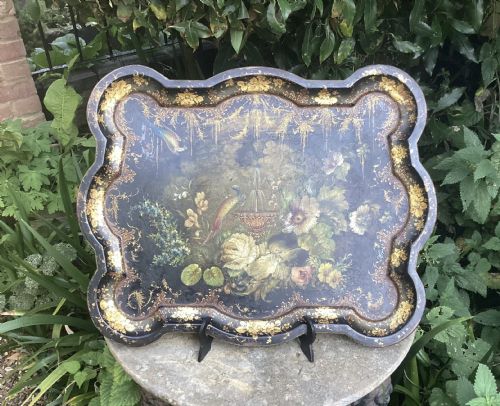


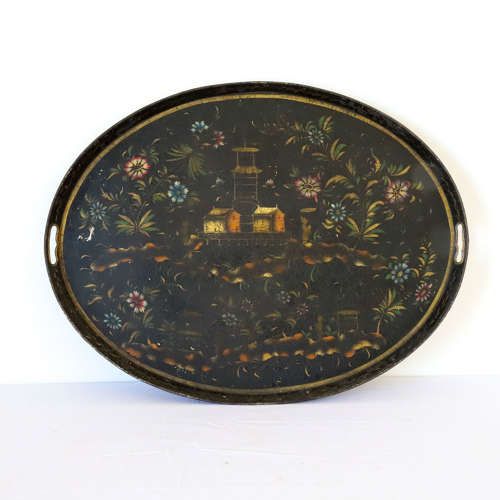


Antique Toleware Tray
An antique toleware tray brings painted metal work into a room, offering durability alongside decorative scenes from the eighteenth and nineteenth centuries.
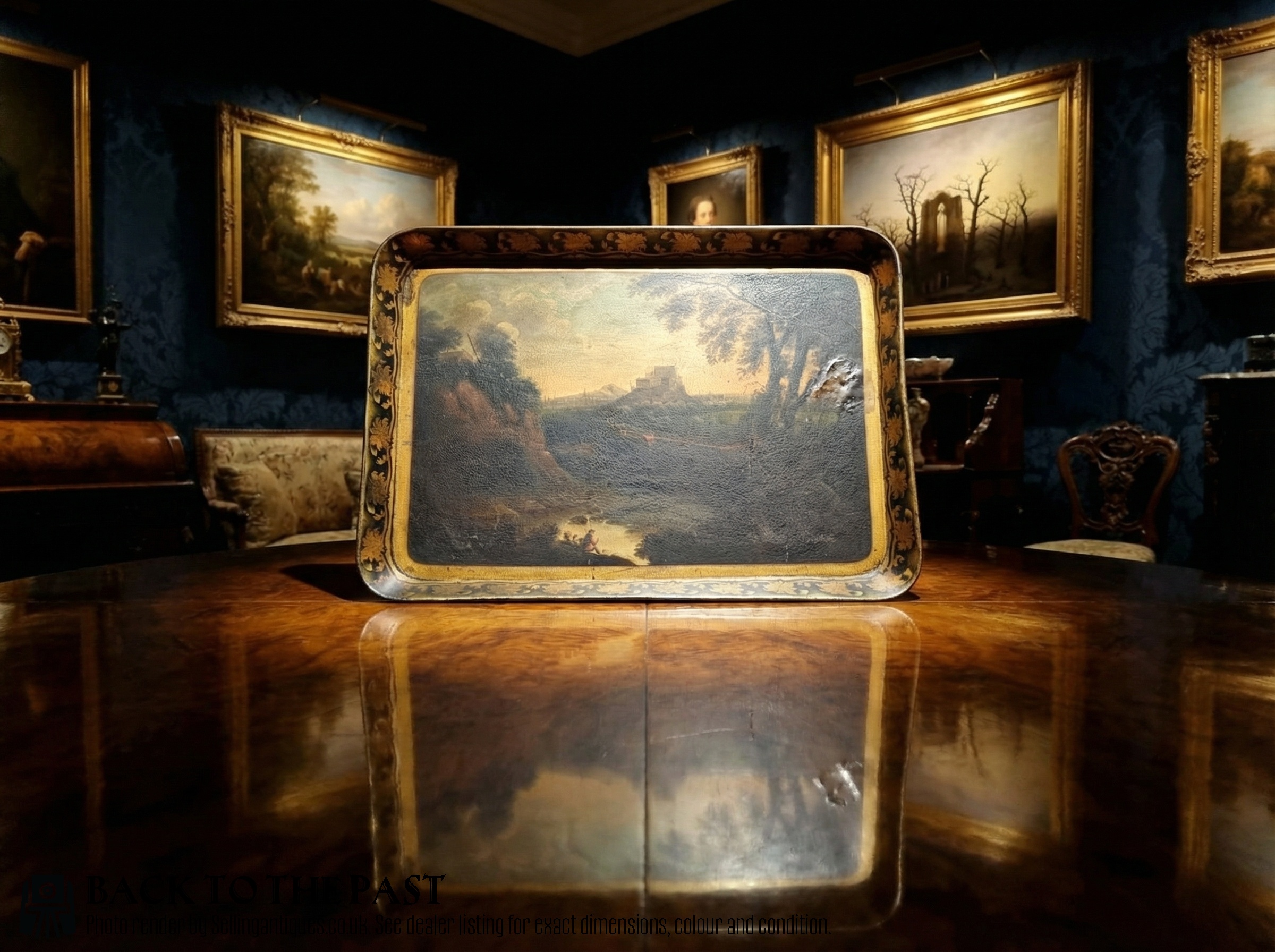
Antique Toleware Tray
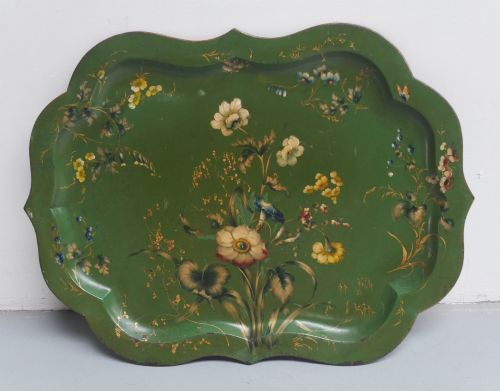
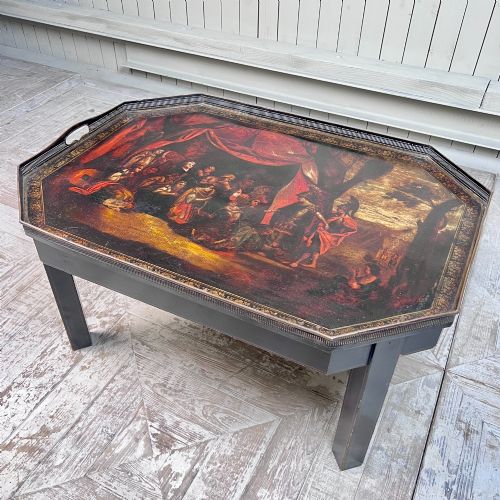
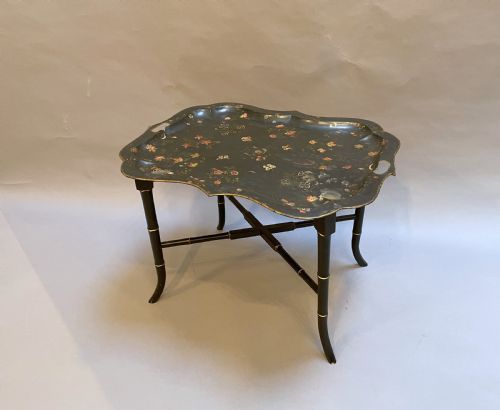
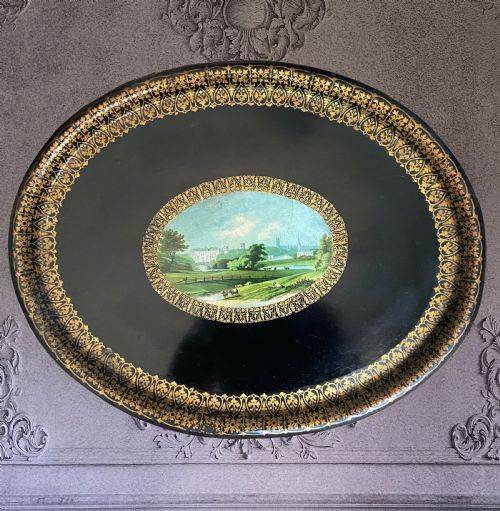
An antique toleware tray is a painted or lacquered metal object used for serving, display, or mounted on stands as tables. These pieces appear primarily from the eighteenth, nineteenth, and early twentieth centuries in forms such as oval, octagonal, and shaped serving trays or bowls.
The selections available on this page span several stylistic traditions, including Regency, Victorian, and French Second Empire designs. Buyers encounter both plain utility pieces and elaborately decorated surfaces featuring narrative scenes or Chinoiserie motifs.
Many examples arrive with their original paint schemes intact, while others have been repurposed historically as coffee tables or side tables. Origin variations include English, French, and Swedish workshops, alongside notable centres like Pontypool.
How they were made
Makers formed these items using sheet iron or metal substrates, sometimes supplemented by wood or papier-mâché in related serving pieces. The foundation layer relied on dark lacquers or heavy dark paint applied over the metal base.
Decoration involved handpainted details, often enhanced with gold leaf and gilding to highlight borders and central tableaus. Pontypool and other regional workshops developed specific japanning and lacquering techniques to achieve their glossy finishes.
Antique Toleware Tray Retail Price Guide 2026
Typical asking prices for toleware tray among the pieces listed under this phrase on Sellingantiques today, from the lower quarter to the upper quarter. They describe what is for sale here now, not the wider market.
Materials recorded across the inventory include paint, lacquer, gold leaf, sheet iron, wood, and gilding.
What varies in quality
The standard of an antique toleware tray rests upon the complexity and execution of its surface decoration. Finely detailed handpainted narrative scenes or intricate Chinoiserie landscapes elevate a piece far above simple utilitarian items.
Originality of the surface finish dictates the desirability of the object. Trays retaining their untouched Regency or Victorian paint and gilding represent the upper tier of the range compared to those with later overpainting.
H. Meeson·Pontypool
The Antique Toleware Tray Glossary
- Toleware
- Painted or lacquered metalware, typically manufactured from sheet iron in Britain, France, and America during the eighteenth and nineteenth centuries. The term derives from the French phrase tole peinte, meaning painted sheet metal.
- Japanning
- A type of European finish that emulated Asian lacquerware by applying layers of dark varnish heat-dried and polished. It formed the durable base upon which gilt and painted decorations sat.
- Pontypool
- A Welsh town renowned for its eighteenth-century pontypool japanning industry, which produced high-quality lacquered metal goods. Pontypool pieces are recognised by their distinctive glossy finishes and tortoiseshell or painted effects.
- Gilding
- The application of gold leaf or gold powder onto the surface of the metal tray to create metallic highlights and decorative borders. This technique added depth and contrast against the dark background lacquer.
Antique Toleware Tray: Frequently Asked Questions
How do I clean an antique toleware tray?
Dust the surface gently with a soft, dry cloth to remove loose particles. Avoid using water, modern detergents, or chemical solvents, which can lift the aged paint and gilding.
For stubborn marks, consult a professional restorer rather than attempting rigorous cleaning at home. Preserving the original nineteenth-century surface is essential for maintaining the character of the object.
Are these trays sturdy enough for daily use?
While constructed from sheet iron, antique toleware trays are primarily decorative objects today. Regular use for serving food or drinks can cause wear, scratching, or moisture damage to the delicate painted finishes.
Many collectors prefer to display them on walls, on stands as occasional tables, or flat on surfaces without heavy loads. Treating them with care ensures the historical paintwork survives intact.
What is the difference between toleware and papier-mâché trays?
Toleware utilises a metal substrate, usually sheet iron or tin, providing a rigid and heavy foundation for painted finishes. Papier-mâché trays are formed from compressed paper pulp and binding agents, offering a lighter alternative that was similarly lacquered.
Both materials accommodated elaborate Regency and Victorian decoration, though their underlying composition requires different handling and environmental controls.
How can I tell a Regency tray from a Victorian one?
Regency trays often display classical motifs, restrained gilding, and specific Chinoiserie interpretations popular in the early nineteenth century. Victorian examples frequently feature bolder floral arrangements, narrative historical scenes, or heavier industrial production methods.
Examining the shape of the rim, the style of the handpainting, and the composition of the underlying metal helps narrow down the period of manufacture.