




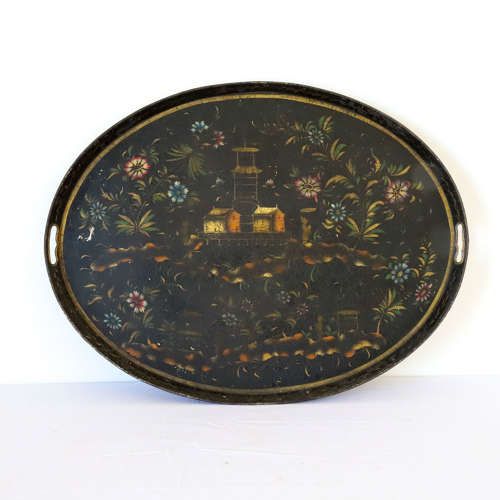


Black Toleware Tray
A black toleware tray brings hand-painted japanned metal into a room, offering a dark glossy surface that reflects candlelight.
Black Toleware Tray
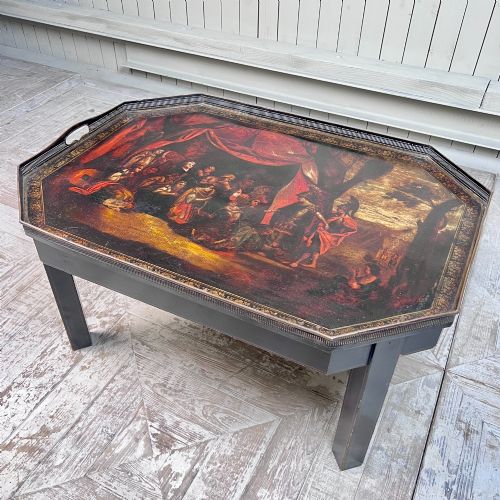
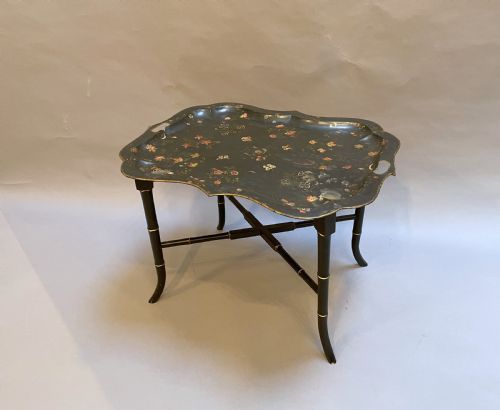
A black toleware tray comprises painted and japanned sheet iron or metal objects, taking the form of large oval or octagonal servers, shaped bowls, and trays mounted on stands as coffee tables. These pieces appear primarily from the eighteenth and nineteenth centuries, spanning Georgian, Regency, and Victorian periods.
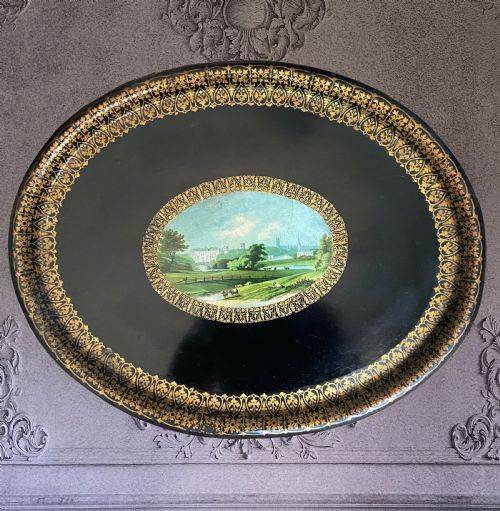
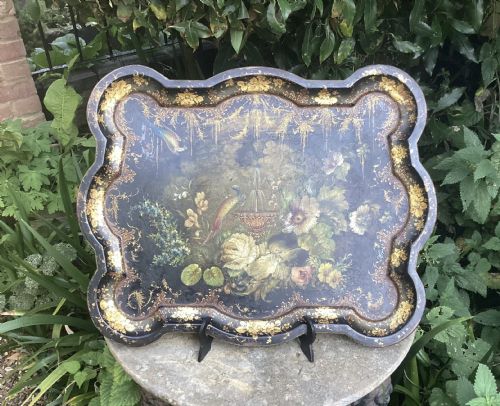
The version most commonly met on this page is the nineteenth-century oval or octagonal tray, often finished with gilt embellishments or Chinoiserie decoration. Many examples sit upon later wooden bases, converting traditional serving pieces into low occasional furniture.
Makers and origins stretch across English workshops like Pontypool, alongside French Napoleon III production and Swedish decorative pieces. Buyers find both standalone servers and nesting sets complete with matching boxes.
Materials and construction
Craftsmen built these pieces from sheet iron or metal foundations, applying successive layers of dark lacquer or paint to create a durable japanned surface. This base coating received heat treatment to harden the finish before artists applied further decoration.
Gilding and hand-painted details complete the surface, utilising gold leaf and pigments to depict pastoral scenes, classical narratives, and Chinoiserie motifs. Pontypool production became particularly noted for this specialised metal varnishing technique.
Black Toleware Tray Retail Price Guide 2026
Typical asking prices for black toleware tray among the pieces listed under this phrase on Sellingantiques today, from the lower quarter to the upper quarter. They describe what is for sale here now, not the wider market.
Object forms include standard serving trays alongside converted coffee tables, side tables, decorative bowls, and nested box sets.
Distinctions in quality
The standard of a black toleware tray rests in the execution of its hand-painted decoration and the crispness of the gilt embellishment. Superior examples display subtle brushwork and well-preserved metallic leaf, whereas simpler pieces rely on basic stencilled motifs.
Structural integrity of the underlying sheet metal also defines the piece, alongside the quality of any associated wooden stand. Original paint surfaces with minimal later restoration command greater attention from collectors.
Pontypool
The Black Toleware Tray Glossary
- Toleware
- Painted or lacquered metalware, typically tinplate or sheet iron. The word derives from the French term for painted sheet metal, tôles peintes.
- Japanning
- A European imitation of East Asian lacquerwork. Craftsmen built up hard resinous layers in black or dark colours.
- Chinoiserie
- European artistic style reflecting Chinese motifs. This aesthetic appears frequently in the gold painted decoration of nineteenth-century trays.
- Pontypool
- Welsh town renowned for eighteenth and nineteenth-century metal varnishing industries. Production from this centre carries specific historical weight.
Black Toleware Tray: Frequently Asked Questions
How were black toleware trays originally used?
These pieces served primarily for carrying tea services, wine glasses, and porcelain in formal reception rooms. Servants brought refreshments into parlours upon them before leaving them on stands or side tables.
Over time, many larger examples transitioned from portable servers into permanent furniture items by acquiring dedicated wooden bases.
Are these trays suitable for daily use?
Most antique examples require careful handling to preserve their delicate hand-painted surfaces and historic japanned finishes. Modern moisture and heat can damage the nineteenth-century varnish.
Collectors generally display them on walls, stands, or tables rather than utilising them for active serving purposes.
How do I identify a Regency period piece?
Regency items often feature classical motifs, bold gilt borders, and refined proportions reflecting early nineteenth-century neoclassical taste. The ironwork tends to feel substantial yet elegant.
Comparison with dated examples helps confirm the era through stylistic cues in the painted foliage and border patterns.
What is the difference between toleware and papier mache?
Toleware utilises a rigid sheet iron or metal foundation coated in dark lacquer. Papier mache relies on compressed paper pulp and binding agents treated with similar varnishes.
Both materials achieve a comparable glossy black finish, though metal objects possess a distinct weight and magnetic property.