




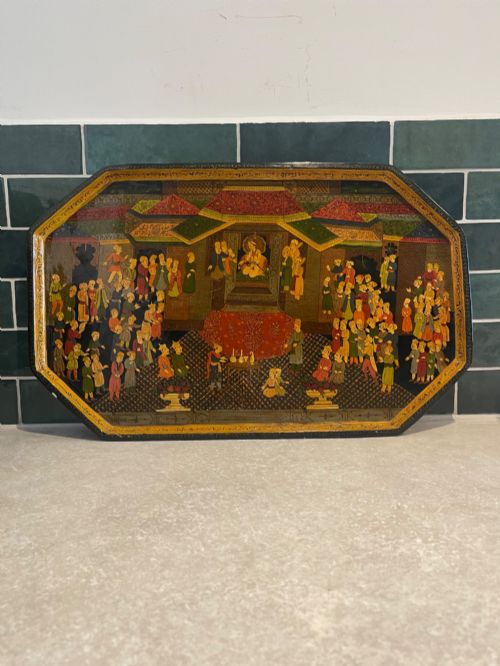
Antique Lacquered Tray
An antique lacquered tray brings a rich, glossy surface and centuries of craftsmanship into a room, serving as both a functional piece and a display of intricate artistry.
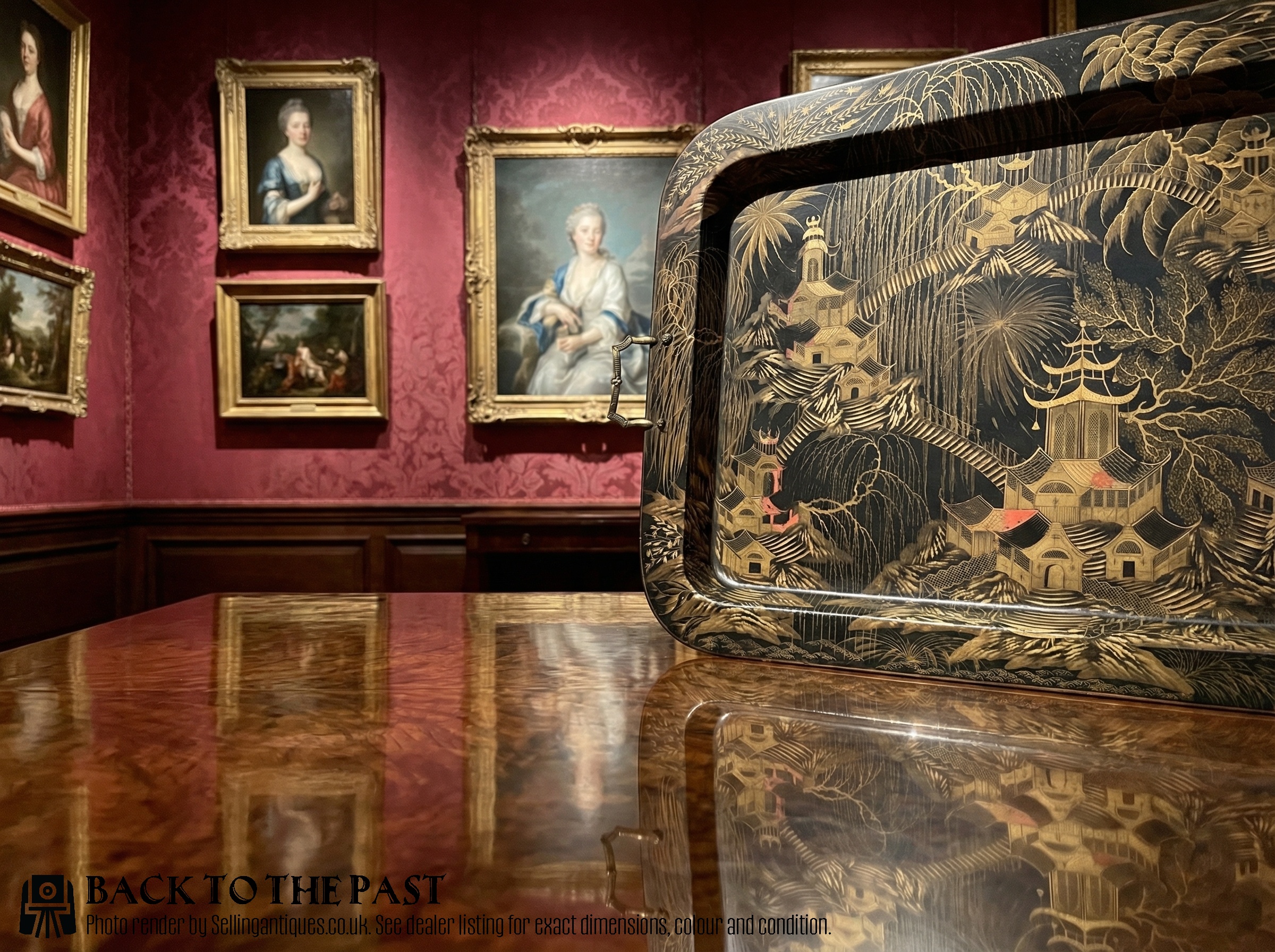
Antique Lacquered Tray
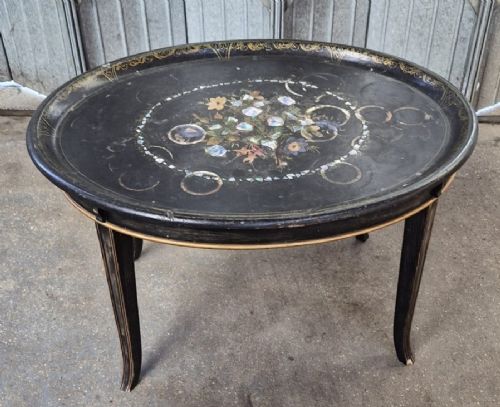
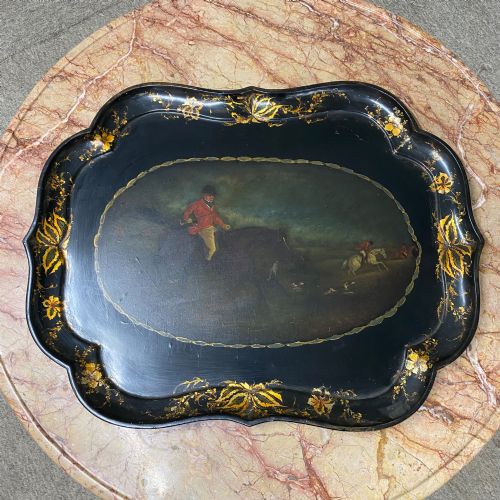
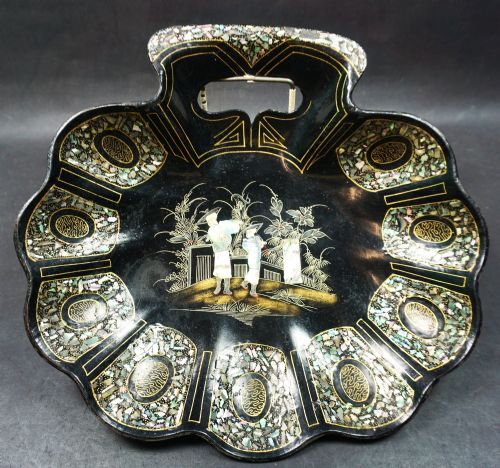
When you search for an antique lacquered tray, you encounter items shaped from pressed paper pulp, wood, and metal, spanning periods from the Georgian era through the early twentieth century. The selection ranges from flat serving vessels and card baskets to desk accessories and large platters mounted upon folding stands as coffee tables.
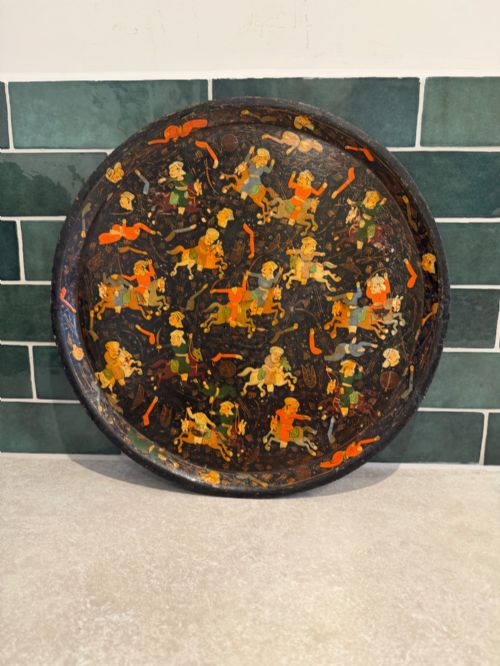
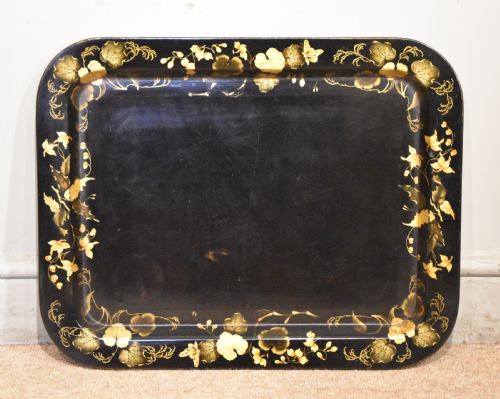
English papier-mâché examples from the Regency and Victorian periods dominate the listings, often finished with black ebonisation and Chinoiserie motifs.Alongside these British pieces appear Japanese Meiji period items and Kashmiri hand-painted trays, showing global variations in lacquer work.
How they were made
Papier-mâché forms were created by pressing layers of paper pulp with glue and chalk over a mould, then baking and varnishing the resulting board to create a sturdy, lightweight base. Artisans applied multiple coats of lacquer, sanding between each application to achieve a smooth, durable finish.
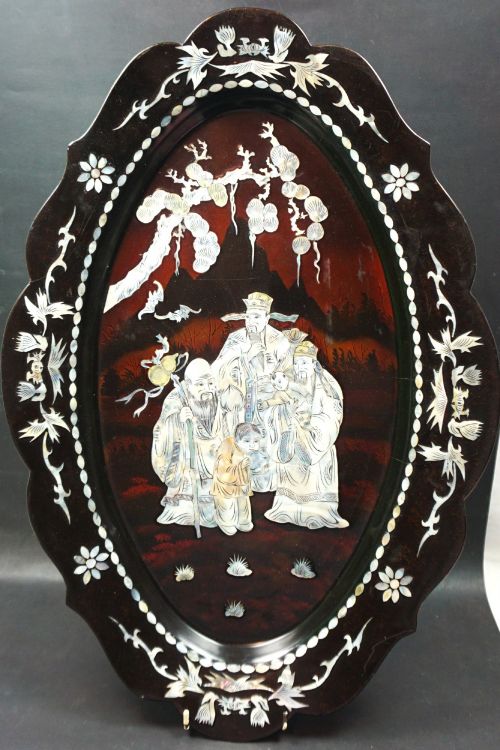
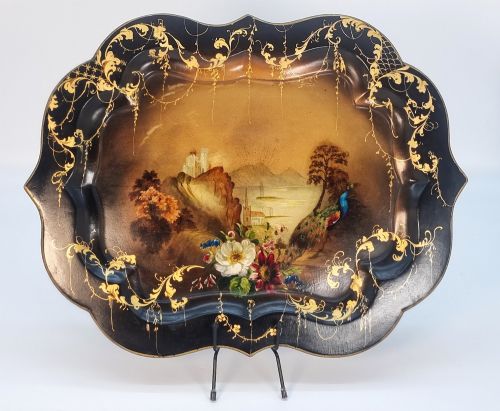
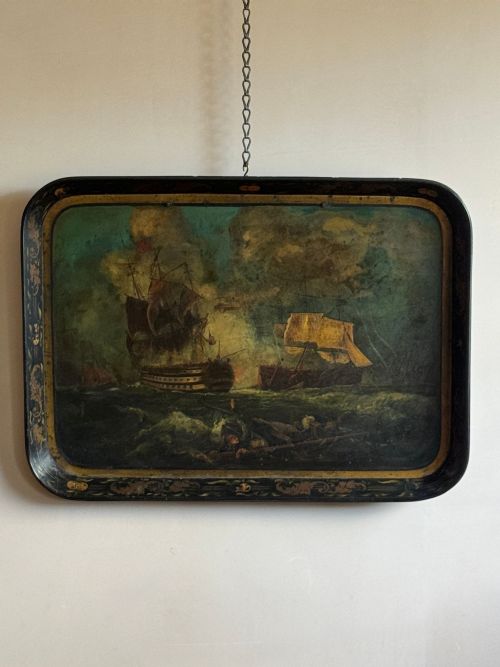
Decoration relied on hand painting, gilding with gold leaf, and inlaying iridescent pieces of mother-of-pearl. Japanese and Chinese pieces utilised traditional sap-based lacquers applied to wood or papier-mâché cores, building deep, reflective surfaces.
Antique Lacquered Tray Retail Price Guide 2026
Typical asking prices for lacquered tray among the pieces listed under this phrase on Sellingantiques today, from the lower quarter to the upper quarter. They describe what is for sale here now, not the wider market.
Listings feature papier-mâché, wood, and metal forms finished with mother-of-pearl and gold leaf across the Georgian and Victorian periods.
What varies in quality
The distinction between ordinary and superior pieces rests upon the crispness of the hand-painted details and the depth of the lacquer finish. Makers who employed multiple layers of varnish and meticulous gold leaf work produced surfaces that retain their lustre and resist wear far better than simpler items.
Structural integrity also separates the range, particularly in how well papier-mâché has resisted warping over time. Pieces bearing signatures from established makers demonstrate a higher grade of artistry in their botanical or pictorial compositions.
Jennens & Bettridge·Henry Clay
The Antique Lacquered Tray Glossary
- Papier-mâché
- A composite material made from paper pulp or layers of paper mixed with glue, chalk, and resin, pressed and dried into a rigid form. It provided a lightweight and smooth foundation for lacquer and paint.
- Japanned
- European work imitating Japanese and Chinese lacquer techniques using dark varnishes and raised metallic decoration. The process involved coating items in heat-dried varnish layers.
- Gilt
- Covered thinly with gold leaf or gold paint. This technique added decorative highlights to borders and central motifs on dark lacquer grounds.
- Mother-of-pearl
- The iridescent inner layer of certain mollusc shells, cut into thin pieces and embedded into the lacquer surface. It caught the light to create shimmering focal points on trays and boxes.
Antique Lacquered Tray: Frequently Asked Questions
How do I clean an antique lacquered tray?
Dust the surface gently with a soft, dry cloth to remove particles. Avoid using water, chemical polishes, or abrasive cloths, which can damage the aged varnish and delicate gold leaf.
For stubborn marks, a slightly damp cloth can be used very cautiously, followed immediately by drying with a lint-free cloth. Keeping the tray away from direct sunlight and heat sources prevents the lacquer from cracking.
Can I use these trays for serving food?
Most antique lacquered trays are best reserved for display or dry use rather than serving wet or hot items. Moisture and heat can penetrate the historic varnish and cause staining or lifting of the lacquer.
Utilising them on coffee tables for books or as desk accessories protects the fragile surface while still allowing you to appreciate the craftsmanship daily.
What is the difference between Victorian and Regency trays?
Regency trays often feature bold gilt decoration and classical or early Chinoiserie motifs on deep papier-mâché bases. They tend to exhibit generous proportions intended for formal entertaining.
Victorian pieces frequently embrace ornate floral patterns, mother-of-pearl inlay, and ebonised finishes. Many Victorian items were also adapted later with stands to function as occasional tables.
Why are some trays mounted on stands?
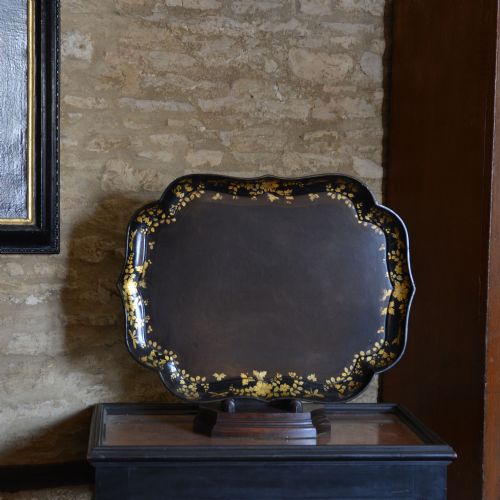
Many serving trays were fitted with wooden folding or fixed stands during the nineteenth and twentieth centuries to convert them into coffee tables or side tables. This practice preserved decorative items by giving them a secondary domestic purpose.
When evaluating a tray on a stand, examine whether the stand is a period addition that complements the age and scale of the tray top.