

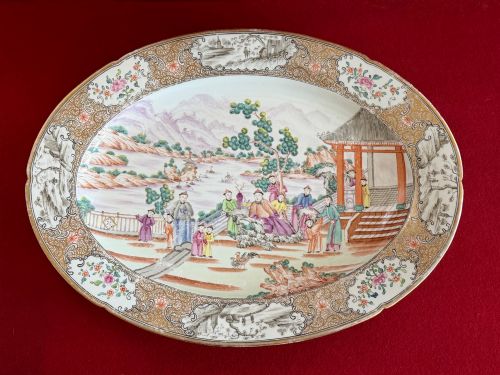
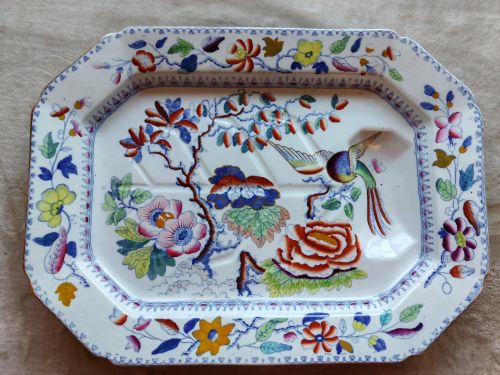
Georgian Serving Tray
A georgian serving tray brings sturdy timber, polished brass and folding stands together to carry glasses and silver with genuine period utility.
Georgian Serving Tray
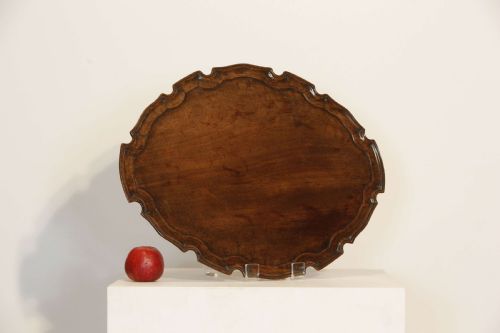
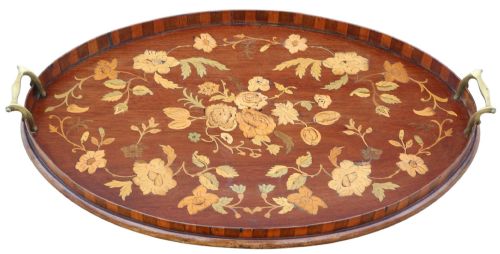
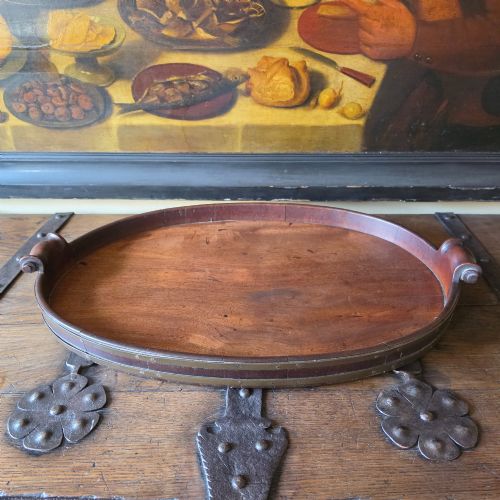
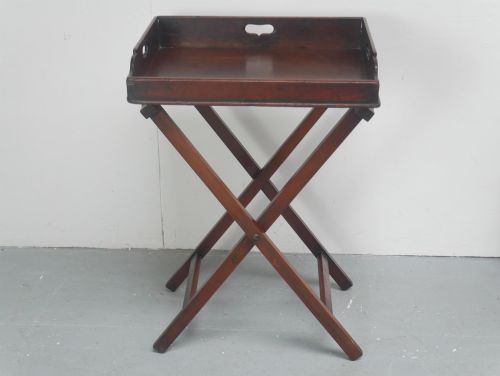
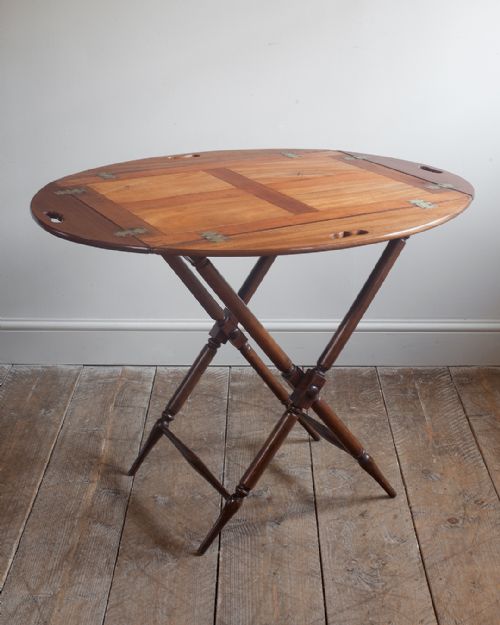
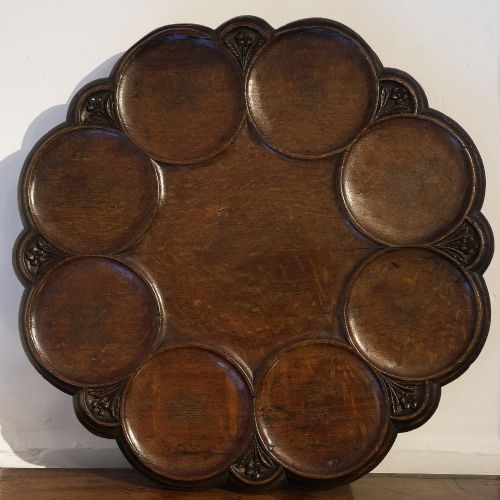
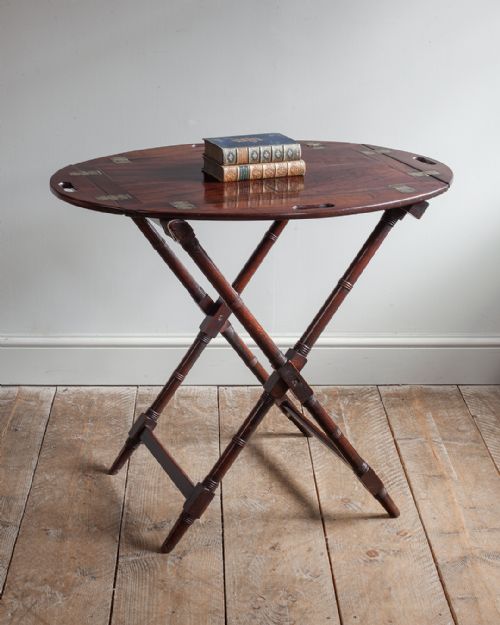
A georgian serving tray encompasses portable timber butler trays, oval mahogany platters and fitted folding stands designed for formal hospitality. Buyers seeking this phrase encounter sturdy mahogany carriers, oak carry trays and raised gallery edges built to transport heavy silver and glassware safely.
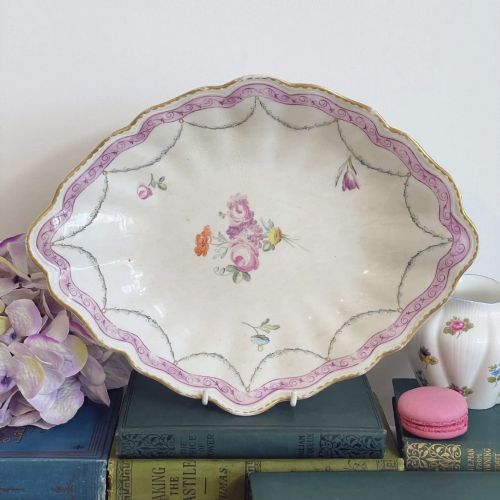
The selections span rigid tea trays, wine trays with inlaid decoration and larger serving dishes spanning the eighteenth and nineteenth centuries. Folding butler stands and occasional table configurations frequently accompany these portable wooden trays in domestic settings.
How They Were Made
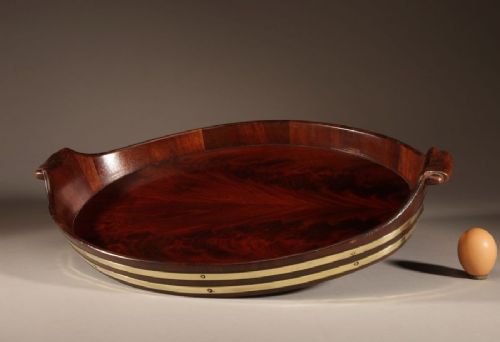
Craftsmen built these trays primarily using solid mahogany, oak and teak timbers, often employing coopered staves with brass bands or delicate boxwood string inlay. Handles were frequently pierced directly into the gallery sides or forged from solid brass for secure lifting.
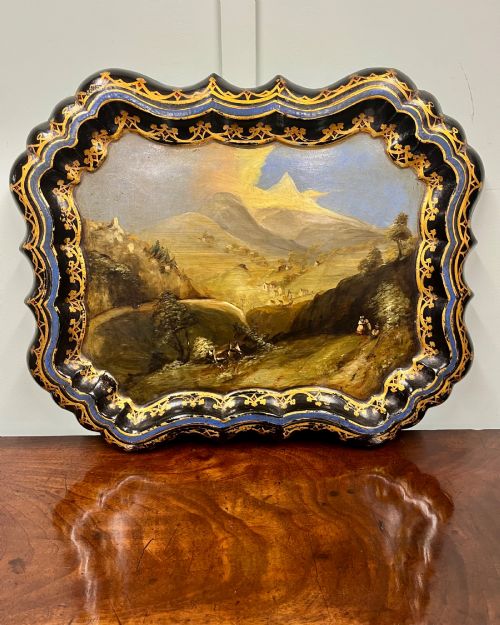
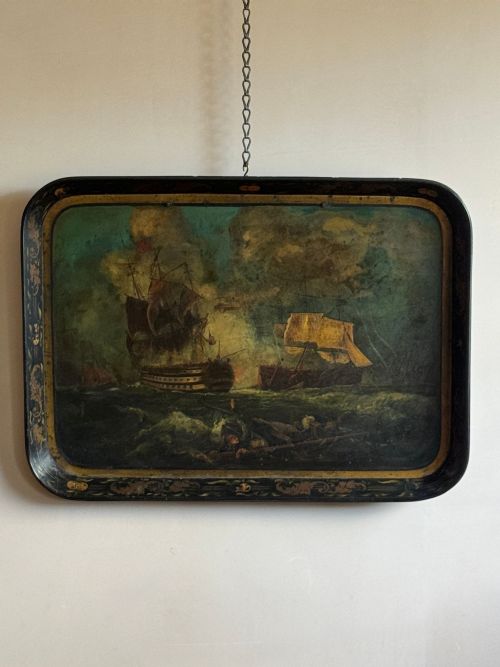
Surface finishes relied on hand-rubbed wax and polish over dense timber grains, while papier-mâché examples utilised layered paper bases treated with dark japanning and gold leaf details.
Georgian Serving Tray Retail Price Guide 2026
Typical asking prices for georgian serving tray among the pieces listed under this phrase on Sellingantiques today, from the lower quarter to the upper quarter. They describe what is for sale here now, not the wider market.
What Varies In Quality
The standard of a georgian serving tray rests upon the crispness of its hand-carved galleries, the tightness of its dovetail or coopered joints, and the depth of the timber figuring. Superior examples retain original brass carrying handles and unwarped wooden bases that sit flat without rocking.
Lighter secondary woods, replacement stands, and heavy modern varnish diminish the integrity of a piece, whereas crisp boxwood inlay and untouched patination elevate the work of regional cabinet makers.
Robert Abercromby·Creswick·Davenport·John Hunt·Robert Breading
The Georgian Serving Tray Glossary
- Butler's tray
- A portable wooden tray with hinged or cutout sides designed to lift off a folding wooden stand for serving drinks or food. These pieces formed an essential part of nineteenth century household service.
- Gallery
- A raised wooden or metal border surrounding the perimeter of a tray to prevent items from sliding off during transit. Higher pierced galleries required greater woodworking skill.
- Coopering
- A construction method utilising curved wooden staves bound together with metal hoops, commonly seen on oval serving trays. This technique originates from barrel making.
- Japanning
- A European imitation of East Asian lacquerwork applied to papier-mâché and metal trays, typically featuring dark varnish and raised gold decoration. Skilled artisans built up multiple layers for a durable sheen.
- Salver
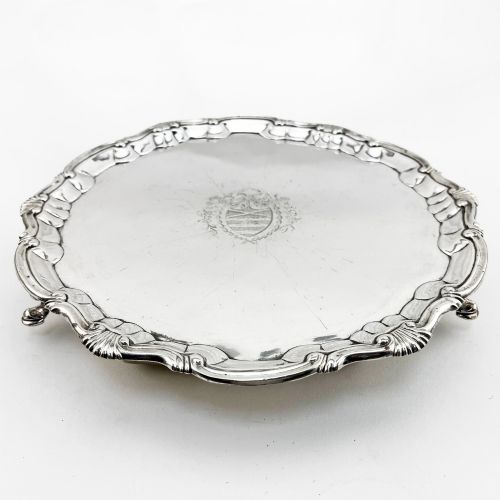
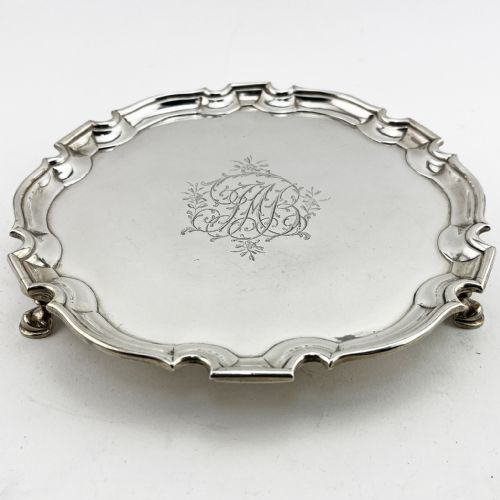
- A flat metal serving dish or tray, usually raised on small feet, cast in sterling silver or old Sheffield plate. These items displayed family crests and held drinking vessels during formal gatherings.
Georgian Serving Tray: Frequently Asked Questions
How were butler trays used?
These portable trays were lifted from their folding stands to transport tea services, wine glasses or heavy dishes between rooms by household staff.
Once the meal concluded, the tray could be removed and the wooden stand folded flat to save floor space in busy dining areas.
Are these trays waterproof?
Period wooden trays feature wax or oil polishes that resist minor spills but prolonged standing liquid can damage the timber grain and antique joinery.
Owners should wipe surfaces dry promptly after use to protect the original polish and prevent water marks on the mahogany or oak.
Can I use a tray on a stand daily?
Sturdy eighteenth and nineteenth century frames easily support everyday items like decanters and tea sets when placed correctly on their matching bases.
Checking the stability of the folding hinges ensures the tray remains secure during routine domestic use.
How do I clean mahogany trays?
A soft, dry cloth removes dust effectively while preserving the aged patina built up across centuries of handling and service.
Occasional applications of neutral beeswax nourish the dry timber without altering the historic colour or finish.