

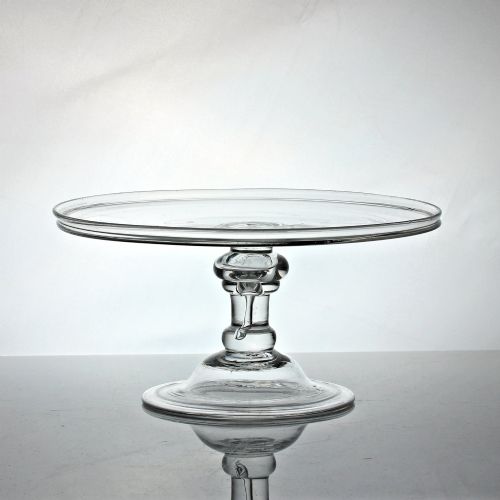


Georgian Glass Tray
A georgian glass tray brings eighteenth-century elegance to a table, combining clear lead crystal and polished brass for serving and display.
Georgian Glass Tray
A georgian glass tray typically takes the form of a tazza, serving tray, or desk accessory created during the eighteenth and nineteenth centuries. These items serve functional roles on tables and desks, functioning as glassware, inkstands, and standishes.
The versions most commonly met on this page include eighteenth-century baluster tazzas with spreading folded feet, alongside Regency glass drinks trays. Materials span clear glass and lead crystal, often paired with brass, mahogany, and Sheffield plate.
Makers and periods represented range from 1700 through the Regency era and George III period, reflecting the broader domestic habits of the time.
How they were made
Makers utilised heavy lead crystal and clear glass, shaping pieces into baluster tazzas with spreading folded feet or flat drinking trays. Glass blowing and cutting techniques define the transparent components.
Support structures and mounts involve cast and turned brass, solid silver, and Sheffield plate fused to base metals. Rosewood and mahogany provide wooden foundations for writing desk sets and inkstands.
Some heavy crystal tazzas tip the scales at over a kilogram, proving that eighteenth-century hosts took their dessert service very seriously.
What varies in quality
Subtleties of proportion and metalwork distinguish finer examples from simpler ones, particularly in the weight of the crystal and the crispness of cut glass facets. Heavy lead crystal with deep resonance marks superior glass production.
The integration of secondary materials like Sheffield plate, rosewood inlay, and turned brass mounts determines the overall refinement of desk sets and inkstands.
The Georgian Glass Tray Glossary
- Tazza
- An elevated shallow bowl or plate used for serving, standing upon a central foot. These pieces often feature baluster stems and folded rims.
- Standish
- A desk accessory or inkstand designed to hold writing materials such as inkwells, sanders, and pens. They frequently incorporate brass or Sheffield plate.
- Sheffield Plate
- A composite material made by fusing a thin sheet of silver to a copper ingot. This technique predates modern electroplating and appears on desk sets.
- Baluster
- A moulded column or stem with a swelling contour resembling a small pillar. It is commonly found supporting eighteenth-century glass tazzas.
Georgian Glass Tray: Frequently Asked Questions
What is a georgian glass tray used for?
These items were originally utilised for serving drinks or displaying small precious objects in domestic settings. On desks, related pieces held inkwells and writing implements.
Today, they function well as decorative table centerpieces or refined serving accessories.
How do I date a glass tazza?
Dating relies on examining manufacturing techniques, such as the presence of a spreading folded foot or heavy lead glass composition. Stylistic markers align with eighteenth-century and Regency design vocabulary.
Comparing weight, metal mounts, and cutting styles helps narrow the period of origin.
Are inkstands considered glass trays?
Inkstands and standishes form a related category of desk accessories that often incorporate glass inkwells alongside brass or Sheffield plate trays. They share the same period aesthetics.
While distinct in function, they appear within the same collecting field as drinking and serving trays.
What is lead crystal in these pieces?
Lead glass contains a proportion of lead oxide, which increases the weight, refractive index, and clarity of the material. This composition allows for deeper cutting.
Pieces made from this material often display a clear ring when struck gently.