




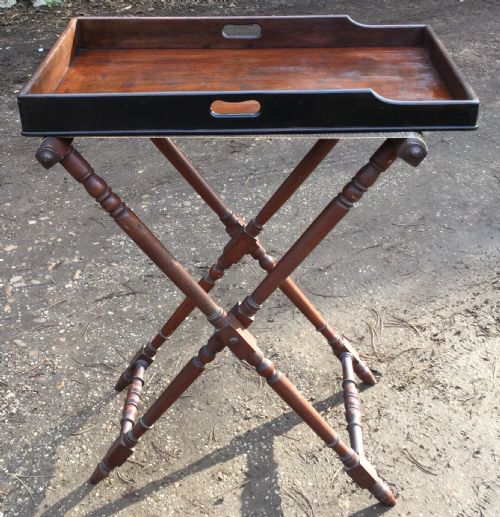

Vintage Wooden Bar Tray
A vintage wooden bar tray brings utilitarian charm to entertaining, spanning folding butler stands, tea trolleys, and removable serving surfaces crafted from rich timbers.
Vintage Wooden Bar Tray
A vintage wooden bar tray encompasses a practical array of serving accessories, tea trolleys, and folding butler stands designed for hospitality and display. You will frequently encounter oak and mahogany examples featuring removable surfaces, alongside tiered trolleys fitted with wheels for effortless service.
The selection ranges from George III and Victorian butler designs to Edwardian tea trolleys and Art Deco novelty pieces. These items bridge the gap between functional furniture and portable serving ware, utilising durable hardwoods suited to domestic use.
How they were made
Makers utilised solid timbers such as mahogany and oak, often shaping them into sturdy frames and raised gallery edges to secure glassware during transit. Joinery techniques varied from traditional dovetailing to robust turned supports on stands and trolleys.
Metal mounts in brass, chrome, and silver plate frequently reinforced handles, gallery rails, and wheel fittings. Inlays and ebonised details added decorative contrast to the timber surfaces on specific Edwardian and Georgian iterations.
Listings feature periods spanning from George III and the Regency era through to Victorian, Edwardian, and 1930s modernist designs.
What varies in quality
The distinction between standard domestic wares and superior examples lies in the selection of timber grain and the finesse of the joinery. Finely figured mahogany and substantial oak command attention through crisp moulding and balanced proportions.
Hardware integration further separates the range, where heavy cast brass handles, gallery railings, and original castors demonstrate a higher standard of manufacture. The presence of a matching folding stand or a neatly fitted removable tray elevates the utility and construction of the piece.
The Vintage Wooden Bar Tray Glossary
- Butlers tray
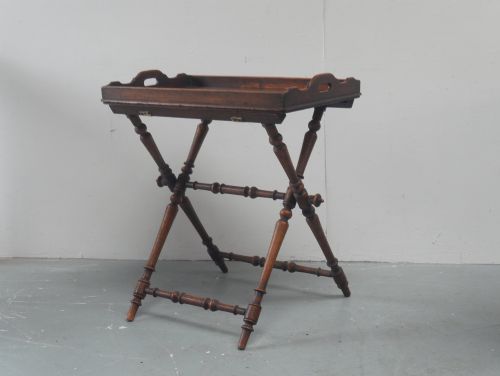
- A portable wooden tray with hinged or fixed sides, traditionally lifted off a folding wooden stand for service. It serves as a classic form for drinks and afternoon tea.
- Tea trolley
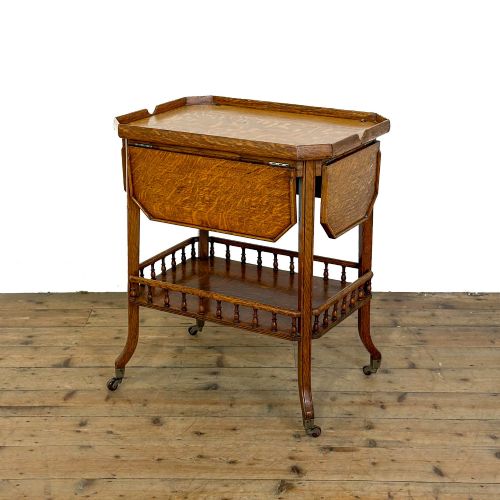
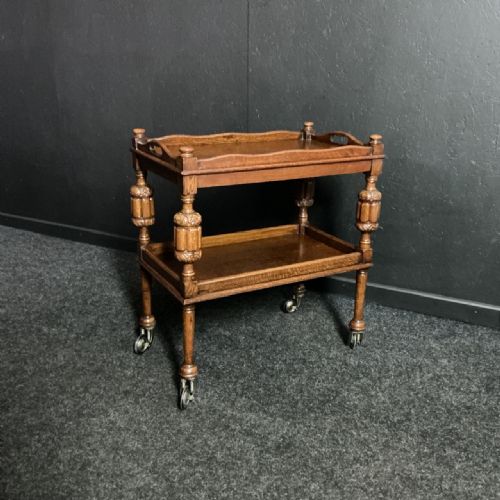
- A wheeled piece of furniture featuring multiple tiers designed to transport tea services, decanters, and glassware across rooms. These often include removable upper trays.
- Gallery tray
- A tray bordered by a raised rim or pierced metal railing to prevent bottles and glasses from sliding off during movement. This railing is frequently fashioned from silver plate or brass.
- Ebonised
- Wood treated with a dark finish to imitate expensive ebony, creating a sharp contrast against metal mounts and lighter inlaid woods. It appears frequently on Victorian and Edwardian serving items.
- Removable tray
- A standalone serving surface designed to lift cleanly out from a supporting trolley or frame. This dual function allowed servants to carry provisions separately from the main furniture piece.
Vintage Wooden Bar Tray: Frequently Asked Questions
What is a butler tray stand?
A butler tray stand is a folding wooden base designed to elevate a removable wooden tray to a comfortable height for serving drinks or afternoon tea. These stands allow the serving surface to be easily lifted off and transported around a room.
Historically used in large households, the folding mechanism made the entire assembly simple to store when not in use. Today, these stands provide stable support while showcasing the grain of the timber tray above.
How do I use a tea trolley?
A tea trolley serves as a mobile station for holding decanters, glassware, and serving accessories during gatherings. The integrated wheels permit smooth movement between rooms, while multiple tiers offer dedicated space for bottles and cups.
Many examples feature a removable top tray that lifts directly off the wheeled frame for independent use. This dual functionality makes them practical for modern entertaining and display.
What woods were used for trays?
Makers predominantly utilised durable hardwoods such as mahogany and oak to construct these trays and trolleys. Mahogany offered a rich, deep hue suited to Georgian and Victorian pieces, while oak provided sturdy utility for Edwardian and earlier designs.
Selected pieces incorporate contrasting inlays or ebonised details to enhance the visual appeal of the timber surface. These materials ensured the trays could withstand regular handling and the weight of heavy glassware.
How do I date a wooden tray?
Dating these pieces involves examining the timber selection, construction methods, and hardware styles present in the piece. Georgian and Regency examples often display hand-cut joinery and heavy mahogany timbers, whereas Edwardian and 1920s trolleys typically feature wheeled frames and silver-plated mounts.
Design motifs such as Jacobean revival turnings or Art Deco modernist lines also provide clear chronological markers. Comparing these stylistic clues helps place the piece within its proper era.