

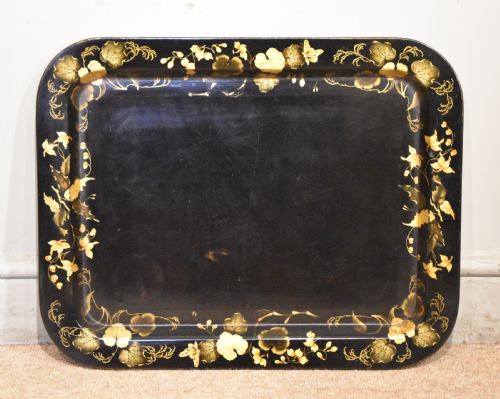
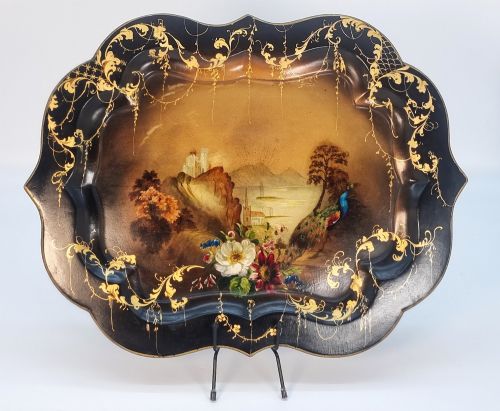
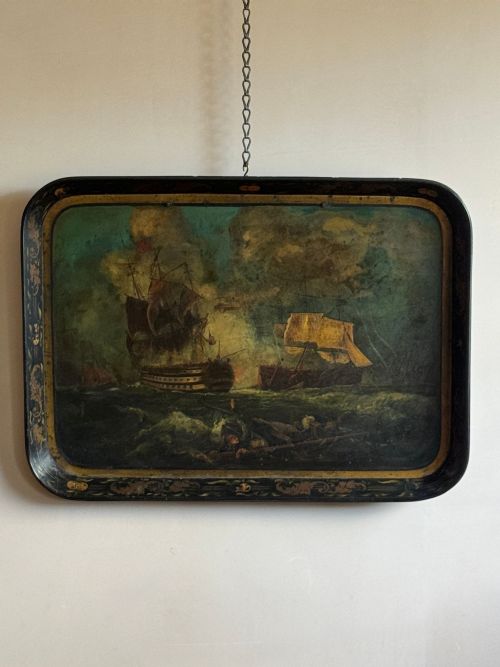
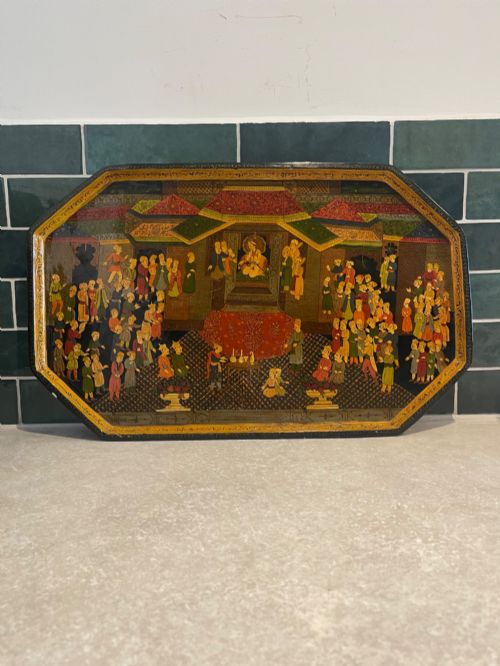




Vintage Papier Mache Tray
A vintage papier mache tray brings tactile warmth and historic charm to a room, offering a durable surface that doubles as striking wall art.
Vintage Papier Mache Tray
A vintage papier mache tray encompasses serving pieces, decorative trays, and desk accessories originating predominantly from the Georgian, Regency, and Victorian periods. Buyers seeking these items will encounter diverse forms, ranging from large serving surfaces and card baskets to desk sets and inkstands.
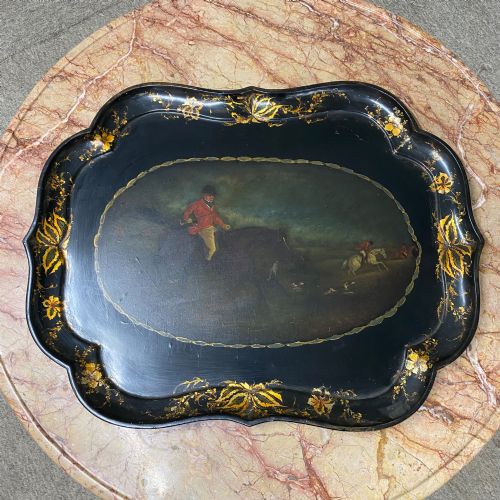
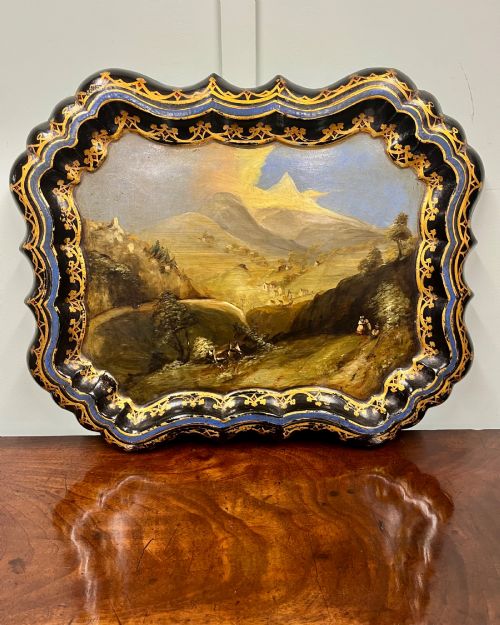
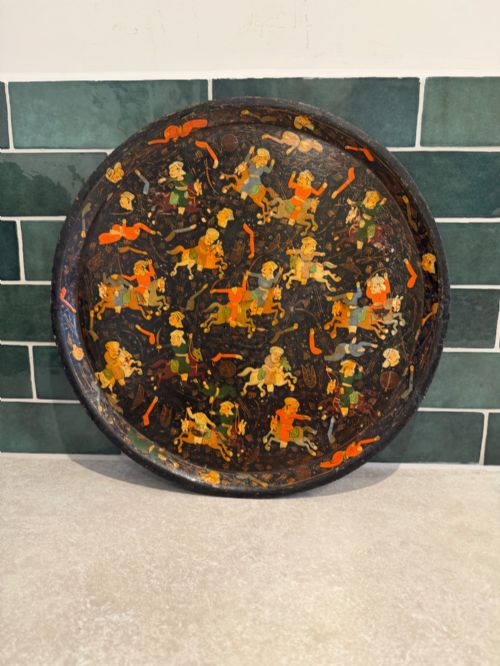
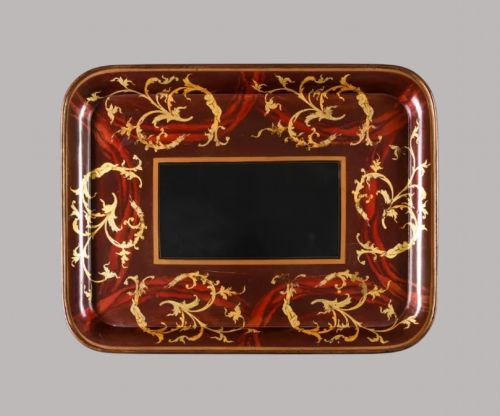
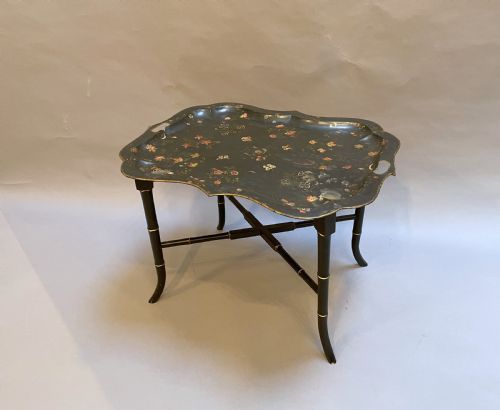
The selections on this page demonstrate rich geographic and stylistic variety, spanning English Chinoiserie, French Napoleon III lacquered pieces, and hand-painted Kashmiri works. Many examples from the nineteenth century survive mounted on later stands, transforming traditional serving pieces into side tables and coffee tables.
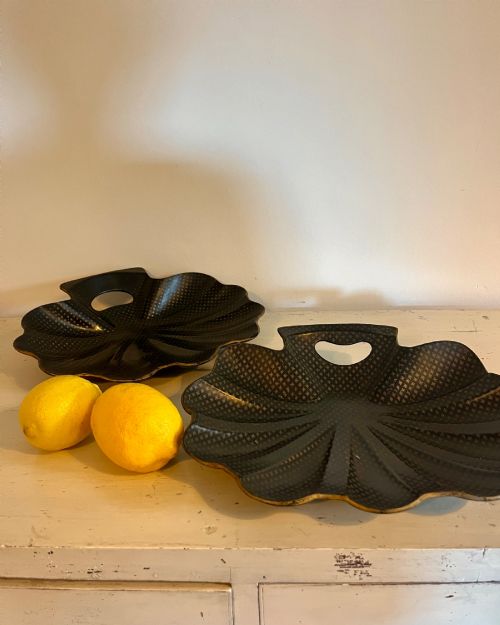
Moulded pulp forms and rigid paper layers provide the structural foundation for these objects, frequently complemented by related toleware items. Whether searching for a scarlet octagonal tray or a kidney-shaped piece with a gilded border, collectors find functional history ready for modern interiors.
Materials and construction methods
Craftsmen built these items using layers of paper pulp or dampened sheets bonded together, compressed under heavy pressure, and dried to create a remarkably resilient core. This sturdy papier-mache substrate received multiple coats of lacquer to seal the surface against moisture and wear.
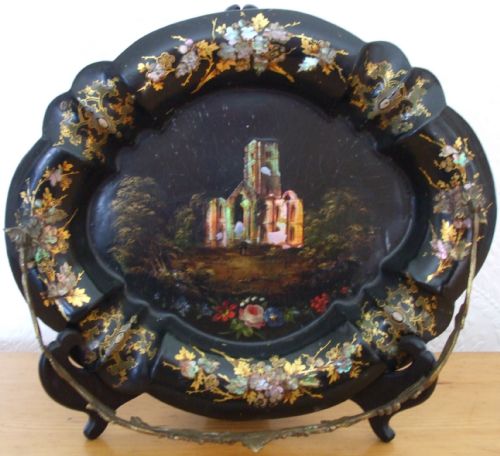
Decoration relied heavily on intricate hand painting, often enhanced with applied gold leaf, metallic gilding, and shimmering mother of pearl inlay. Artisans frequently employed Japanning techniques and Chinoiserie motifs to achieve the glossy, ornate finishes characteristic of the nineteenth century.
Vintage Papier Mache Tray Retail Price Guide 2026
Typical asking prices for vintage papier mache tray among the pieces listed under this phrase on Sellingantiques today, from the lower quarter to the upper quarter. They describe what is for sale here now, not the wider market.
Current listings feature items from the eighteenth, nineteenth, and early twentieth centuries, incorporating materials such as mother of pearl, gold leaf, and lacquer.
Assessing craftsmanship and finish
Quality reveals itself in the integrity of the papier-mache core and the precision of the surface lacquer. Superior examples maintain structural rigidity without warping, while lesser pieces show stress fractures or separation within the compressed layers.
The artistry of the ornamentation dictates the upper tier of the range, distinguishing standard production items from masterworks featuring detailed hand painting and pristine mother of pearl inlay. Preservation of original gilding and unusual decorative schemes elevates a piece significantly above routine factory output.
The Vintage Papier Mache Tray Glossary
- Papier-mâché
- A composite material made from paper pulp or reinforced paper layers mixed with binders, moulded, and dried to form a hard surface. This versatile medium allowed makers to create lightweight yet durable trays and desk accessories.
- Japanning
- A European imitation of East Asian lacquerware involving layered varnishes baked to a hard, glossy finish. Artisans frequently utilised this technique on nineteenth-century trays to achieve deep, lustrous black backgrounds.
- Chinoiserie
- European artistic interpretations of Chinese and East Asian decorative styles, popular across Georgian and Victorian periods. This aesthetic appears frequently in the hand-painted landscapes and figures adorning serving trays.
- Toleware
- Metalware painted or enamelled and lacquered, often grouped alongside papier-mache items in historic collections. These pieces share similar decorative motifs, including gilt embellishments and rich colour palettes.
- Mother of pearl
- The iridescent internal layer of certain mollusc shells, inlaid into lacquer surfaces to create luminous highlights. Skilled craftsmen shaped these delicate pieces into floral or geometric patterns on high-end trays and desk sets.
Vintage Papier Mache Tray: Frequently Asked Questions
Can these trays still be used for serving?
While structurally sound, nineteenth-century pieces are best reserved for light use or display to preserve their delicate hand-painted surfaces.
Using them as decorative accents on side tables or hanging them on walls protects the original gilding and lacquer from accidental moisture damage.
What is the difference between papier mache and toleware?
Papier mache utilises compressed paper pulp and layers as its primary structural material, offering a lightweight and fibrous base for lacquer.
Toleware consists of sheet metal that has been painted, enamelled, and varnished, though both categories often share similar decorative gilt and Chinoiserie styles.
How do I date a Victorian papier mache tray?
Examine the decorative style, colour palette, and underlying material construction to align the piece with documented nineteenth-century periods.
Signatures, registration marks, or specific motifs like mother of pearl inlay and hunting scenes often help narrow down the decade of manufacture.