




Gilded Papier Mache Tray
These gilded papier mache tray examples bring tactile depth and rich surface ornament to any table, offering both decorative presence and historic utility.
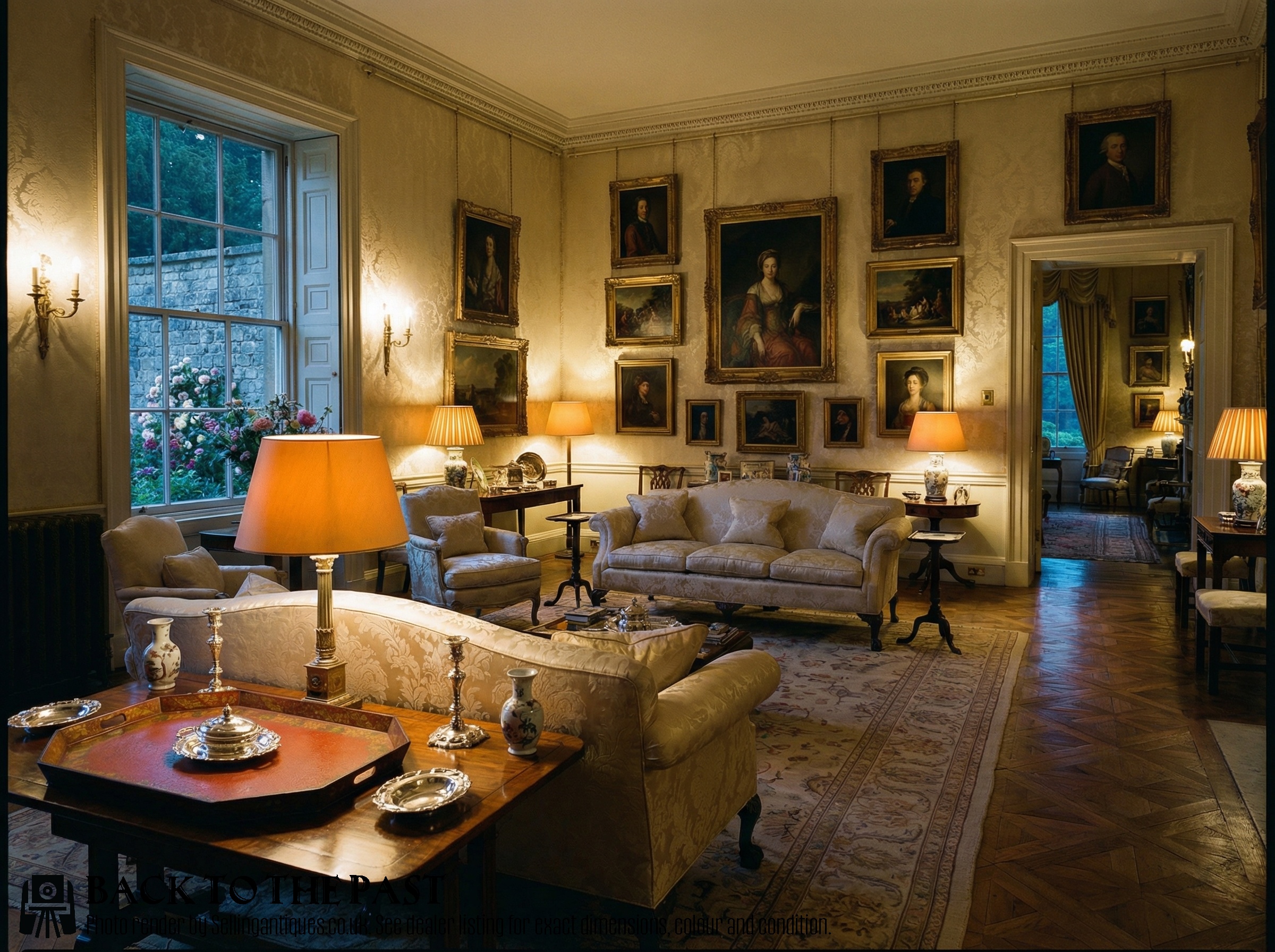
Gilded Papier Mache Tray
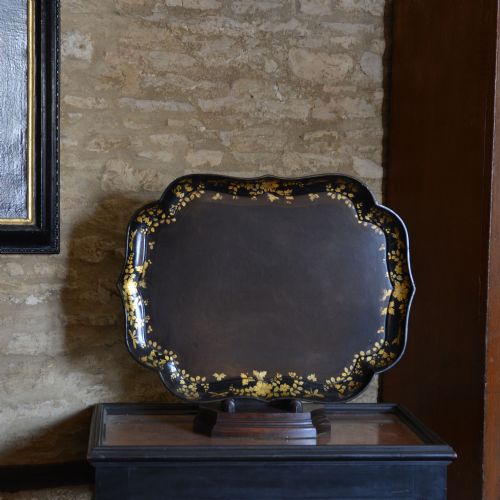
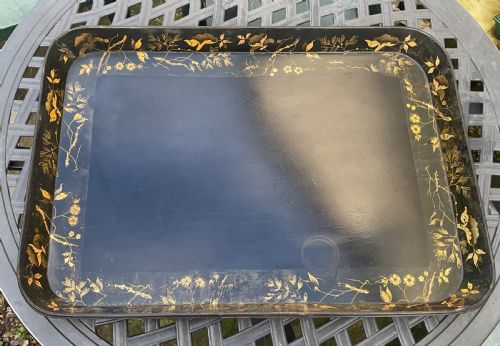
A gilded papier mache tray represents a durable yet lightweight form of household serving ware originating from the Georgian, Regency, and nineteenth century periods. These items combine utility with ornamental design, frequently appearing as serving trays or decorative dishes.
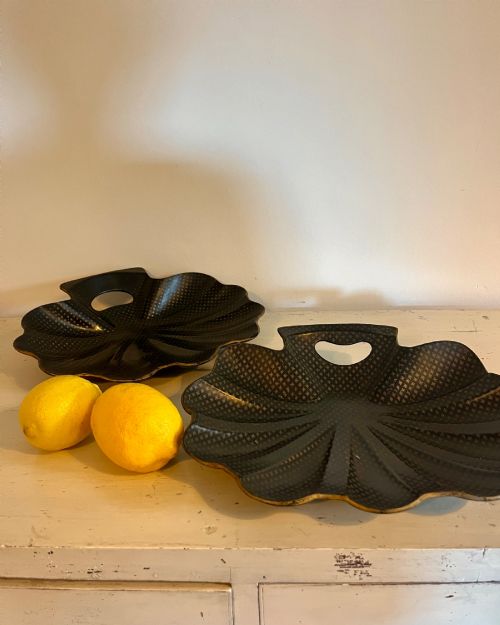
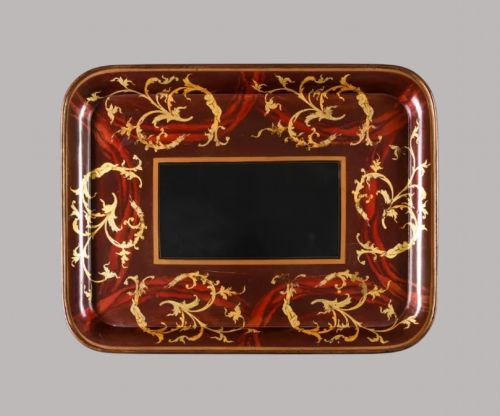
The versions encountered on this page encompass various shapes and colorways, including scarlet octagonal pieces, green dishes, and large-proportion serving trays. Many examples preserve their original surface treatments from the early nineteenth century and Regency eras.
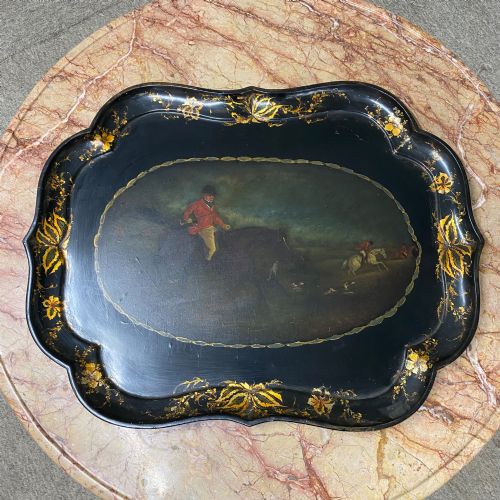
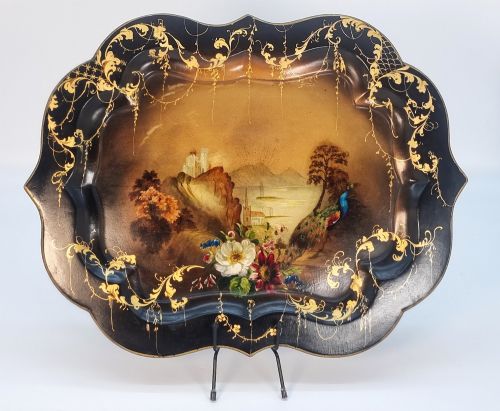
Makers such as Jennens and Bettridge produced substantial examples, sometimes incorporating detailed landscape hunting scenes painted onto the surface. Buyers typically encounter forms ranging from standard serving vessels to specialised octagonal dishes.
How they were made
Makers constructed the core of each piece using layers of paper pulped or laminated together and treated with binders to form a rigid board. This papier-mache material provided a stable base capable of holding heavier items despite its light weight.
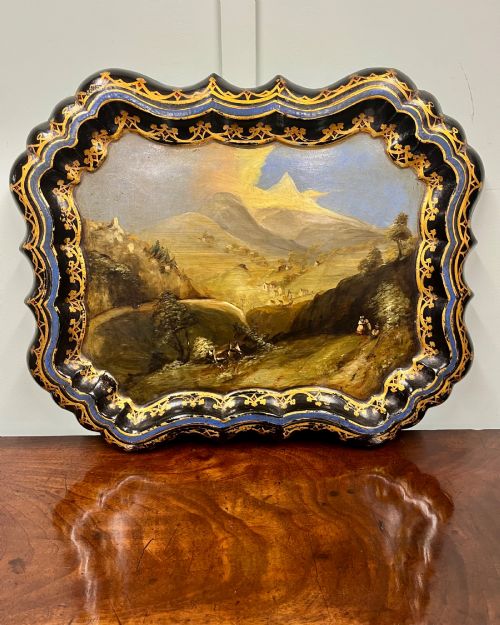
Craftsmen then applied lacquer and paint to the surface, incorporating gold leaf or gilding to create metallic highlights and borders. Some examples also integrate brass elements alongside painted landscapes and decorative motifs.
Gilded Papier Mache Tray Retail Price Guide 2026
Typical asking prices for gilded papier mache tray among the pieces listed under this phrase on Sellingantiques today, from the lower quarter to the upper quarter. They describe what is for sale here now, not the wider market.
Some nineteenth-century artisans painted entire hunting scenes onto a humble paper mixture, proving that dinner service could double as outdoor adventure.
What varies in quality
The standard of a gilded papier mache tray depends heavily on the preservation of its original decoration and surface finish. Pieces retaining unrubbed gilding and distinct painted details sit firmly at the upper end of the range.
Structural integrity of the papier-mache core and the complexity of the form, such as octagonal shaping or large proportions, also distinguish standard production items from more ambitious workshops.
Jennens and Bettridge
The Gilded Papier Mache Tray Glossary
- Papier-mache
- A composite material made from paper pulp or layers of paper reinforced with glue or resin, pressed and dried into a rigid shape. This substance forms the primary structural body of these trays.
- Gilding
- The application of gold leaf or gold powder to a surface to impart a metallic sheen. Artisans used this technique to highlight rims and decorative motifs.
- Lacquer
- A clear or coloured varnish applied in multiple layers to provide a hard, smooth, protective finish. It seals the papier-mache base against moisture and wear.
- Regency
- An architectural and design period spanning the early nineteenth century, characterised by classical motifs and refined ornamentation. Many trays on this page originate from this specific stylistic era.
Gilded Papier Mache Tray: Frequently Asked Questions
How were these trays used?
These trays served primarily for carrying drinks, tea wares, or food items across rooms in larger households. Their lightweight construction made them practical for daily domestic service.
Beyond functional carrying tasks, people also displayed them on stands or tables as decorative objects to catch the eye in a parlor or dining room.
How do I clean a papier mache tray?
Cleaning requires only a soft, dry cloth to remove dust from the surface without disturbing the delicate lacquer or gold leaf. Moisture can soften the historic paper base, so water and chemical cleaners must be avoided entirely.
Keeping the tray away from direct sunlight and damp environments helps preserve the painted landscape scenes and original gilding for the future.
How can I tell the period?
Dating relies on stylistic clues such as the shape of the tray, the colour palette, and the specific style of the painted decoration. Georgian and Regency pieces often feature distinct geometric forms like octagonal edges alongside specific colour choices like scarlet or green.
Maker inscriptions or stamps on the underside can also pinpoint the manufacturing era, particularly when linked to prominent nineteenth-century firms.
Are all these trays painted?
Many examples feature hand-painted details, ranging from simple decorative borders to intricate landscape hunting scenes executed by skilled artisans. The presence of such artwork adds significant visual complexity to the surface.
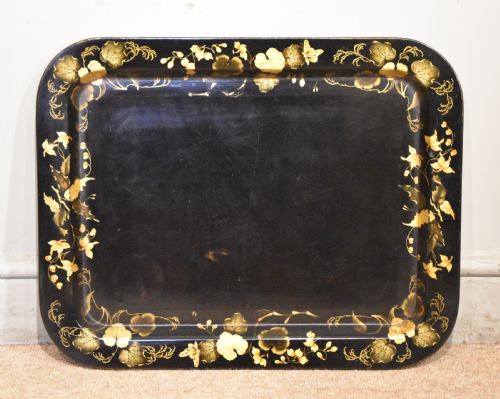
Not every piece includes a pictorial scene, as some rely purely on the contrast between the lacquered ground, coloured paint, and applied gold leaf or gilding.