


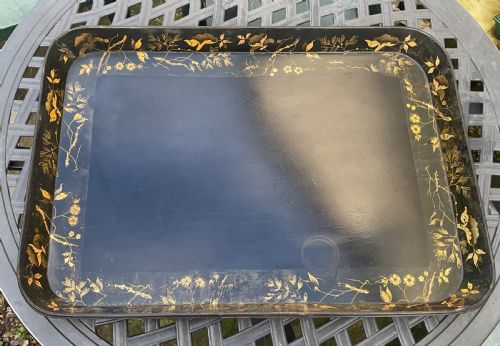


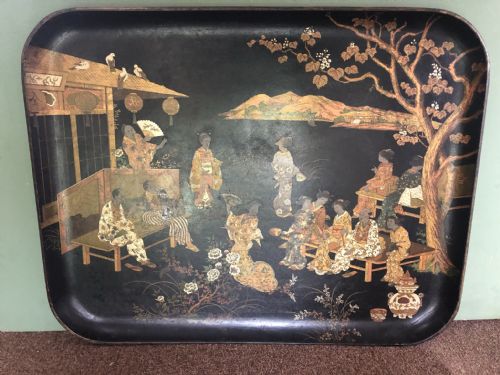


Antique Papier Mache Platter
An antique papier mache platter offers a robust yet remarkably light surface, combining deep lacquer and gilded detail for your home.
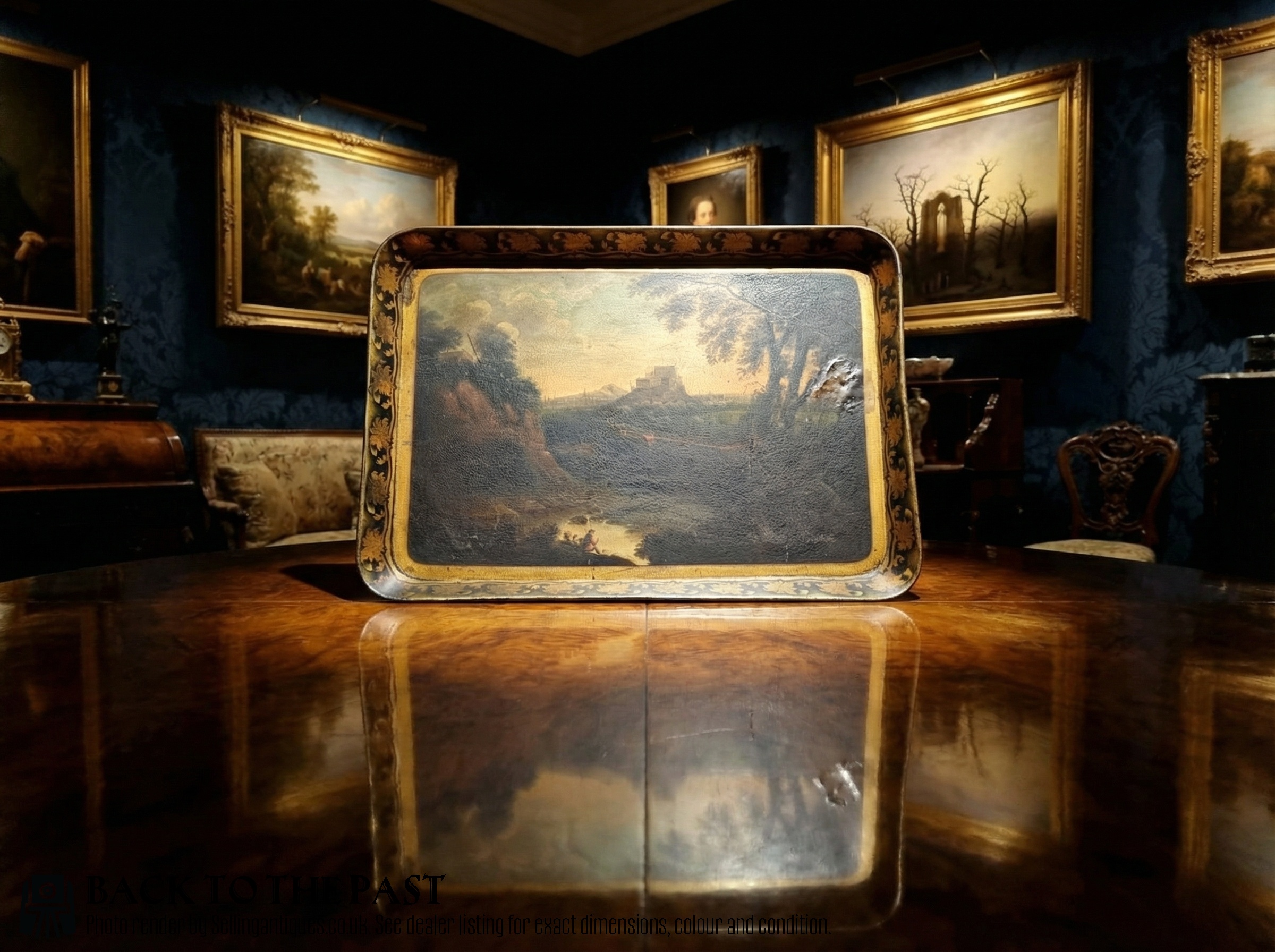
Antique Papier Mache Platter
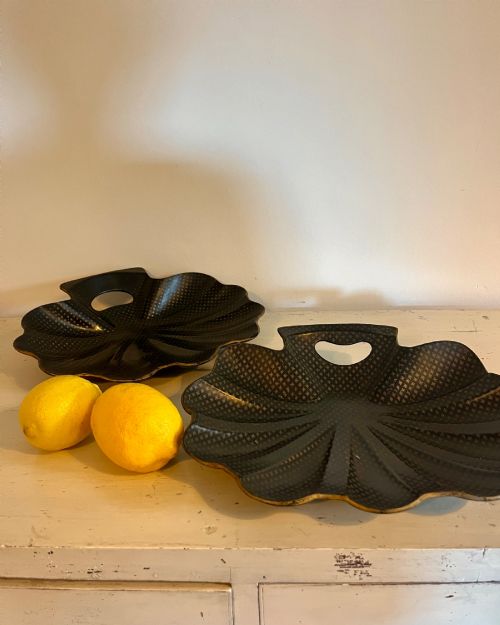
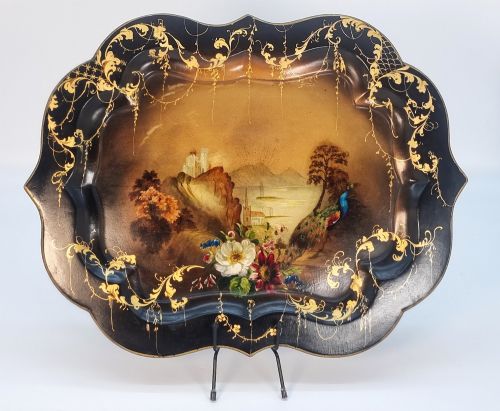
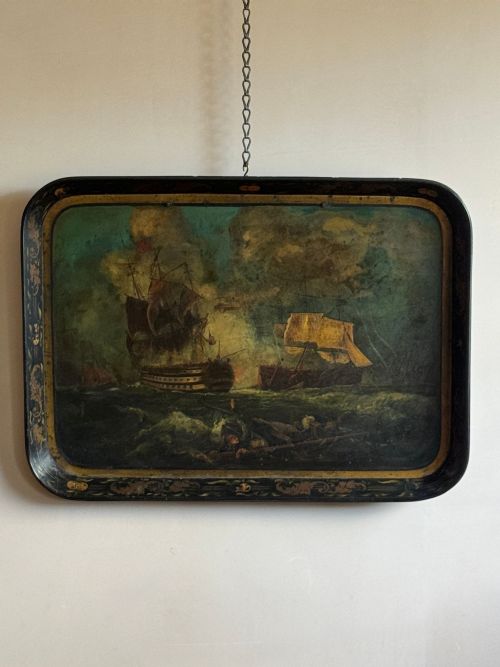
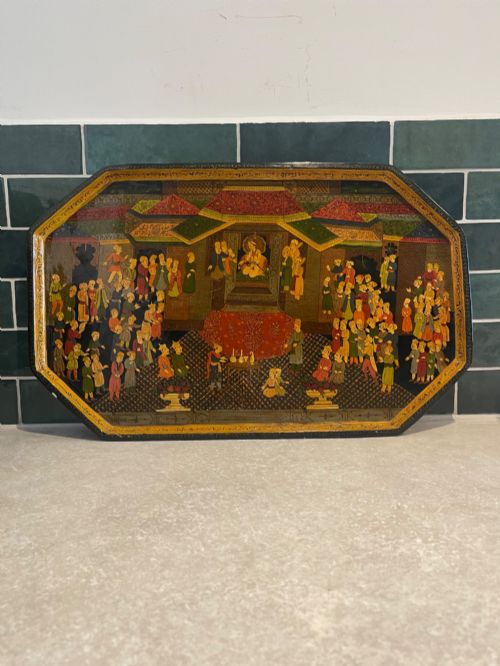
When you search for an antique papier mache platter, you enter a field dominated by serving trays and decorative trays spanning the Georgian, Regency, and Victorian periods. These pieces range from small domestic items to massive examples decorated with hunting scenes, fishing subjects, and landscape motifs.
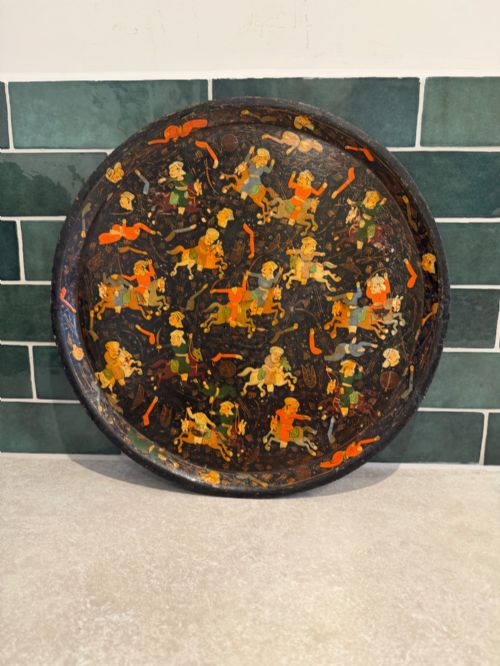
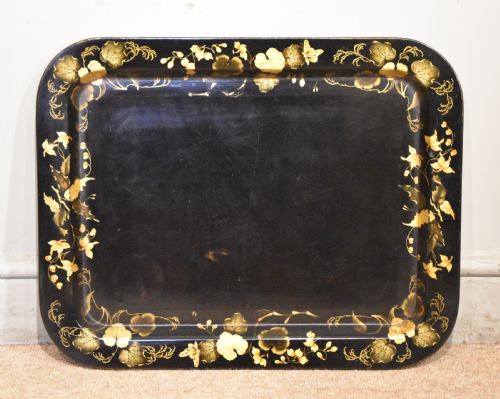
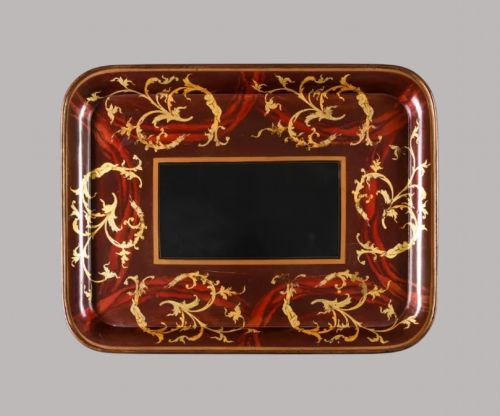
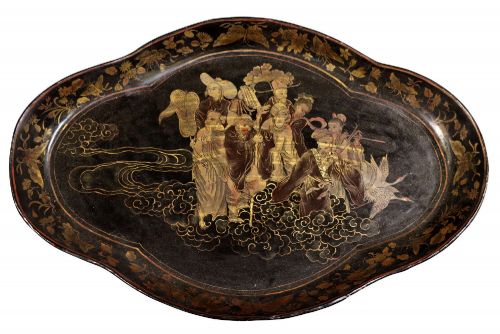
The most common form you will meet on this page is the large oval or rectangular tray dating from the nineteenth century, often finished with a gilded border or painted Chinoiserie details. Alongside English and French output, you encounter Kashmiri and Japanese export pieces that widen the stylistic scope.
Makers such as Clay and Jennens and Bettridge produced some of the finest examples, while naive pieces from the late eighteenth century show a more rustic charm. Whether kidney-shaped or deep rectangular, each serving tray serves as both a functional object and a decorative wall or table piece.
How They Were Made
These platters rely on layers of paper pulp or sheets pressed together with glue, creating a strong core that resists warping far better than solid timber. Makers then applied multiple coats of lacquer to seal the surface and provide a smooth base for painting and gilding.
Painters added fine details in gold leaf, polychrome paint, and occasionally mother-of-pearl inlay to create contrasting textures against the dark lacquer background. Protective varnishes sealed the final artwork, preserving the pigments through generations of use.
Antique Papier Mache Platter Retail Price Guide 2026
Typical asking prices for papier mache platter among the pieces listed under this phrase on Sellingantiques today, from the lower quarter to the upper quarter. They describe what is for sale here now, not the wider market.
Materials recorded across the current selection include lacquer, gold leaf, paint, and mother-of-pearl applied to moulded paper pulp.
What Varies in Quality
The skill of the painting sets the standard, separating mass-produced decorative work from hand-painted landscapes and figurative scenes executed by skilled artisans. Finer pieces display precise brushwork, intricate gold leaf application, and carefully integrated mother-of-pearl inlay.
Structural integrity also defines the tier of a piece, with superior examples retaining their original decoration and strong edges without excessive cracking to the lacquer. The reputation of the maker, such as Clay or Jennens and Bettridge, often indicates a higher grade of manufacture and material selection.
Clay·Jennens and Bettridge
The Antique Papier Mache Platter Glossary
- Papier-mâché
- A composite material made from paper pulp or reinforced paper sheets mixed with glue, pressed into moulds, and baked until rigid. It provided a lightweight alternative to wood and metal for nineteenth-century serving trays.
- Japanning
- A European imitation of East Asian lacquerwork, created by applying layers of dark varnish and curing them under heat before adding painted or gilded decoration. This finish characterises many Regency and Georgian trays.
- Chinoiserie
- A European artistic style reflecting Chinese motifs, featuring pagodas, exotic figures, and stylised landscapes. It appears frequently on nineteenth-century English trays.
- Mother-of-pearl
- The iridescent inner layer of certain mollusc shells, inlaid into lacquer surfaces to catch the light. It adds shimmering highlights to architectural and floral designs.
- Gilding
- The application of gold leaf or gold powder to the surface of an object to highlight borders and decorative elements. On these trays, it frames the central painted scenes.
Antique Papier Mache Platter: Frequently Asked Questions
How were these trays used historically?
These trays served primarily for carrying tea services, glassware, and decanters across formal rooms in large houses. Their light construction made them practical for servants to transport heavy loads without wooden bulk.
Beyond domestic service, owners often displayed them upright on stands or tables when not in use, treating the painted surfaces as portable artworks.
Are papier mache platters waterproof?
While the lacquer finish resists moisture to a degree, these pieces are not fully waterproof and prolonged exposure to standing water will damage the surface. Spills should be wiped away promptly with a dry or slightly damp cloth.
Due to their delicate construction and historic varnishes, they are best suited for dry display or gentle service rather than heavy kitchen use.
How do I date a papier mache tray?
Dating relies heavily on the style of painting, the shape of the tray, and any maker stamps found on the underside. Georgian and Regency examples often feature crisp Japanning and classical motifs, while Victorian pieces embrace varied influences including Japanese export styles.
Material clues such as the presence of mother-of-pearl inlay or specific framing styles also help narrow down the period of manufacture.
How should I clean and maintain my tray?
Maintenance requires only a soft, dry duster to remove surface dust without scratching the aged lacquer. Avoid harsh chemical cleaners, abrasives, and excessive moisture, which can lift the paint and degrade the varnish.
Keep the piece away from direct sunlight and heat sources to prevent the papier-mâché core from drying out and the lacquer from cracking.