







Regency Papier Mache Tray
A regency papier mache tray brings brilliant lacquer and gilded detail to a room, serving as a striking centrepiece or occasional table top.
Regency Papier Mache Tray
A regency papier mache tray is a sturdy serving vessel or decorative centrepiece shaped from pressed paper pulp and finished with hard lacquer. These objects emerge primarily from the Regency, Georgian and Victorian periods, often taking large oval or rectangular forms designed for domestic use.
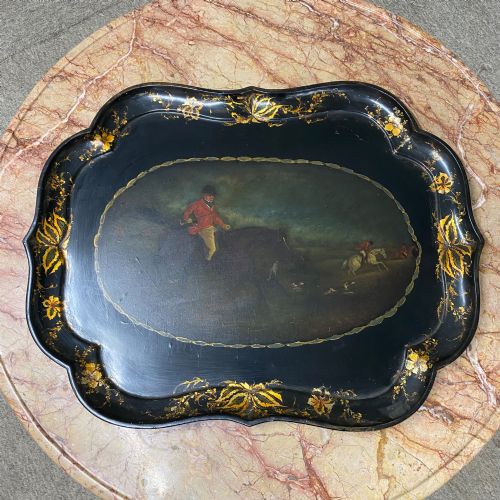
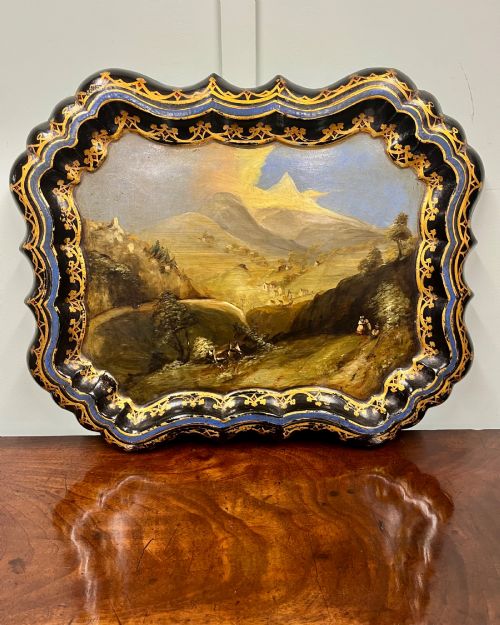
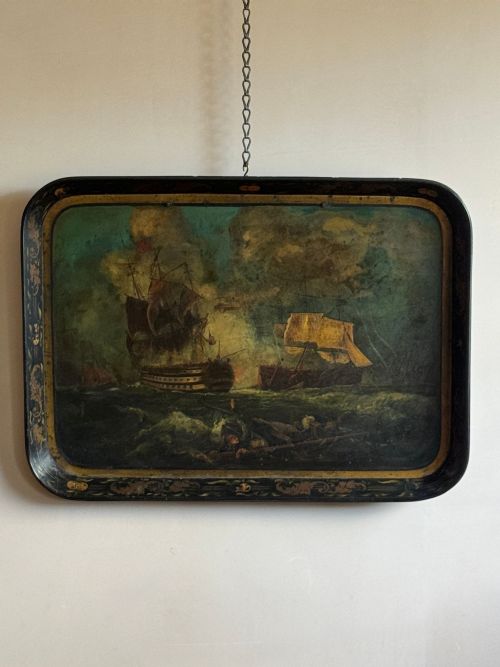
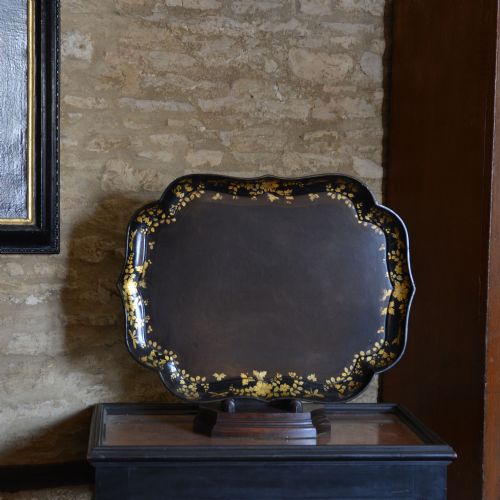
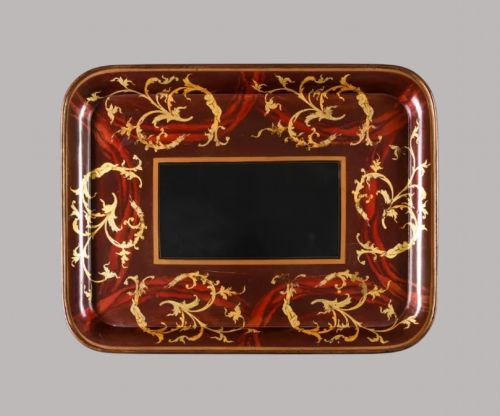
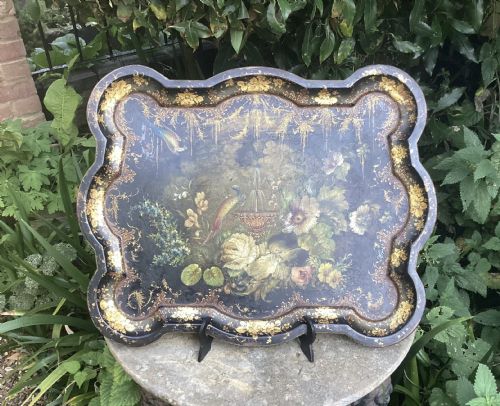
Buyers regularly encounter these pieces mounted on later folding stands to function as occasional tables or drinks surfaces. The selection includes plain ebonised examples alongside elaborate serving trays featuring hand-painted landscapes, mythological scenes and Chinoiserie decoration.
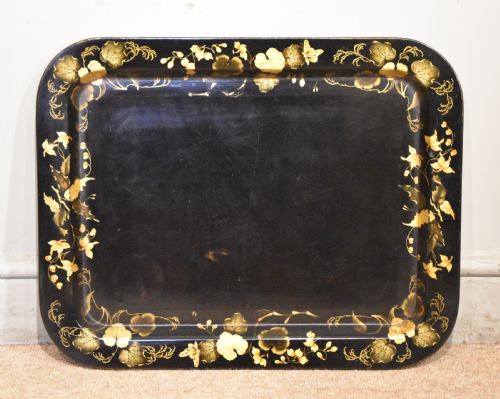
The material history spans the early nineteenth century, connecting strict Georgian utility with the decorative tastes of the Victorian era. Many survivors retain original gilt borders or polychrome painting, though some appear alongside related toleware and lacquer boxes.
How they were made
Makers constructed the foundation of a regency papier mache tray by layering paper sheets or pulped paper with glue and heavy pressure, creating a rigid board that resisted warping far better than solid timber. Artisans then applied multiple coats of dark lacquer, rubbing the surface smooth between layers to achieve a deep, glossy sheen.
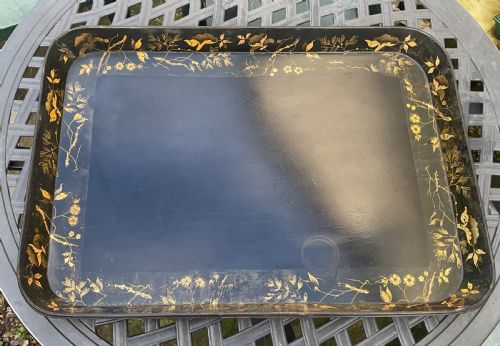
Decoration relied on skilled hand painting using oil colours, bronze powders and gold leaf, frequently finished with a protective clear varnish. Master workshops added brass fittings or incorporated elaborate gilt foliate borders to frame the central painted motifs.
Regency Papier Mache Tray Retail Price Guide 2026
Typical asking prices for regency papier mache tray among the pieces listed under this phrase on Sellingantiques today, from the lower quarter to the upper quarter. They describe what is for sale here now, not the wider market.
Materials recorded across the archive include papier-mâché paired with gold leaf, brass, lacquer and painted wood.
What varies in quality
The distinction between standard production and top-tier work rests largely on the fidelity and preservation of the hand-painted surface. Pieces bearing documented signatures from leading makers exhibit superior draughtsmanship in landscapes, figures and gilded foliate borders.
Structural integrity also separates examples, as the underlying papier-mâché core can suffer from moisture damage or cracking beneath the lacquer. Trays retaining their original decoration without extensive overpainting command greater interest from serious collectors.
Jennens & Bettridge·Henry Clay·Clay of Covent Garden
The Regency Papier Mache Tray Glossary
- Papier-mâché
- A composite material formed from paper pulp or layered paper sheets mixed with binding agents, pressed and dried into a rigid board. This medium allowed makers to mould complex curves and lightweight trays.
- Japanned
- A European imitation of East Asian lacquerwork, created by applying layers of dark varnish and curing them to a hard finish. Craftsmen often decorated these surfaces with raised gilt motifs.
- Toleware
- Painted or enamelled sheet metalware produced in England and on the continent during the eighteenth and nineteenth centuries. It shares stylistic traits and decorative palettes with contemporaneous lacquer items.
- Chinoiserie
- A European artistic style reflecting Chinese aesthetic influences, characterising fantastical landscapes and pavilions. This ornamentation appears frequently on painted serving trays.
- Gilt
- A thin application of gold leaf or gold powder used to embellish borders and painted details. It provides high contrast against dark ebonised or green lacquer grounds.
Regency Papier Mache Tray: Frequently Asked Questions
Can I use these trays for serving drinks?
While originally built for domestic service, the delicate lacquer and painted surfaces of a regency papier mache tray are vulnerable to moisture and heat. Modern owners generally reserve them for display or tabletop use rather than active hospitality.
Placing drinks directly on antique lacquer risks permanent clouding or scratching of the finish. Many choose examples already mounted on stands to enjoy their decorative utility safely as low tables.
How do I care for antique lacquer?
Maintenance requires only a soft, dry cloth to remove dust, avoiding all commercial polishes, water and chemical cleaners. Keeping the tray away from direct sunlight and excessive humidity prevents the lacquer from cracking.
Temperature fluctuations in modern homes can stress the underlying paper pulp foundation. Gentle handling ensures the original painted decoration and gilt borders remain stable.
Are tray stands original to the pieces?
Most stands supporting these trays date from a later period, often added during the Victorian era or the twentieth century to convert a serving tray into an occasional table. Trays were primarily portable objects designed to rest on sideboards or laps.
Finding a piece on a period folding stand is common, but buyers should examine how the tray fixes to the frame. Faux bamboo and ebonised wood are typical materials for these later supporting structures.
How do I distinguish different periods?
Georgian and Regency examples tend to feature restrained neoclassical motifs, classical figures or simple gilt foliate borders on dark ebonised grounds. Later Victorian pieces often embrace bolder Chinoiserie scenes or polychrome landscapes with richer colour palettes.
Maker marks stamped into the reverse provide the most reliable chronological anchor. Stylistic shifts in the painted subjects also mirror broader changes in nineteenth-century interior design.