




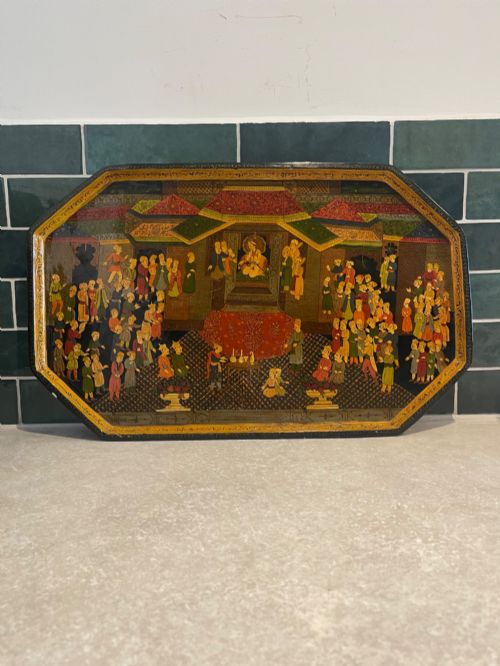
Black Lacquered Tray
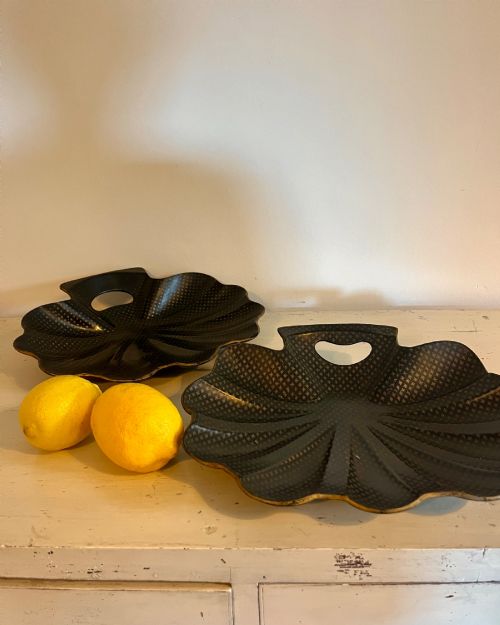
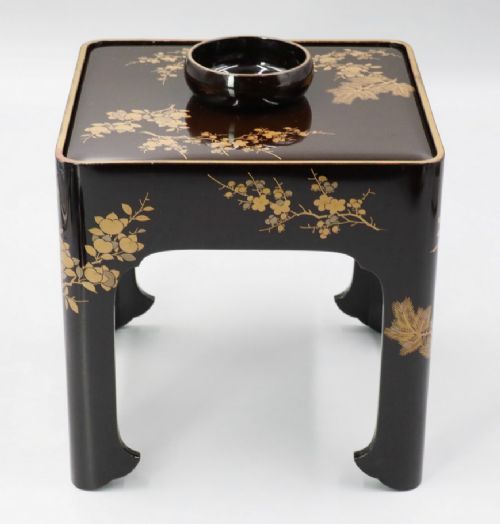
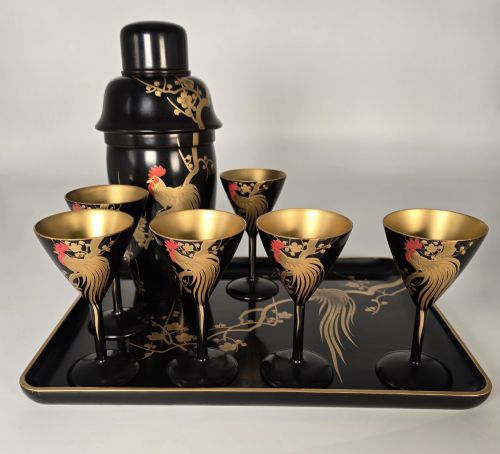
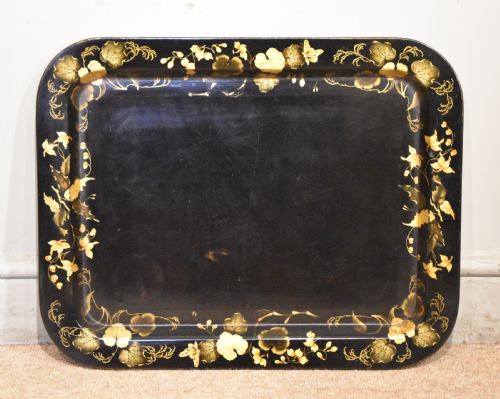
A black lacquered tray brings a deep, reflective surface and hand-painted detail into a room, offering both utility and decorative presence.
Black Lacquered Tray
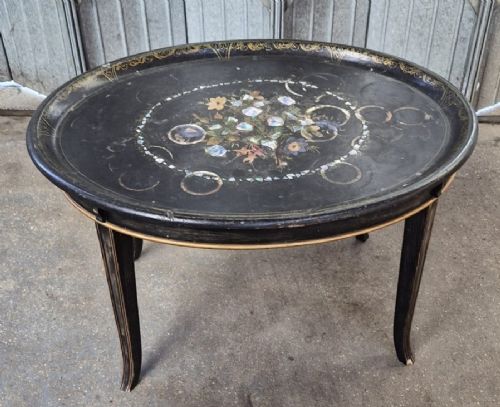
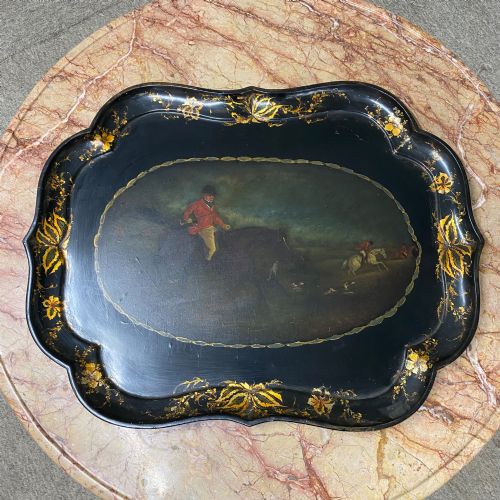
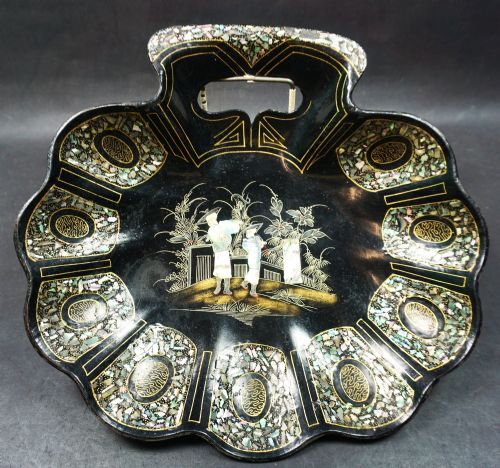
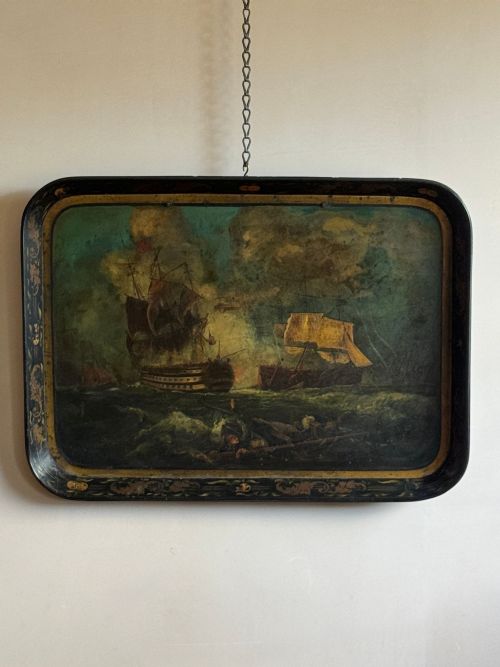
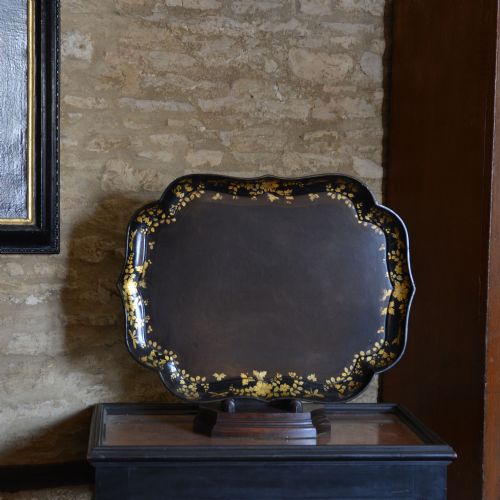
When you search for a black lacquered tray, you encounter pieces spanning from the Georgian and Regency eras through the Victorian period and into the early twentieth century. These items appear primarily as serving trays, decorative platters, and card baskets, often mounted onto later stands to function as occasional or coffee tables.
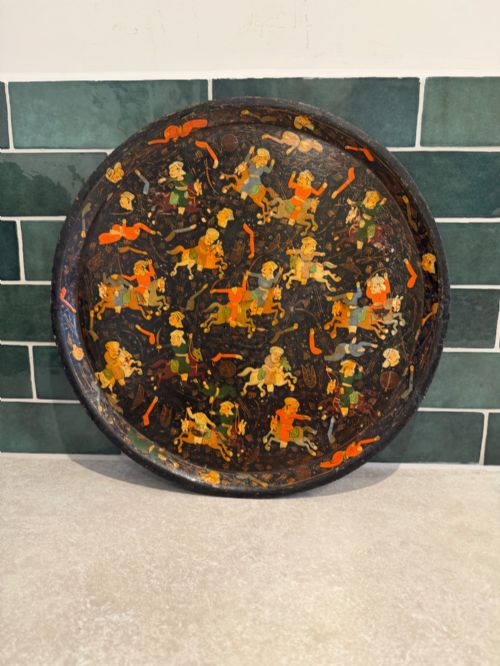
The English examples lean heavily on papier-mâché and wood finished with black lacquer and gilt, while the Asian pieces incorporate traditional techniques from Japan, China, and Kashmir. Forms range from small desk accessories and letter racks to large oval serving trays and circular tray tables.
How they were made
The foundation of many English pieces is papier-mâché, built up from layers of paper pulp and glue pressed in moulds, then dried and baked to create a rigid, durable board before being coated in dark lacquer. Wooden trays and platters provide an alternative solid base, particularly in larger formats or Asian imports.
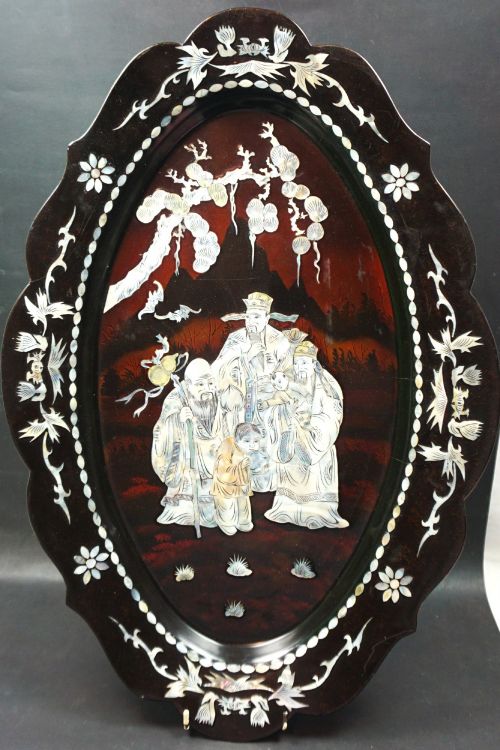
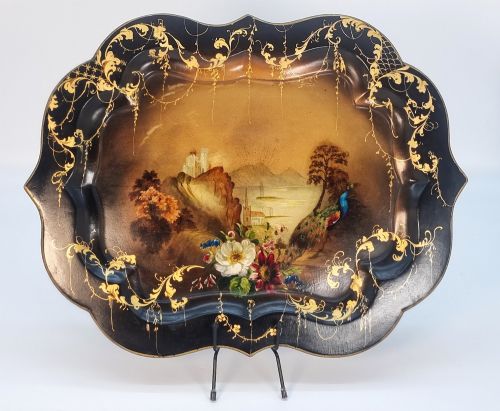
Makers finished these surfaces using gold leaf, paint, and gilt decorations, frequently employing Chinoiserie motifs. Some pieces integrate mother-of-pearl inlay into the lacquer layers to catch the light, alongside brass mounts or silver plate galleries.
Black Lacquered Tray Retail Price Guide 2026
Typical asking prices for black lacquered tray among the pieces listed under this phrase on Sellingantiques today, from the lower quarter to the upper quarter. They describe what is for sale here now, not the wider market.
One listed tray carries a direct connection to royal history, marked as a waiter from Windsor Castle.
What varies in quality
The distinction between ordinary and exceptional pieces rests upon the precision of the hand-painted decoration and the depth of the lacquer finish. Pieces bearing the marks of recognised makers command attention for their superior execution in gilding and papier-mâché moulding.
Preservation of the surface matters significantly, as original gilt details and intact mother-of-pearl inlay elevate a piece above those with heavy modern repainting or structural cracks in the lacquer base.
Henry Clay·Jennens & Bettridge
The Black Lacquered Tray Glossary
- Papier-mâché
- A composite material made from paper pulp, reinforced with binders, and pressed into rigid forms for trays and boxes. It provides a smooth base that takes a dark lacquer finish exceptionally well.
- Japanned
- European work imitating Japanese and Chinese lacquer finishes using dark varnishes and metallic powders. This technique was widely applied to eighteenth and nineteenth-century furniture and serving trays.
- Toleware
- Painted and lacquered sheet metal items produced in domestic and decorative forms. These pieces bridge the gap between functional metalware and decorative lacquer objects.
Black Lacquered Tray: Frequently Asked Questions
Were these trays originally made as tables?
Most antique trays began life as portable serving pieces, desk accessories, or waiting trays used by servants to carry items. Their conversion into tray tables often happened later in their lifespan or in the twentieth century.
Many examples sit upon custom-built stands that match the period style, transforming a flat serving surface into a permanent piece of furniture.
How can I tell a Georgian tray from a Victorian one?
Georgian and Regency pieces often display finer, restrained Chinoiserie gilding and heavier, rigid papier-mâché construction. Makers such as Henry Clay produced notable work during these earlier decades.
Victorian pieces frequently embrace bolder floral designs, mother-of-pearl inlay, and ebonised wood finishes. They also encompass the rise of branded institutional items, such as pieces associated with Windsor Castle.
Can I use an antique tray for serving food?
While these items served functional roles in the past, modern use with hot or wet food can damage the delicate lacquer and historic painted surfaces. Condensation and heat cause the lacquer to craze or lift from its papier-mâché or wooden base.
Displaying them as decorative accents, desk organizers, or coffee table surfaces preserves their condition for the future.