



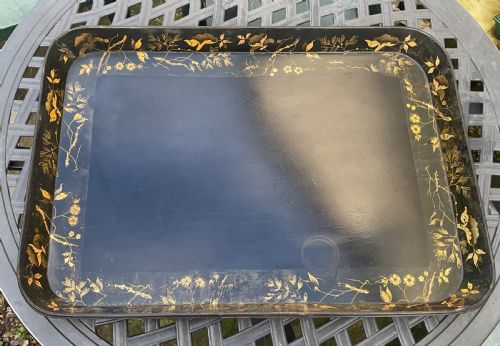


Chinoiserie Tea Tray
A chinoiserie tea tray brings hand-painted oriental scenes and deep lacquer surfaces to a room, serving as both a functional server and a statement of Regency or Victorian taste.
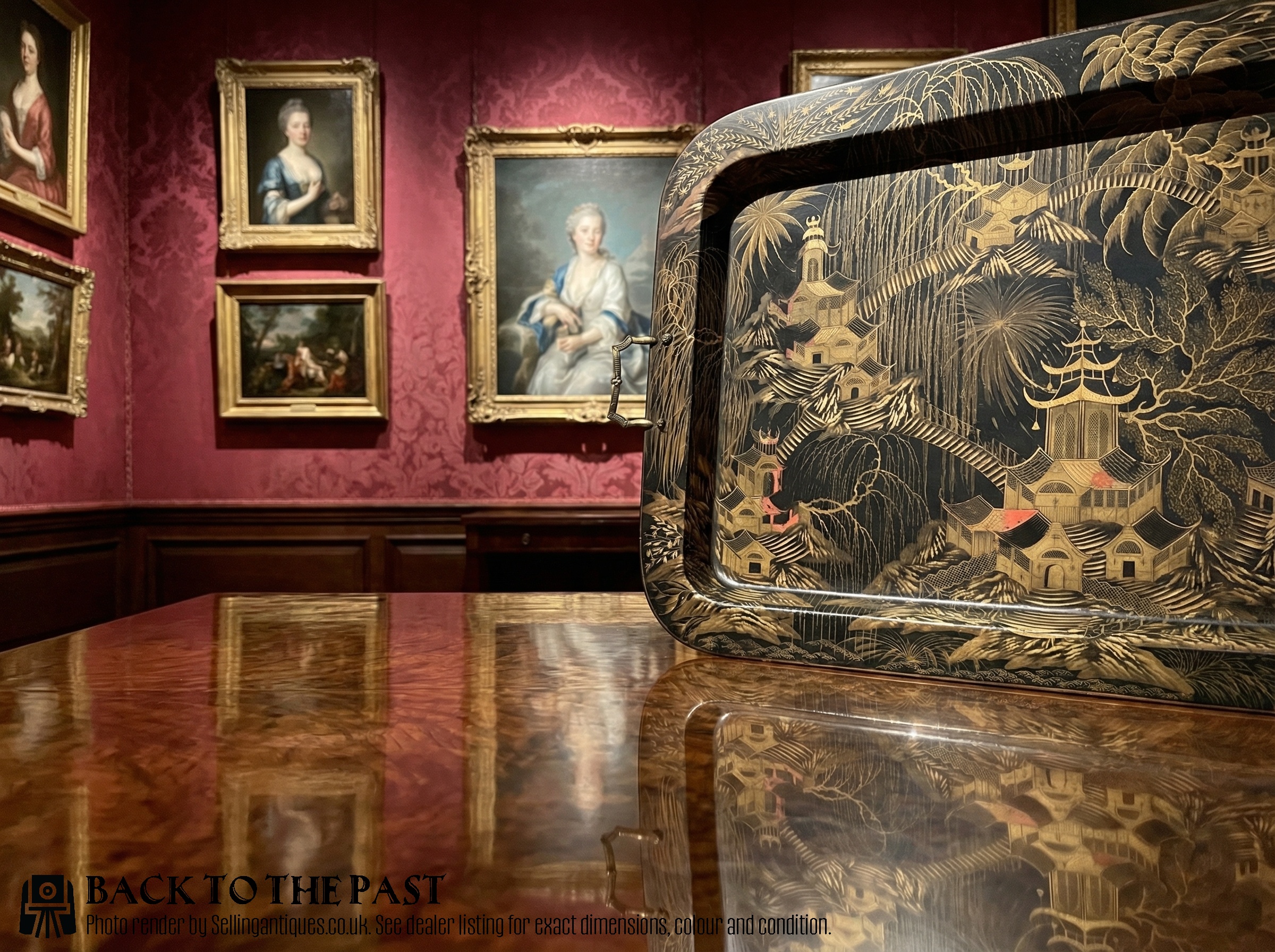
Chinoiserie Tea Tray
A chinoiserie tea tray combines functional serving ware with European fantasy interpretations of East Asian design, appearing in forms ranging from handheld servers to large decorative pieces mounted on stands as coffee or occasional tables. The pieces gathered here span the Georgian, Regency, Victorian, and Edwardian eras, capturing nearly two centuries of changing taste in decorative lacquer and painted surfaces.
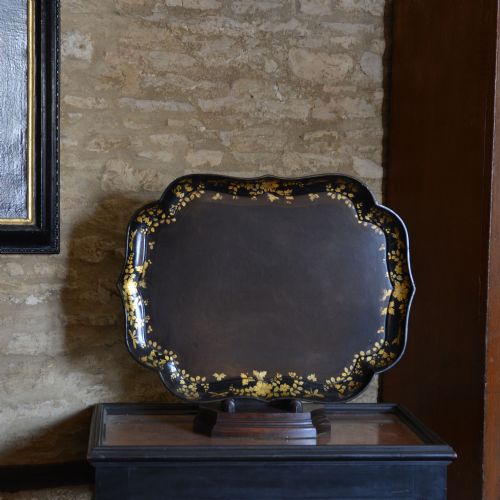
The most frequent examples on this page are papier-mâché and lacquered wood trays dating from the nineteenth century, often elevated onto folding or fixed stands to serve as low tables. These items demonstrate how domestic items transitioned from the dining room to the drawing room as household habits shifted.
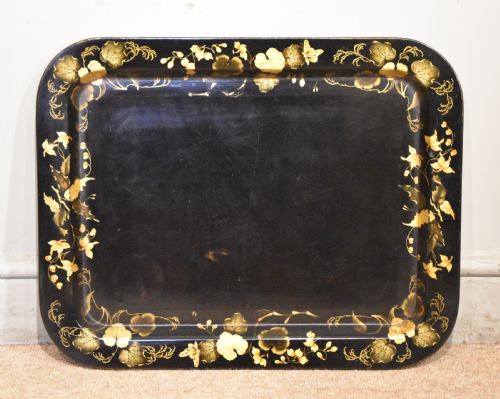
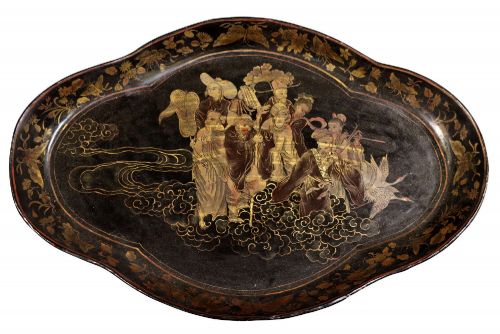
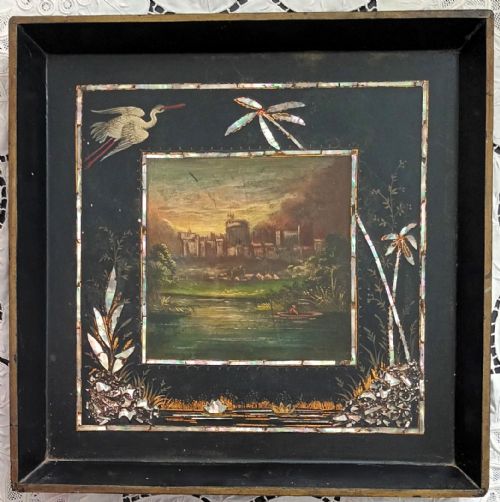
Alongside standard serving trays, the selection includes oval trays, hanging wall pieces, and specialised forms like spoon trays and toleware. Makers from the Regency period onward applied elaborate gilt and painted motifs of figures, pavilions, and flora to dark ebonised grounds.
Assessing quality and finish
Quality rests upon the crispness and complexity of the hand-painted chinoiserie details and the depth of the lacquer finish. Finer pieces display intricate gilt work and carefully shaded figures rather than flat, stencilled motifs.
The integrity of the papier-mâché or wood base dictates longevity, with superior examples maintaining rigid structure and smooth edges despite centuries of use. The preservation of the original gilt and painted surface without heavy overpainting separates premier pieces from standard workshop output.
Chinoiserie Tea Tray Retail Price Guide 2026
Typical asking prices for chinoiserie tea tray among the pieces listed under this phrase on Sellingantiques today, from the lower quarter to the upper quarter. They describe what is for sale here now, not the wider market.
Listings feature pieces spanning the Georgian, Regency, Victorian, and Edwardian periods, constructed in lacquer, papier-mâché, wood, and toleware.
Clay
The Chinoiserie Tea Tray Glossary
- Papier-mâché
- A composite material made from paper pulp or reinforced paper sheets mixed with glue and pressed into moulds. It provides a lightweight yet durable base for decorative trays.
- Chinoiserie
- A European artistic style reflecting Chinese motifs and decorative techniques, popular during the eighteenth and nineteenth centuries. Artisans interpreted Asian aesthetics through Western eyes.
- Toleware
- Painted or enamelled tinplate items produced in various European centres. These metal trays and vessels offered durable surfaces for colourful floral and landscape designs.
- Ebonised
- Wood or other materials treated to resemble ebony through dark staining or finishing. This technique creates a stark black background that makes gold leaf and bright colours stand out.
- Gilt
- A thin layer of gold applied to the surface of wood, metal, or papier-mâché. It adds luminous highlights to painted scenes and framing borders.
Chinoiserie Tea Tray: Frequently Asked Questions
How were chinoiserie tea trays used originally?
These trays served during tea and social gatherings to carry porcelain cups, teapots, and ewers between rooms. Servants brought them into drawing rooms where hosts poured tea for assembled guests.
Over time, many of these trays found new life mounted on stands to function as permanent coffee tables or side tables within period interiors.
How do I care for a papier-mâché tray?
Keep these pieces away from direct sunlight, excessive heat, and moisture, which can warp papier-mâché and crack the delicate lacquer surface. Dust gently with a dry, soft cloth rather than using liquid polishes or chemical cleaners.
If the tray sits on a stand as a table, use coasters beneath glasses to protect the historic painted finish from water rings and heat damage.
How can I tell a Regency tray from a Victorian one?
Regency trays often feature lighter, more classical proportions with subtle gilt borders and refined figural scenes produced by notable workshops. They typically date from the early nineteenth century around the eras associated with makers like Clay.
Victorian examples frequently display heavier ebonised papier-mâché construction with dense floral and orientalist decoration, reflecting the later nineteenth-century taste for rich, dark interiors.
Can I use an antique tray for serving food?
Historic lacquered and painted surfaces are delicate and vulnerable to staining, scratching, or moisture damage from modern tableware. It is best to display them as decorative objects or use them strictly for dry display.
Using them for heavy daily service risks wearing away the original hand-painted chinoiserie details and gilt work that define their character and age.