


Antique Paper Mache
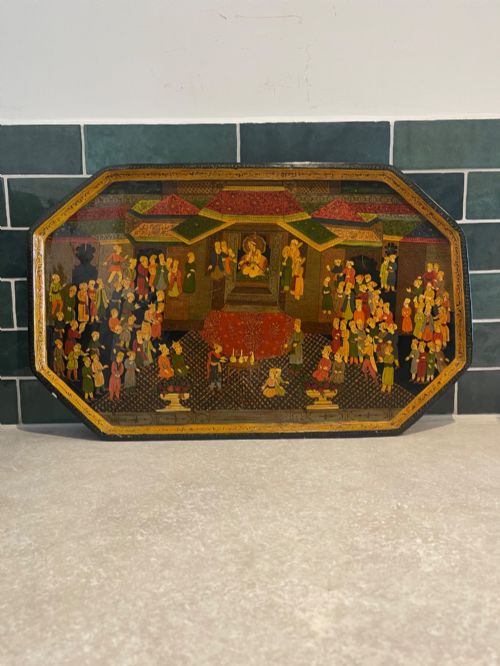
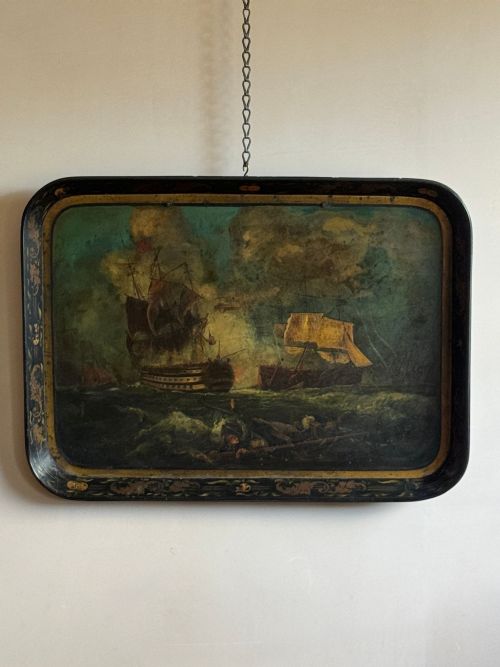
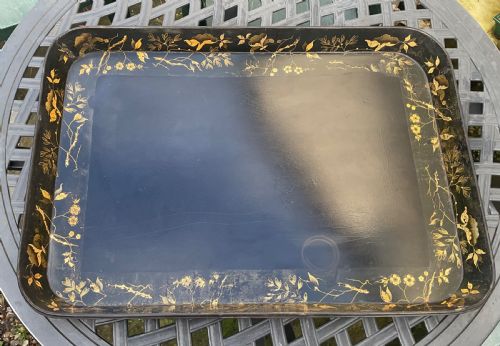
These antique paper mache pieces bring tactile warmth to a room through dark lacquer, gilt, and painted details.
Antique Paper Mache
Trays dominate the selection, appearing in small formats and large Regency tea tray configurations. Many trays sit on folding wooden or iron stands to function as occasional tables.
Beyond trays, the selection includes Kashmiri bowls, letter racks, tea caddies, coasters, face screens, and globes. Wall brackets, snuff boxes, needle boxes, and framed silhouettes also appear.
The periods span the Georgian, Regency, and Victorian eras, extending into Edwardian pieces and mid-century items. Kashmiri workshops and English makers produced these pieces across the nineteenth and twentieth centuries.
How they were made
Workers formed the base material by pressing layers of paper or pulped paper over moulds, then saturating the matrix with adhesive binders before baking and drying it into a rigid board. This created a tough substrate that resisted warping better than solid timber.
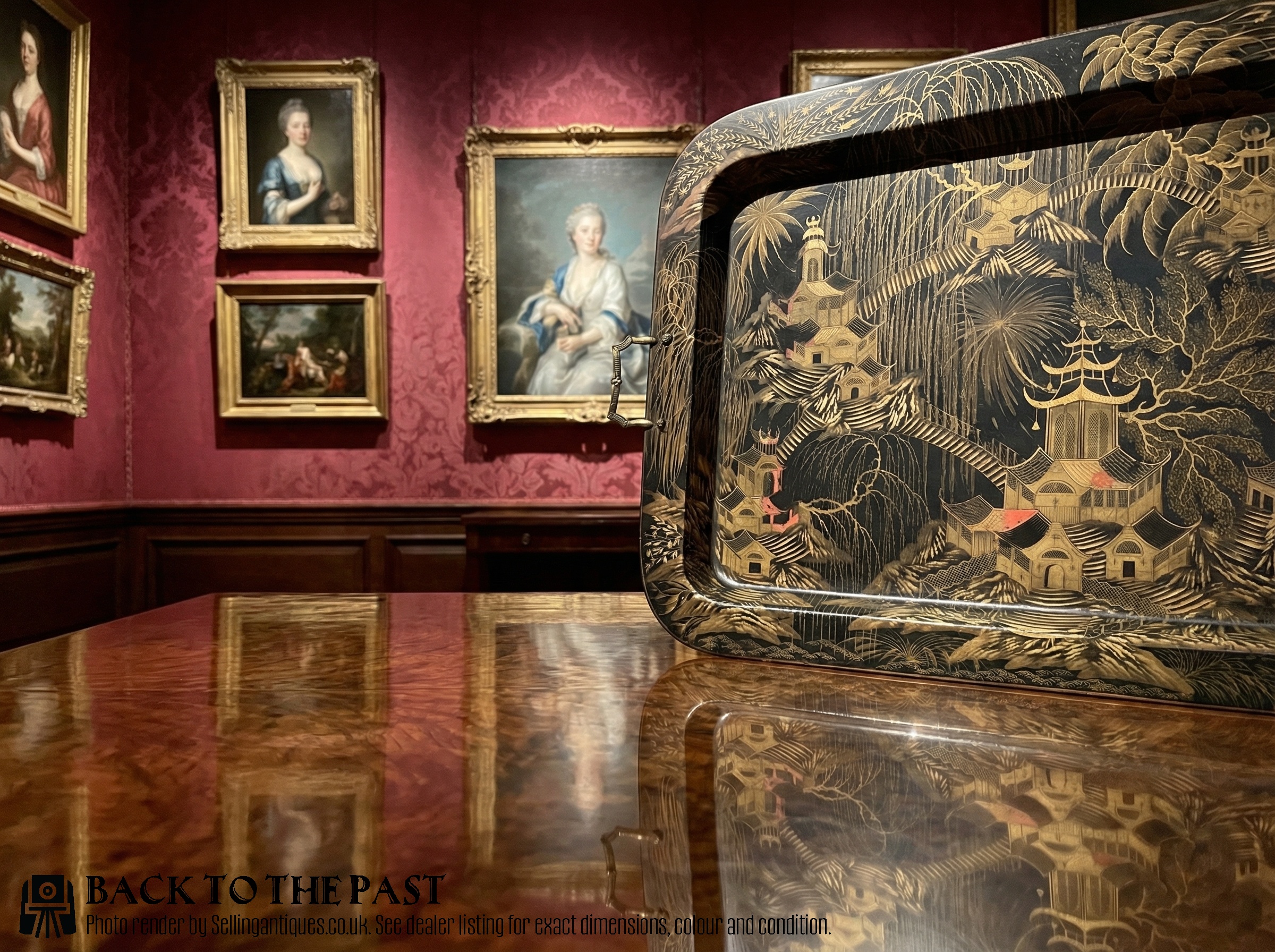
Makers finished the dried forms with layers of dark lacquer, black paint, or japanned surfaces. Artisans applied gold leaf, hand-painting, and Chinoiserie motifs over the base, sometimes incorporating shell inlays or intricate foliage designs.
The listings on this page span the Georgian, Regency, and Victorian periods, extending into Edwardian and 1930s items.
What varies in quality
Quality rests in the crispness of the painted decoration and the integrity of the lacquered surface. Superior pieces show precise brushwork, intricate gilding, and well-preserved decorative motifs rather than flat, heavy-handed repainting.
The physical substance of the tray or box matters just as much as the paint layer. Denser, heavier mouldings retain their structural rigidity and smooth edges, while inferior examples suffer from surface cracking and delaminating paper layers.
Jennens & Bettridge·Clay
The Antique Paper Mache Glossary
- Papier-mâché
- A composite material made from paper pulp or layers of paper glued together, pressed into moulds, and dried until rigid. It serves as the primary substrate for trays, boxes, and decorative objects.
- Japanned
- A European imitation of East Asian lacquerwork, created by applying successive coats of dark varnish and curing them under heat. This finish provides a hard, glossy black surface often decorated with gilt motifs.
- Chinoiserie
- A European artistic style reflecting Chinese aesthetic influences, featuring whimsical landscapes, figures, and pavilions. It appears frequently in gold and colour on Victorian and Regency trays.
- Face screen
- A small hand-held screen mounted on a handle, designed to protect a lady's complexion from the heat of a fireplace. These screens often feature painted or needlework panels set in papier-mâché frames.
- Tea caddy
- A lidded box partitioned to store loose tea leaves securely. Regency and Victorian examples utilised papier-mâché for its smooth surfaces and suitability for lacquer and inlay.
Antique Paper Mache: Frequently Asked Questions
How do I clean antique paper mache?
Dust surfaces gently with a dry, soft cloth to prevent scratching the aged lacquer. Avoid using water, damp cloths, or chemical solvents, as moisture penetrates the paper layers and damages the painted finish.
Keep these pieces away from direct sunlight and damp environments to protect the varnish and gold leaf. Proper placement ensures the material remains stable over decades.
Were tray tables original to the period?
Many papier-mâché trays started as flat serving items equipped with raised edges for carrying tea wares. Dealers and owners later paired these portable trays with folding wooden or iron stands to serve as occasional tables.
This conversion practice happened both historically and in later periods to give fragile serving trays a permanent domestic function. The pairing creates practical side tables suited for display.
How do I distinguish Regency from Victorian pieces?
Regency items often feature restrained classical motifs, Chinoiserie landscapes, and flat black lacquer surfaces associated with makers like Clay. The forms tend to emphasise clean geometric lines and precise, sparse gilding.
Victorian pieces embrace heavier ornamentation, vibrant shell inlay, and mother-of-pearl accents. The later nineteenth-century aesthetic favours denser floral decoration and more complex moulded forms.
What is the difference between English and Kashmiri pieces?
English items typically utilise pressed paper pulp finished with smooth black japanning and metallic paint. They focus on European silhouettes, tea caddies, and domestic trays bearing maker signatures.
Kashmiri pieces showcase intricate hand-painted bird and foliage motifs across bowls and trays. These items reflect distinct regional pigment choices and surface patterns originating from northern India.