


Regency Chinoiserie Tray
These pieces of regency chinoiserie tray bring hand-painted narrative scenes and deep lacquer into a room, offering both flat serveware and elevated display surfaces.
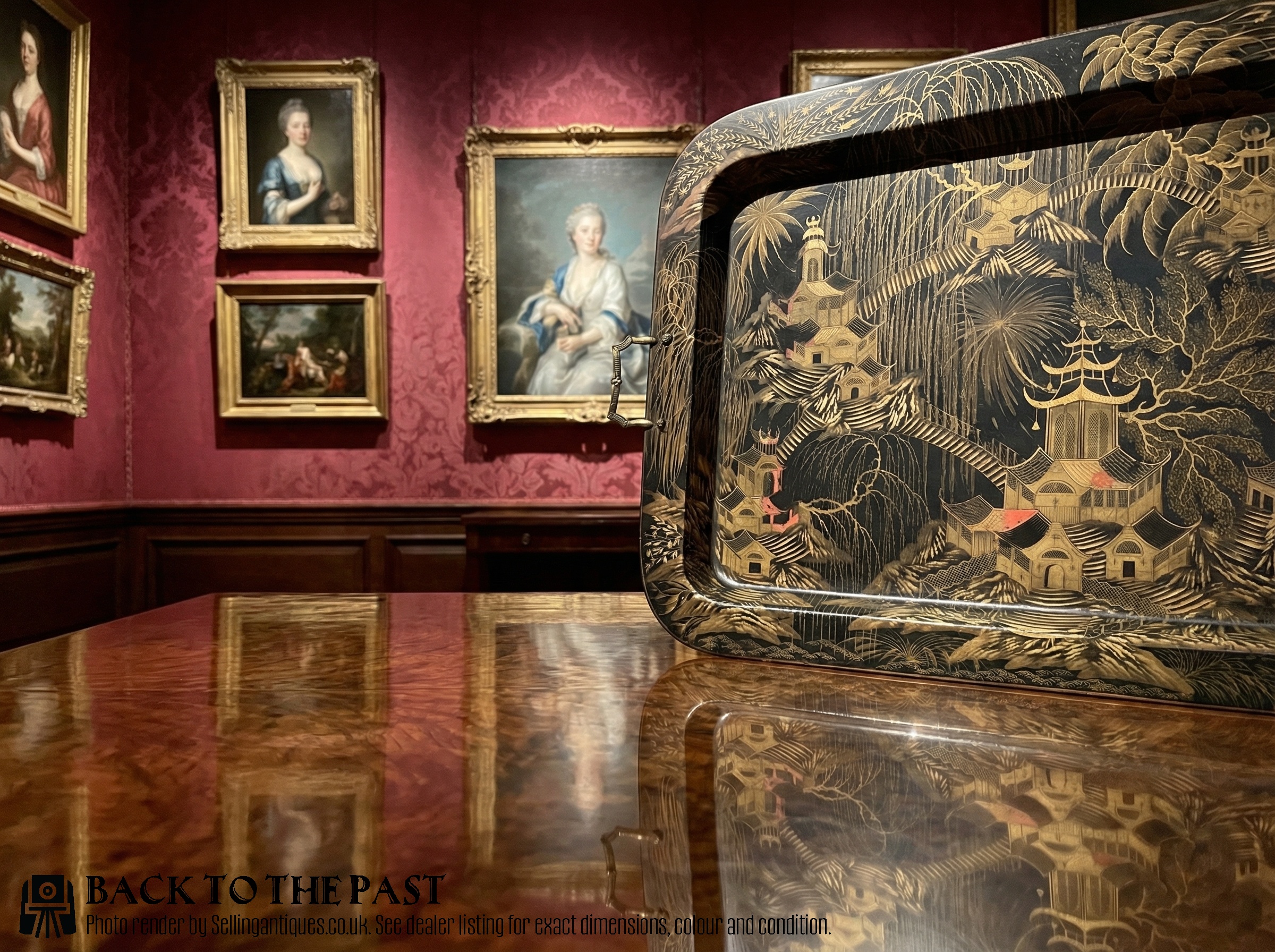
Regency Chinoiserie Tray
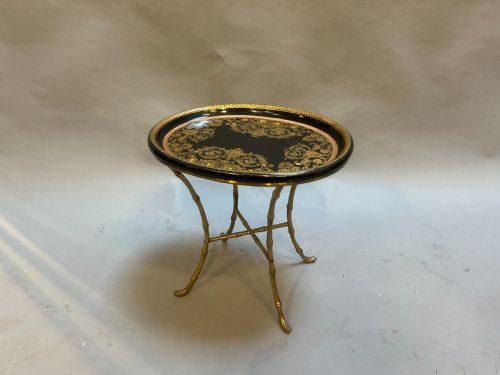
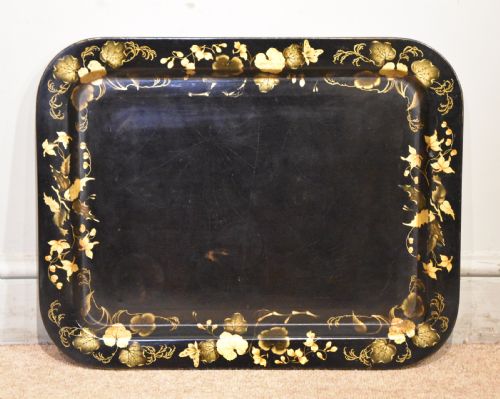
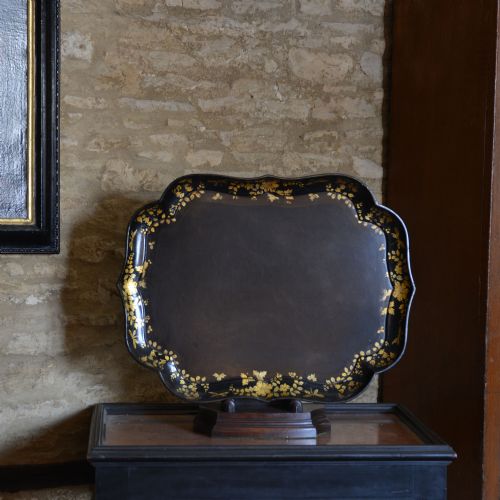
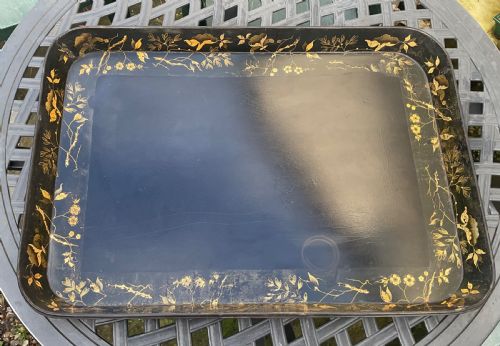
A regency chinoiserie tray combines the dark surfaces of early nineteenth-century manufacture with orientalist motifs, appearing most frequently in the evidence as large papier-mâché or tole pieces. Buyers encounter these items either as standalone platters or mounted on custom stands to function as occasional tables.
The physical forms range from substantial rectangular trays to oval shapes and smaller serving dishes. Many examples from the period sit upon bespoke wooden supports, turning utility into a permanent furniture piece for the modern interior.
Materials and Construction
Makers relied primarily on papier-mâché and lacquered metal toleware as the core substrate for these surfaces, building up dense layers of black or coloured ground. Artisans then applied intricate details using gold leaf and hand-painted pigments to render the figures, landscapes, and architectural elements characteristic of the style.
The finish required extensive polishing and sealing to protect the delicate metallic leaf and paintwork from moisture during daily use. Some iterations incorporate additional elements such as brass handles or bespoke bamboo-turned wooden stands.
Factors of Quality
The refinement of the hand-painted decoration separates superior examples from simpler production, particularly in the precision of the gilding and the depth of the narrative scenes. Pieces bearing the mark of notable makers command greater attention due to the documented skill of their workshops.
The integrity of the original lacquer surface and the crispness of the moulded papier-mâché dictate the overall condition grade. Surviving components such as original stands or matching decorative boxes elevate the completeness of the item.
Clay
The Regency Chinoiserie Tray Glossary
- Papier-mâché
- A composite material made from paper pulp or layers of paper reinforced with glue, moulded and baked to form a rigid, durable base for lacquer.
- Toleware
- Painted or lacquered sheet metal utensils and decorative objects popular during the nineteenth century.
- Chinoiserie
- A European artistic style reflecting Chinese motifs and techniques, interpreted through Western imagination during the eighteenth and nineteenth centuries.
- Comport
- A decorative dish or bowl raised on a stem or foot, used for serving fruit or sweetmeats at the table.
Regency Chinoiserie Tray: Frequently Asked Questions
What is a regency chinoiserie tray used for?
Originally designed for serving drinks or displaying small items, these pieces functioned as portable service ware in grand houses.
Today, many owners place them on bespoke stands to use them as occasional or side tables in a living space.
How do I care for papier-mâché?
Keep these items away from direct sunlight and excessive moisture to protect the delicate lacquer and gold leaf.
Dust them gently with a dry, soft cloth rather than using liquid polishes or chemical cleaners.
Are all these trays on stands?
The evidence shows a mix of flat platters intended for table use and versions mounted upon nineteenth-century or bespoke wooden supports.
Some buyers prefer the flat format for storage, while others seek the tray table configuration for daily display.
What periods do these pieces date from?
The primary items originate from the Regency era and the broader nineteenth century, showcasing classical proportions and traditional lacquering techniques.
Later revival pieces also appear in the records from the early twentieth century, reflecting a continued admiration for the aesthetic.