




Papier Mache Serving Tray
These papier mache serving tray examples offer sturdy utility and fine hand-painted decoration across Georgian, Regency, and Victorian periods.
Papier Mache Serving Tray
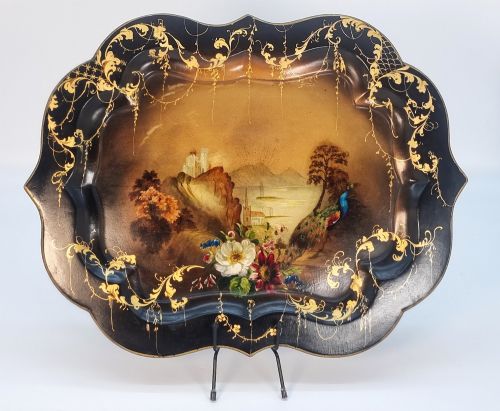
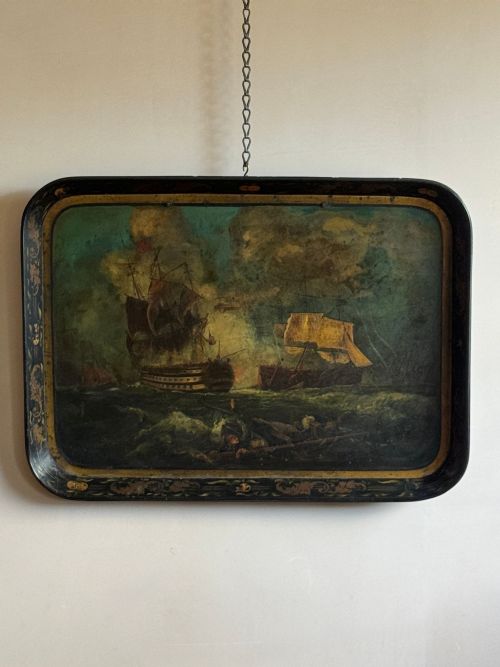
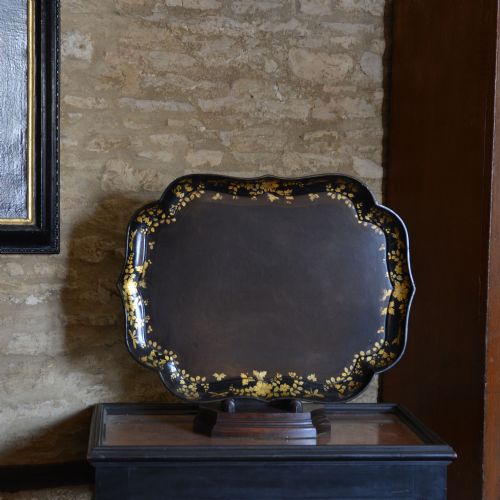
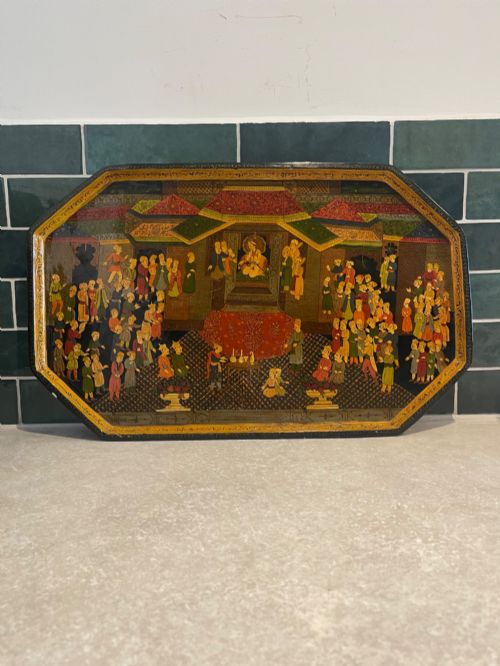
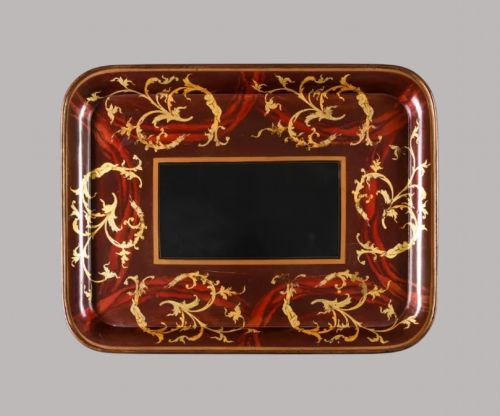
A papier mache serving tray brings a durable, light domestic surface that has survived from the 18th century through the Victorian era. Buyers searching for a papier mache serving tray encounter rectangular, oval, octagonal, and kidney-shaped examples designed for carrying drinks or resting on dedicated stands.
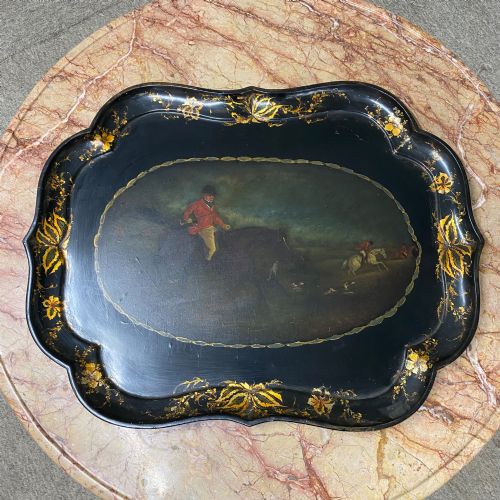
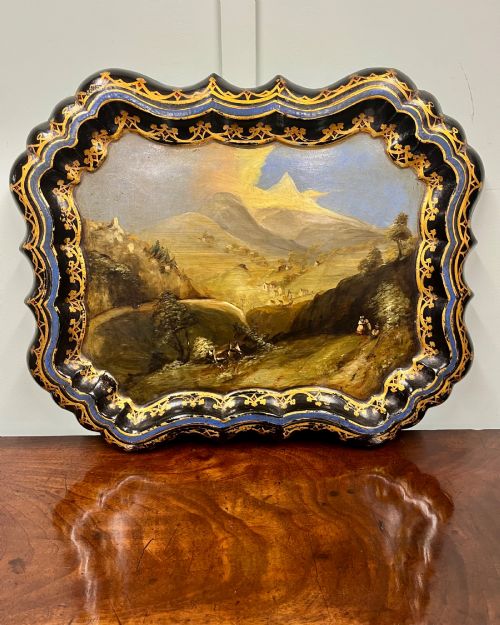
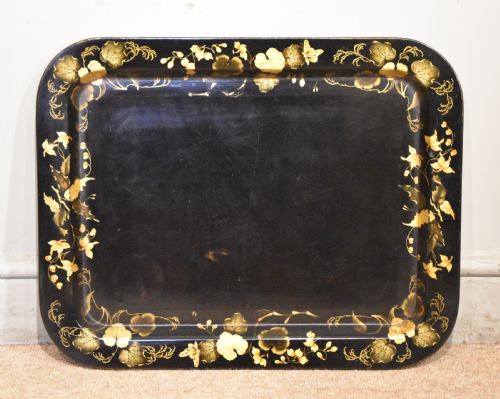
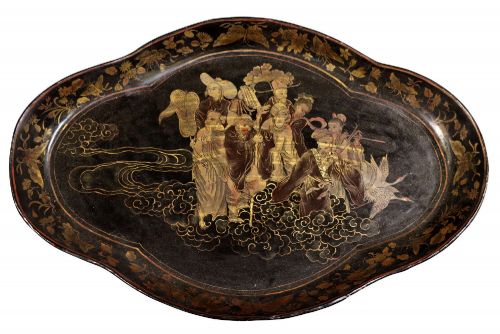
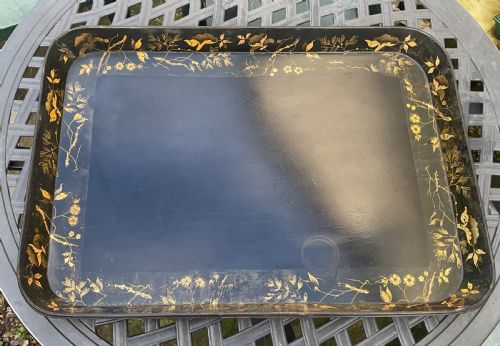
The selection here spans English Regency and Victorian workshops, alongside Kashmiri and Japanese export pieces. Most date from the 19th century, featuring dark ebonised finishes, floral motifs, or painted landscapes.
Some larger variations function as butler trays or convert into low side tables. Their construction combines practicality with ornamental display, making them versatile additions to a room.
How manufacturers constructed these trays
Maker workshops built the core structure by layering paper pulps or sheets pressed with glue and chalk, then dried and compressed under heavy pressure to achieve rigidity. This dense substrate received multiple coats of lacquer to seal the surface against moisture.
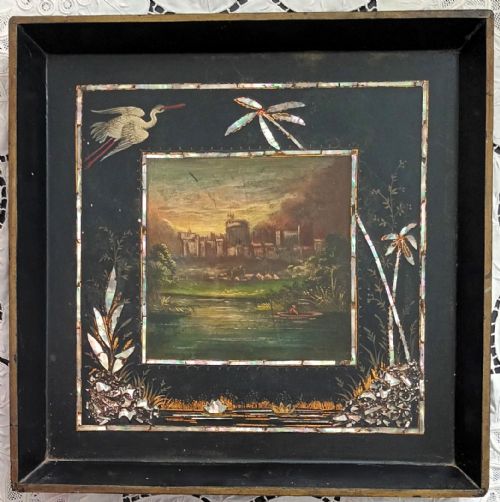
Decorators applied paint, gold leaf, gilding, and mother of pearl inlay directly onto the lacquered base. Final protective varnish coats cured to a deep, reflective sheen.
Papier Mache Serving Tray Retail Price Guide 2026
Typical asking prices for papier mache serving tray among the pieces listed under this phrase on Sellingantiques today, from the lower quarter to the upper quarter. They describe what is for sale here now, not the wider market.
One massive naive 18th-century piece specifically records fishing interest.
What determines the quality of a piece
The refinement of the painted scene and the depth of the lacquer separate standard production from masterwork pieces. Skilled artists rendered landscapes, floral patterns, and hunting scenes with fine brushwork rather than simple stencils.
The incorporation of mother of pearl inlay and genuine gold leaf indicates superior workshop output. Structural integrity of the pressed paper layers without warping defines better preservation.
Jennens & Bettridge·Clay
The Papier Mache Serving Tray Glossary
- Japanning
- European imitation of East Asian lacquerwork, created by applying layers of varnish and heat-curing them on a dark ground. This technique gave early English pieces their glossy black finish.
- Toleware
- Painted or enamelled sheet metalware often grouped alongside papier mache pieces. These items share similar decorative motifs and period aesthetics.
- Ebonisation
- The process of treating wood or papier mache to resemble ebony. It created the dark, dramatic background popular on Victorian trays.
- Mother of pearl
- The iridescent inner layer of mollusc shells used for inlay. Craftsmen cut thin pieces to form glowing highlights on floral and architectural designs.
- Chinoiserie
- European interpretation of Chinese and East Asian artistic styles. It appears frequently in the whimsical landscapes and figures painted on these trays.
Papier Mache Serving Tray: Frequently Asked Questions
Can I actually use a papier mache serving tray today?
These trays were originally made to carry glasses and porcelain tea sets, so their robust construction handles light daily use. Modern owners often place them on side tables or use them for serving drinks with care.
To preserve the historic lacquer and painted details, wipe them clean with a dry or barely damp cloth and avoid standing water or abrasive cleaners.
How do I date a papier mache serving tray?
Georgian and Regency examples tend to feature classical motifs, rich gilding, and simple geometric shapes like ovals and octagons. Victorian versions frequently showcase elaborate ebonised finishes with dense mother of pearl inlay and Chinoiserie scenes.
Examining the recorded periods in the titles, such as 1870 or the Regency era, helps align the decorative style with the correct decade.
What is a papier mache tray on a stand?
Many trays were eventually mounted onto folding or fixed wooden legs to serve as low side or coffee tables. This conversion adapts a decorative serving piece into functional living room furniture.
Original stands match the period of the tray, while others represent later adaptations made to display the painted surface at couch height.
Where were these trays made?
English workshops in Birmingham and London produced a large proportion of these pieces, with renowned makers like Jennens and Bettridge leading the industry. Other geographic origins include Kashmiri workshops and Japanese export centres during the Edo and Meiji periods.
Each regional tradition introduced distinct materials, such as specific lacquer mixtures or native inlay techniques.