

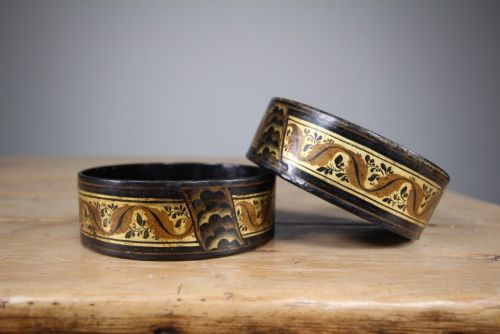


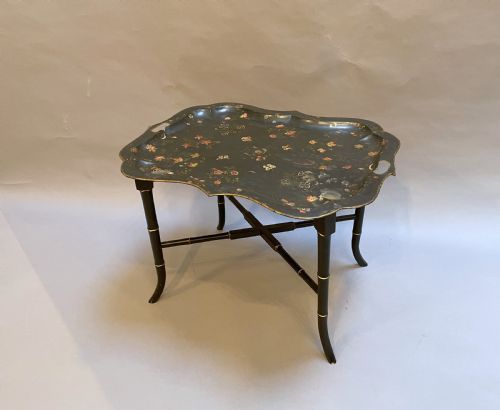


Japanned Papier Mache Table
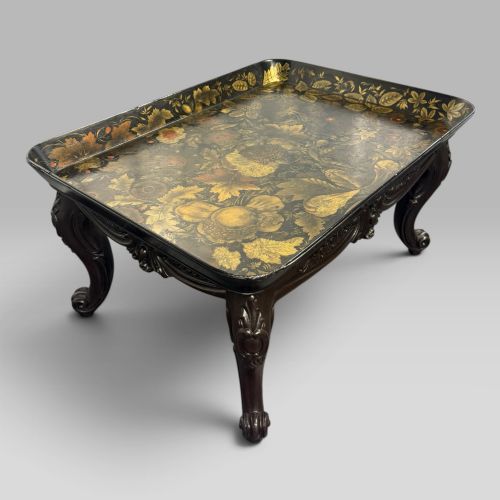
These japanned papier mache table pieces bring Chinoiserie lacquer and rich hand painting into a room with genuine period character.
Japanned Papier Mache Table
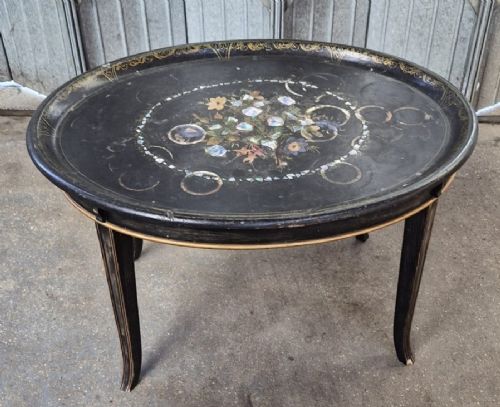
A japanned papier mache table combines moulded paper pulp foundations with glossy dark lacquer finishes and intricate Chinoiserie decoration. These pieces primarily emerge from the Georgian, Regency, and Victorian periods, often taking the form of occasional tables, coffee tables, or serving trays mounted on later stands.
The most common examples on this page date to the nineteenth century, reflecting the peak of British papier-mâché manufacturing. They frequently feature tilt-top mechanisms or dedicated stands that elevate decorative trays into functional furniture.
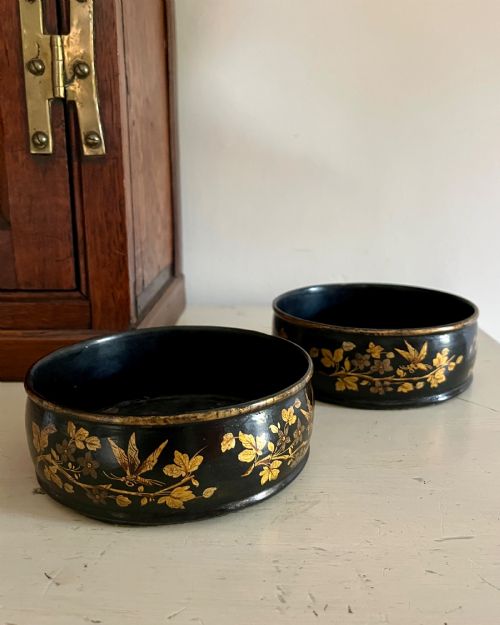
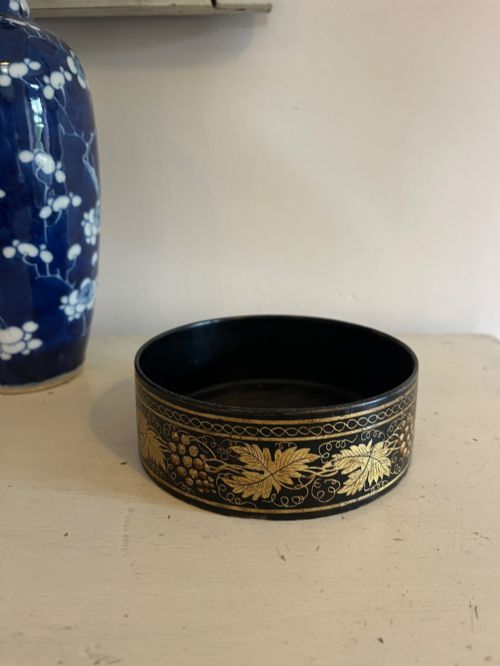
Buyers seeking a japanned papier mache table will encounter distinct regional variations and stylistic periods, ranging from early Regency designs to mid-Victorian revivals. The forms span from compact wine coasters and side tables to larger occasional tables designed for display.
Materials and construction
Makers constructed these pieces using layers of paper pulp combined with glue and resin, pressed into heavy iron moulds and subjected to intense heat and pressure. This created a dense, durable board that accepted multiple coats of black or dark lacquer.
Artisans then applied japanning techniques, building up layers of varnish decorated with gold leaf, gilt paint, and mother-of-pearl inlay. The resulting surface required careful polishing to achieve the characteristic glossy finish associated with fine Chinoiserie work.
Japanned Papier Mache Table Retail Price Guide 2026
Typical asking prices for japanned papier mache table among the pieces listed under this phrase on Sellingantiques today, from the lower quarter to the upper quarter. They describe what is for sale here now, not the wider market.
The selection includes pieces spanning the eighteenth, nineteenth, and twentieth centuries, incorporating papier-mâché, lacquer, mother-of-pearl, and rosewood.
Assessing quality
Quality in these pieces rests primarily on the crispness and complexity of the hand-painted Chinoiserie scenes and the integration of mother-of-pearl inlay. Finer examples display meticulous brushwork and depth within the gold leaf decoration, whereas simpler pieces rely on basic stencilled motifs.
The underlying woodwork and stability of the stands also dictate the overall standard, particularly where detachable trays meet later timber bases or original tilt-top mechanisms. Superior construction ensures the papier-mâché core remains flat and securely fixed to its support without warping.
Jennens & Bettridge·Henry Clay
The Japanned Papier Mache Table Glossary
- Japanning
- European imitation of East Asian lacquerwork, created using layered varnishes and heat-cured finishes. It typically depicts figures, landscapes, or floral motifs in gold against a dark ground.
- Papier-mâché
- A composite material made from paper pulp or sheets of paper mixed with binding agents. Pressed and dried under heavy pressure, it forms a rigid and lightweight foundation for furniture.
- Chinoiserie
- A European artistic style reflecting Chinese aesthetic influences. It appears frequently on nineteenth-century trays and tables through whimsical landscapes and pagoda motifs.
- Tilt-top table
- A table featuring a hinged mechanism that allows the surface to fold vertical when not in use. This design originally saved space and protected delicate surfaces from damage.
Japanned Papier Mache Table: Frequently Asked Questions
What is a japanned papier mache table?
These items are decorative nineteenth-century tables formed from compressed paper pulp finished with dark lacquer and gilt painting. Many incorporate antique serving trays mounted onto wooden stands.
They serve primarily as occasional or coffee tables, bringing reflective surfaces and intricate Chinoiserie detail into traditional or contemporary interiors.
Are these tables sturdy enough for daily use?
The dense papier-mâché material is remarkably strong and stable, provided it has not suffered from damp conditions over the centuries. Many examples function well as light coffee tables or side tables.
Care should be taken with tilt-top mechanisms and joints, treating them gently to preserve the original construction and structural integrity.
How can I tell the period?
Look closely at the style of the hand painting, the depth of the lacquer, and the construction of the supporting wooden stands. Regency examples often display refined Georgian proportions, while Victorian pieces embrace more elaborate decoration.
Makers' stamps or impressed marks on the underside of trays or tables occasionally provide definitive evidence of date and origin.