
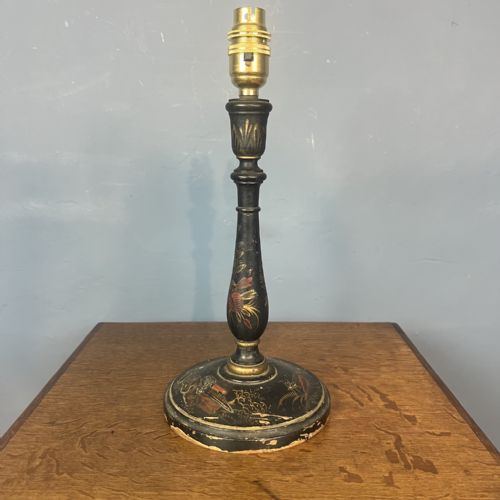
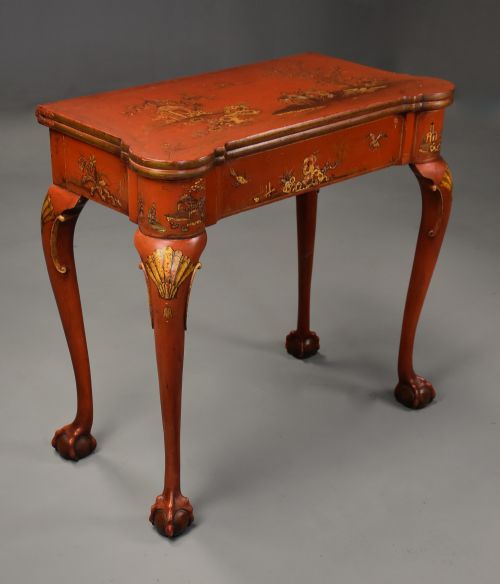
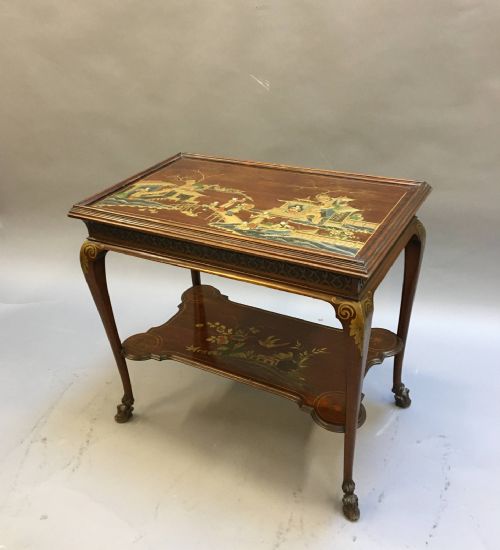


Gilded Chinoiserie Table
A gilded chinoiserie table brings hand-painted lacquer and bright metallic detail into a room, offering both surface charm and historic utility.
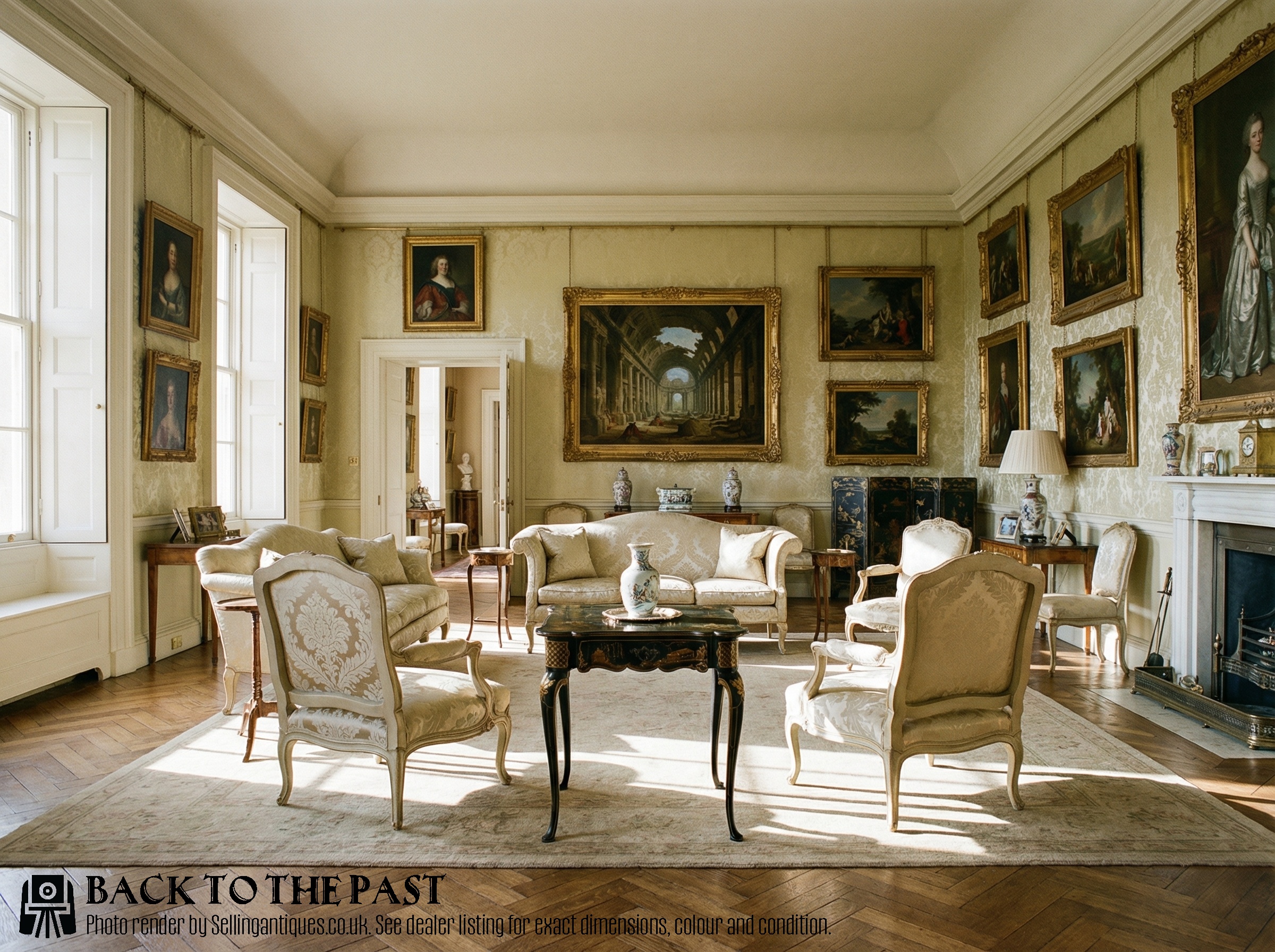
Gilded Chinoiserie Table
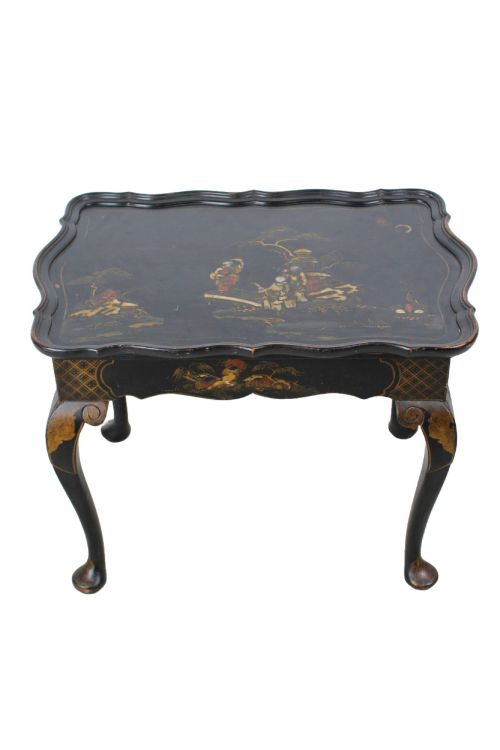
A gilded chinoiserie table encompasses various small furniture pieces designed with orientalist motifs, spanning coffee tables, nests of tables, and occasional tables. These items frequently appear from the nineteenth and early twentieth centuries, drawing on earlier Queen Anne, Regency, and French Rococo revival styles.
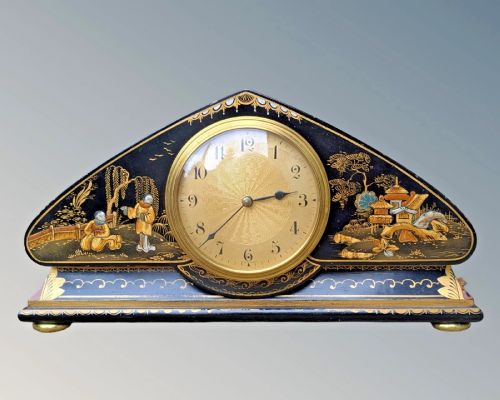
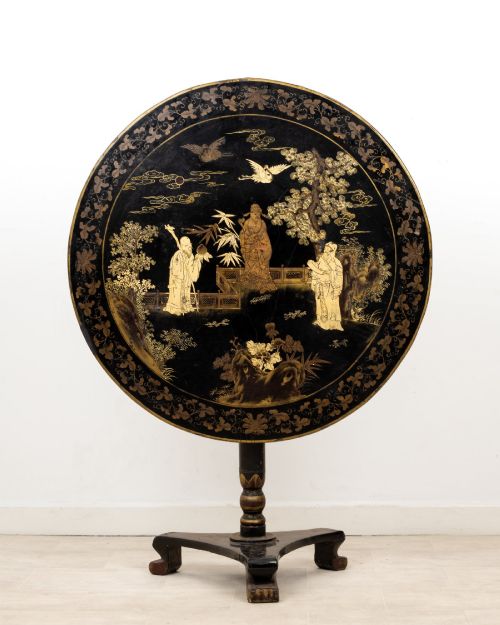
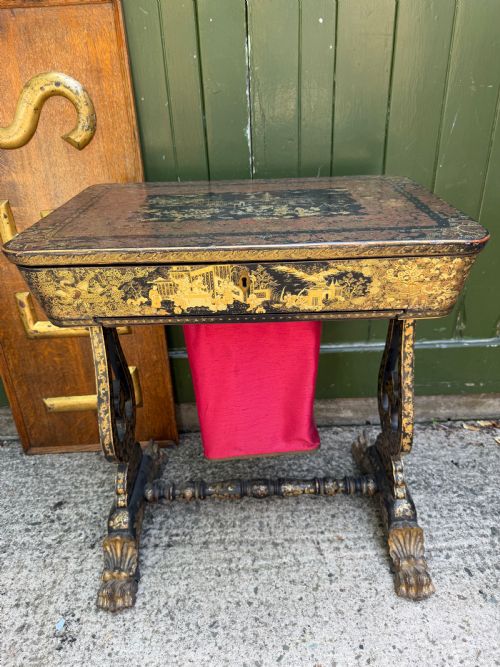
Buyers encounter different formats on this page, ranging from low coffee tables and tilt-top occasional pieces to nests of four tables and games tables. Many incorporate black or red lacquered finishes decorated with gold leaf scenes depicting figures, pavilions, and landscapes.
The selection also includes Chinese export works and English or European adaptations in the japanned manner, reflecting centuries of western fascination with eastern design. These tables function practically as side supports or coffee surfaces while serving as decorative focal points.
Materials and Construction
Makers built these pieces using wood substrates, papier-mâché, or lacquer panels, applying successive layers of varnish to create smooth dark surfaces. Artisans then added gold leaf or metallic paint by hand to render intricate raised figures and floral borders.
Structural elements often combine timber frames with brass hardware, glass tops, or fabric linings depending on whether the object is a games table, work table, or simple occasional stand. Surface decoration remains the defining technical feature across every period represented.
Materials span lacquered wood, papier-mâché, gold leaf, and brass across various occasional and coffee table forms.
Assessing Quality
Quality rests primarily in the crispness and depth of the hand-applied gilding and the smoothness of the underlying lacquer ground. Superior examples exhibit finely detailed brushwork that retains its definition across intricate figural scenes without appearing flat or hurried.
Construction integrity also separates standard items from finer pieces, visible in the tight joinery of nests, the stability of tripod bases, and the preservation of original japanned finishes rather than heavy modern repainting.
The Gilded Chinoiserie Table Glossary
- Chinoiserie
- European decorative style from the seventeenth to nineteenth centuries that interprets Chinese and East Asian artistic traditions. It appears across furniture, ceramics, and textiles through whimsical pastoral and architectural scenes.
- Tilt-top table
- A small occasional table featuring a mechanism that allows the wooden top to pivot vertically when not in use. This design saved space in period domestic interiors.
- Nest of tables
- A set of graduated tables designed to fit neatly beneath one another in a single stack. They gained popularity during the Victorian and Edwardian periods for entertaining.
- Ormolu
- Gilded bronze mounts and decorative details applied to furniture and lighting. The technique involves treating brass or bronze with a mercury and gold amalgam to achieve a rich metallic sheen.
Gilded Chinoiserie Table: Frequently Asked Questions
What is a chinoiserie table?
A chinoiserie table is a piece of furniture decorated with European interpretations of East Asian art, typically featuring hand-painted gold motifs on a lacquered wooden surface.
These surfaces often depict traditional landscapes, figures, and pavilions set against black, red, or cream backgrounds.
How do I date a lacquer table?
Dating relies on examining the construction methods of the wooden frame, the wear patterns on the lacquer, and the specific decorative style used in the gilding.
Nineteenth-century pieces often show heavier timber construction and distinct craquelure in the varnish, while Edwardian examples display lighter framing and brighter metallic finishes.
Were these tables made in China or Europe?
The listings include both Chinese export pieces made specifically for the Western market and European items created in domestic workshops.
European cabinetmakers frequently utilised japanning techniques to imitate imported Asian lacquer furniture during the eighteenth, nineteenth, and early twentieth centuries.
How do I care for antique lacquer?
Antique lacquer requires gentle dusting with a soft, dry cloth and protection from direct sunlight and extreme humidity fluctuations.
Avoid using harsh chemical polishes or water, as moisture can penetrate hairline cracks in the old varnish and damage the delicate gold leaf decoration.