
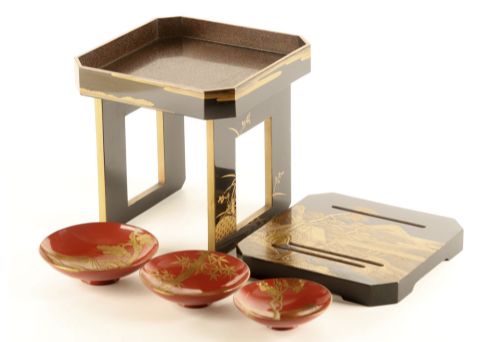
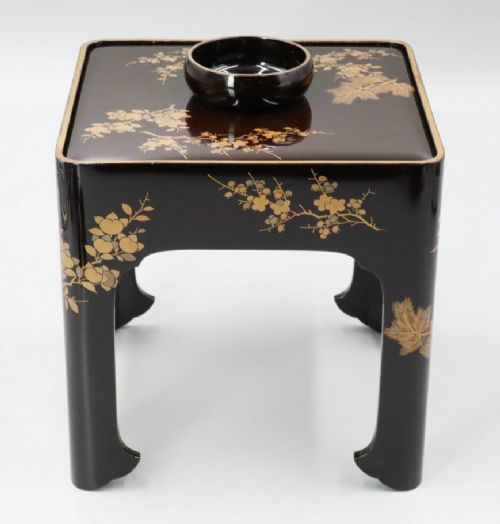


Lacquered Tray on Stand
These lacquered tray on stand pieces bring a practical surface and hand-painted artistry to a room, turning a serving tray into an occasional table.
Lacquered Tray on Stand
A lacquered tray on stand combines a portable serving surface with a dedicated base, creating a functional table for drinks or display. Buyers searching for a lacquered tray on stand will find pieces ranging from Georgian and Regency eras through the Victorian period and into the early twentieth century.
The most common form on this page pairs a deep papier-mâché or metal tray with a fitted wooden stand, often standing on slender legs. Many examples showcase Asian influence, particularly Japanese Meiji and Taisho work or British Chinoiserie interpretations.
Beyond standard serving trays, the broader category includes occasional tables, desk sets, inkstands and letter racks sharing the same lacquer and painted vocabulary. These pieces function easily as side tables in a drawing room or study, offering both utility and decorative depth.
Materials and construction
Papier-mâché serves as the primary base for many of these pieces, built from layers of paper pulp or sheets pressed and dried to create a surprisingly tough, lightweight board. Artisans then applied layers of dark lacquer, sanding and polishing the surface to a deep, smooth finish.
Decoration relied on hand painting, often enhanced with gold leaf, gilt and vibrant pigments to build up intricate floral or figurative scenes. Some trays utilise painted tole metal rather than papier-mâché, resting upon custom wooden or iron stands constructed decades later or alongside the tray itself.
Listings feature papier-mâché, wood, lacquer, gold leaf and iron, spanning the eighteenth, nineteenth and early twentieth centuries.
Judging quality and execution
The sophistication of the hand painting sets apart the finer examples, particularly where gold leaf and delicate brushwork create genuine depth in Chinoiserie or Japanese scenes. Crisp detailing in the motifs and a smooth, unblemished lacquer ground distinguish superior workshop output.
Henry Clay
The Lacquered Tray on Stand Glossary
- Papier-mâché
- A composite material made from paper pulp or reinforced paper sheets mixed with glue and pressed into moulds. Once dried and sealed, it provides a sturdy, smooth canvas for lacquer and paint.
- Tole
- Painted or enamelled sheet metal, typically iron or steel, used to form durable trays and decorative objects. It was often finished with dark lacquer and colourful floral decoration.
- Gilt
- A thin application of gold leaf or gold powder used to highlight painted designs on lacquer surfaces. It catches the light and adds contrast to the dark background.
Lacquered Tray on Stand: Frequently Asked Questions
Are these trays fixed to their stands?
Most trays lift off their stands entirely, allowing the top to be used independently for serving before being placed back on the frame.
Some stands are custom-built to cradle the exact dimensions of the tray, while others are later additions adapted to hold the piece at table height.
How do I care for a papier-mâché tray?
Keep these pieces away from direct sunlight and excessive moisture to protect the delicate lacquer and hand-painted surface.
Dust gently with a dry, soft cloth and avoid using liquid cleaners or polishes that might damage the historical finish.
What is the difference between Regency and Victorian pieces?
Regency pieces often lean towards classical proportions and refined Chinoiserie motifs, reflecting a lighter, more restrained aesthetic.
Victorian examples tend to feature bolder floral designs, heavier papier-mâché construction and deeper ebonised finishes paired with elaborate gilding.
Can I use these tables for daily serving?
While originally designed for serving drinks or holding desk accessories, these antique pieces function best today as decorative occasional tables.
Treating them with care prevents wear to the antique lacquer and ensures the hand-painted details remain protected.