


Regency Papier Mache Table
These regency papier mache table pieces bring polished lacquer and hand-painted decoration into a room, offering a versatile surface with a glossy finish.
Regency Papier Mache Table
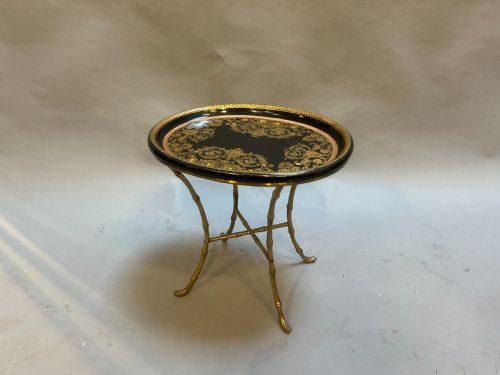
A regency papier mache table pairs moulded paper pulp surfaces with timber stands, forming a sturdy yet light piece of furniture for the home. Most examples on this page take the form of tray tables, where a removable or fixed painted tray sits atop a wooden base.
The aesthetic draws heavily on Regency, Georgian, and Victorian Chinoiserie styles, incorporating gilt motifs and dark lacquered finishes. Makers often produced occasional tables and tripod tables alongside larger tray stands to suit fashionable interiors.
While many date from the nineteenth century, the selection also includes later interpretations from the nineteen-twenties alongside earlier Georgian-period pieces. Buyers will find occasional tables, tray tables, and side tables sharing similar construction methods and painted ornament.
How they were made
The core structure relies on layers of paper pulp compressed and treated with size, then baked and cured to create a rigid board. This papier mache foundation receives multiple coats of dark lacquer to achieve a smooth, resilient ground.
Artisans applied gold leaf, gilding, and oil paint by hand to build up intricate Chinoiserie scenes and botanical details. Brass accents and wooden stands completed the assembly, uniting the papier mache top with a stable support.
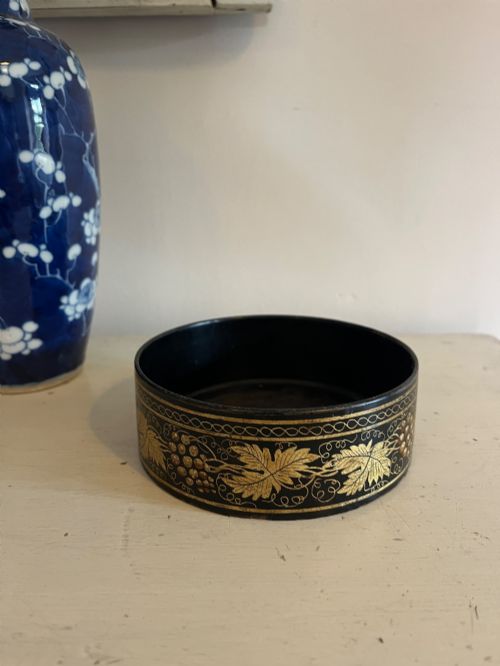
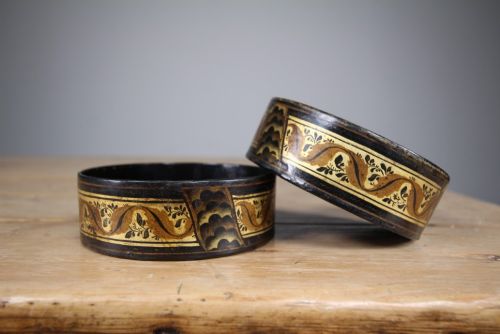
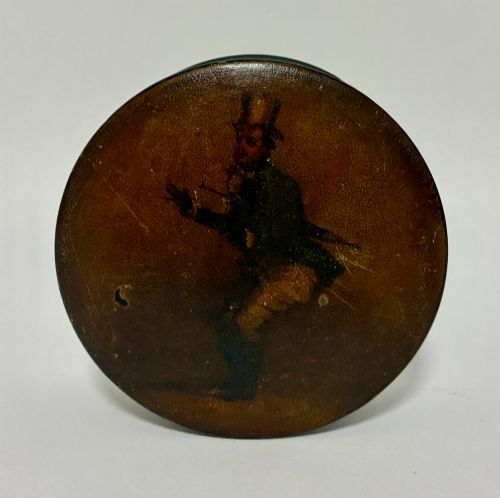
Object types seen on this page span occasional tables, wine coasters, snuff boxes, decorative boxes, trays, and tray tables.
What varies in quality
The refinement of the hand-painted decoration distinguishes superior pieces from standard examples, with finer brushwork and detailed gilt highlights commanding attention. The depth and clarity of the original lacquer finish also indicate the standard of production.
Structural integrity between the papier mache top and the wooden stand affects overall desirability, particularly in tray tables where the surface meets the base. Well-preserved painted surfaces without excessive overpainting retain greater character and integrity.
Jennens & Bettridge·Henry Clay·Gillows
The Regency Papier Mache Table Glossary
- Papier-mache
- A composite material made from paper pulp or layers of paper mixed with glue and oil, then pressed and dried into a hard form. This substance provides a lightweight yet durable base for decorative furniture.
- Japanned
- A European imitation of East Asian lacquerwork, created by applying successive layers of varnish and dark paint to a surface. The finish is often decorated with gilt Chinoiserie motifs.
- Chinoiserie
- A Western stylistic tradition reflecting European interpretations of Chinese and East Asian artistic motifs. It frequently appears on lacquer and papier mache items as painted landscapes and figures.
- Tripod Table
- A small occasional table supported by a central pillar resting on three legs. This form offers stability on uneven floors and saves floor space in smaller rooms.
Regency Papier Mache Table: Frequently Asked Questions
How do I clean a papier mache table?
Dust the surface gently with a dry, soft microfibre cloth to remove daily particles without scratching the lacquer. Avoid using water, chemical sprays, or abrasive cleaners, as moisture can damage the underlying paper composite and paint.
Keep the table away from direct sunlight and strong heat sources to prevent the lacquer from cracking or fading over time. A mild furniture wax applied sparingly by a professional can help maintain the sheen on resilient surfaces.
Are these tables sturdy enough for daily use?
These occasional and tray tables function well for holding light items such as books, cups, or decorative objects during normal daily routines. Their lightweight construction means they are easily moved around a room as needed.
However, they require careful handling to avoid heavy impacts that could chip the lacquer or dent the compressed paper core. Placing them away from heavy traffic areas helps protect the painted surfaces from accidental knocks.
What is a tray table?
A tray table consists of a deep papier mache tray supported by a dedicated wooden stand, which can sometimes be folded or dismantled. The tray itself often lifts off the base, serving a dual purpose as a serving vessel and a tabletop.
This form gained popularity during the Regency period for tea service and casual entertaining in the drawing room. The combination of a portable tray and a fixed stand provided flexibility for fashionable interiors.
How can I tell the period of a table?
Examining the style of the painted Chinoiserie decoration, the turning of the wooden stand, and the construction of the papier mache helps determine the era. Nineteenth-century examples often display deep black lacquer and refined gilt work characteristic of Regency and Georgian workshops.
Later pieces from the twentieth century or Victorian revivals may show subtle differences in paint composition, timber choice, and decorative flair. Comparing the piece against documented examples by makers like Jennens and Bettridge provides further chronological context.