





Faux Bamboo Tray Table
A faux bamboo tray table brings a light, versatile surface and distinct nineteenth-century character to any room.
Faux Bamboo Tray Table
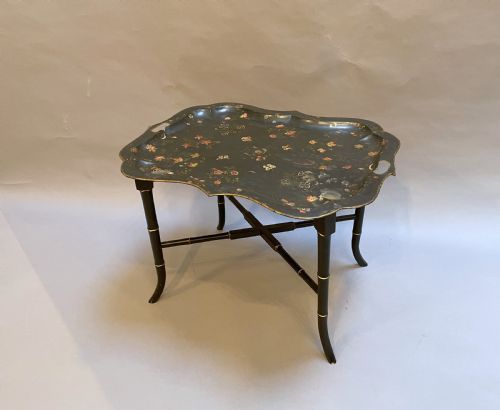
A faux bamboo tray table combines a removable serving surface with a folding or fixed support stand, functioning as an occasional table, side table, or coffee table. These pieces emerge predominantly from the nineteenth century, including Victorian and Regency periods, alongside later twentieth-century interpretations.
The most common iterations on this page pair papier-mâché or toleware trays with timber stands, often featuring hand-painted decoration. Alongside British and French examples, you will find Chinese export and Qing dynasty carved hardwood versions, as well as distinct French provincial and Chinoiserie styles.
How they were made
Construction relies heavily on wood, hardwood, and papier-mâché, shaped into sturdy stands and deep serving trays. Stands are frequently carved or turned to imitate natural bamboo stems, while trays utilise pressed paper pulp or metal tôleware.
Finishes involve lacquer, paint, and gold leaf applied to create rich black, japanned, or red surfaces. Many pieces feature intricate hand-painted floral motifs and Chinoiserie scenes, complemented by gilt detailing.
Faux Bamboo Tray Table Retail Price Guide 2026
Typical asking prices for faux bamboo tray table among the pieces listed under this phrase on Sellingantiques today, from the lower quarter to the upper quarter. They describe what is for sale here now, not the wider market.
Some nineteenth-century makers went to great lengths to paint individual bamboo nodes by hand, ensuring even the wooden joints looked convincingly botanical.
What varies in quality
Quality reveals itself in the crispness of the bamboo turnings on the stand and the structural integrity of the folding mechanism. Superior examples display dense, stable hardwood or firm papier-mâché that resists warping under the tray edges.
The artistry of the surface decoration dictates the upper tier of the range, distinguishing simple painted finishes from finely executed Chinoiserie and original gold leaf gilding. Original stands paired with their matching trays hold greater coherence than later married pieces.
The Faux Bamboo Tray Table Glossary
- Papier-mâché
- A composite material made from paper pulp mixed with glue and oil, pressed into moulds and baked to form durable, lightweight trays. It provides a smooth dark ground ideal for painted decoration.
- Tôleware
- Enamelled or japanned metalware, usually iron or steel, painted and varnished to create robust serving trays that sit atop folding stands.
- Chinoiserie
- European theatrical interpretations of Chinese artistic motifs, heavily featuring figures, pavilions, and landscapes in gold and colour upon dark lacquer.
- Japanned
- A European imitation of East Asian lacquerwork, created by applying successive coats of dark varnish and curing them with heat before adding painted designs.
- Regency
- An architectural and decorative style spanning the early nineteenth century, known for classical restraint, painted finishes, and bamboo-turned furniture.
Faux Bamboo Tray Table: Frequently Asked Questions
What is a faux bamboo tray table?
A faux bamboo tray table is a portable piece of furniture comprising a removable serving tray resting on a decorative support stand. The stands are carved or turned from timber to resemble natural bamboo.
They function primarily as occasional, side, or coffee tables. The design allows the tray to be lifted off easily for serving drinks or clearing surfaces.
How were these tables used historically?
Historically, these tables served elite households for afternoon tea, serving drinks, or general entertaining in drawing rooms and parlours. The removable tray made transportation from kitchens easy.
Purchasers valued their portability and decorative painted surfaces, which added an exotic touch to nineteenth-century interiors.
How do I style a tray table at home?
You can place a tray table beside a sofa or armchair as a convenient surface for books, lamps, or small decorative objects. Their lightweight nature lets you move them effortlessly between rooms.
Because many feature folding bases and striking Chinoiserie or japanned finishes, they also serve well as standalone accent pieces against a wall.
How can I tell a Regency piece from a Victorian one?
Regency pieces typically date from the early nineteenth century and lean towards classical painted designs and large proportions on the tôle or papier-mâché trays. Victorian examples often incorporate rich ebonised finishes and elaborate floral Chinoiserie.
Exact dating relies on examining the construction methods of the tray bases, the wear on the lacquer, and the specific painting style characteristic of each era.