



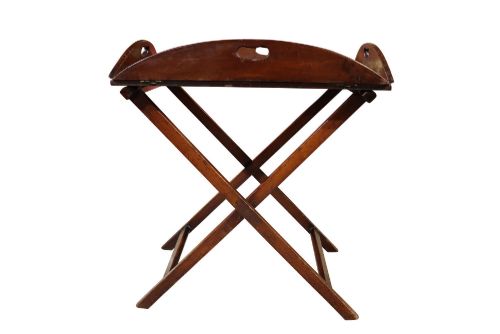
Antique Coffee Table Tray
An antique coffee table tray brings portable dining and serving heritage directly into modern seating arrangements.
Antique Coffee Table Tray
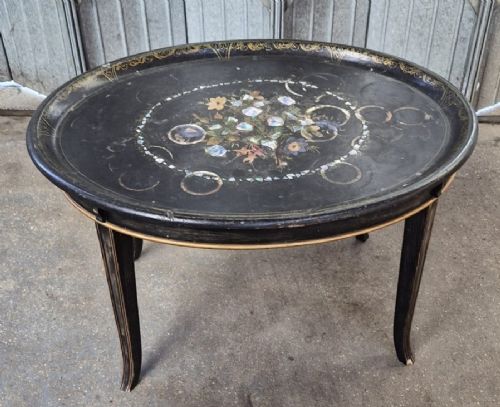
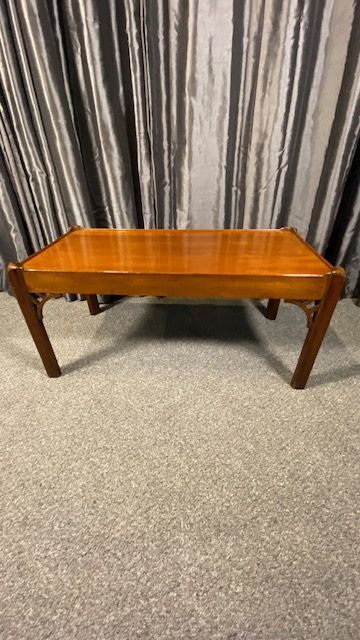
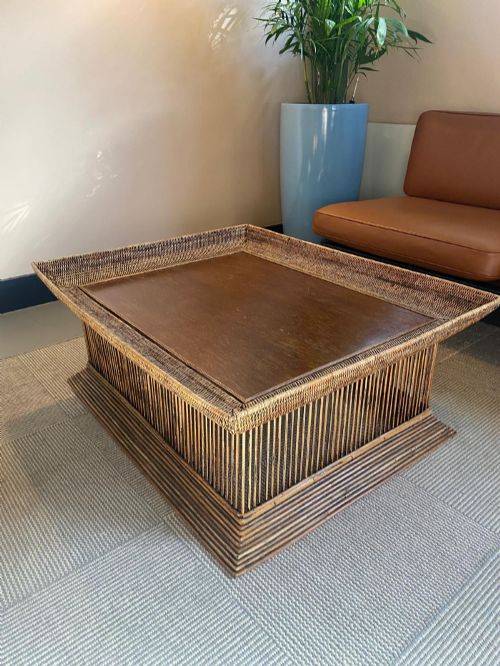
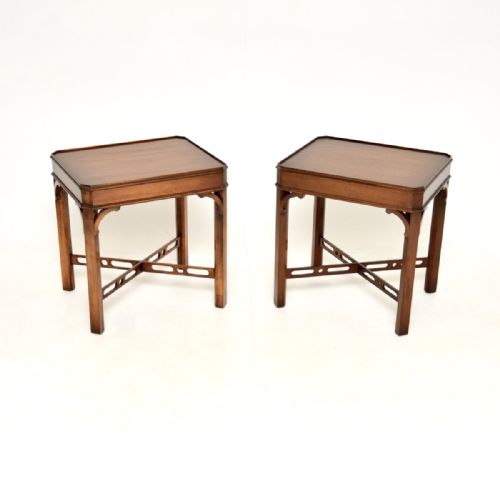
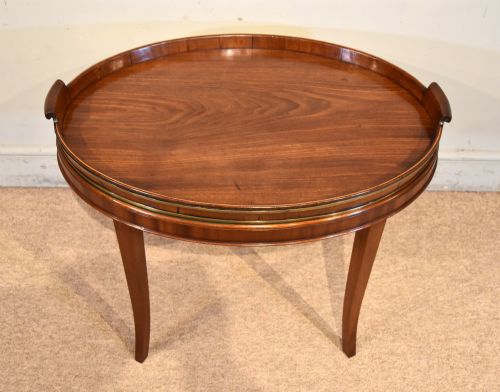
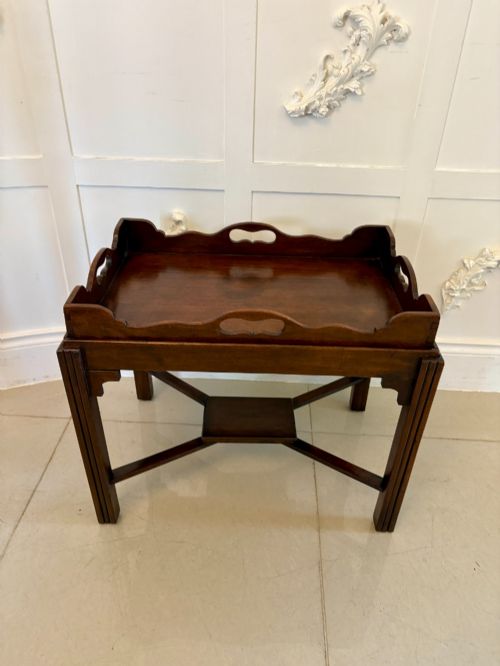
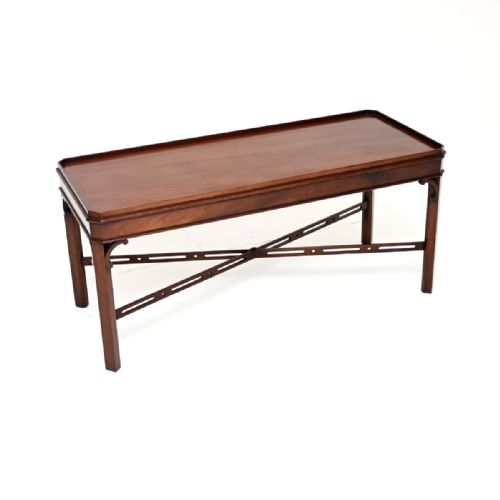
When searching for an antique coffee table tray, buyers encounter versatile serving surfaces adapted onto dedicated folding or fixed stands. These pieces span the eighteenth, nineteenth, and early twentieth centuries, merging domestic utility with decorative craftsmanship.
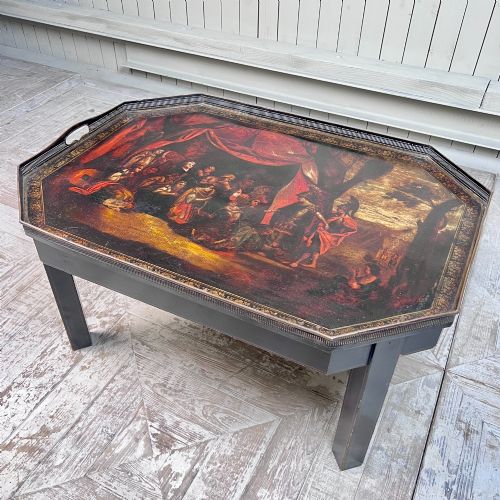
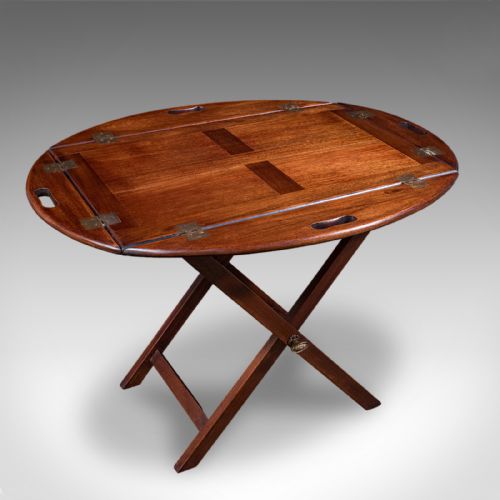
The most common formats on this page combine mahogany butler trays with collapsible wooden stands, alongside brass tables and papier-mâché trays featuring lacquer or chinoiserie details. Originating as portable items for meals or drinks, these trays now function as permanent low tables in sitting rooms.
How they were made
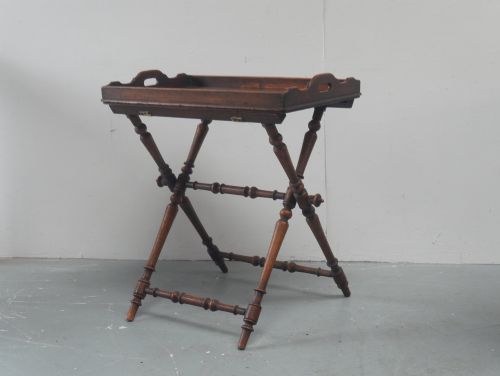
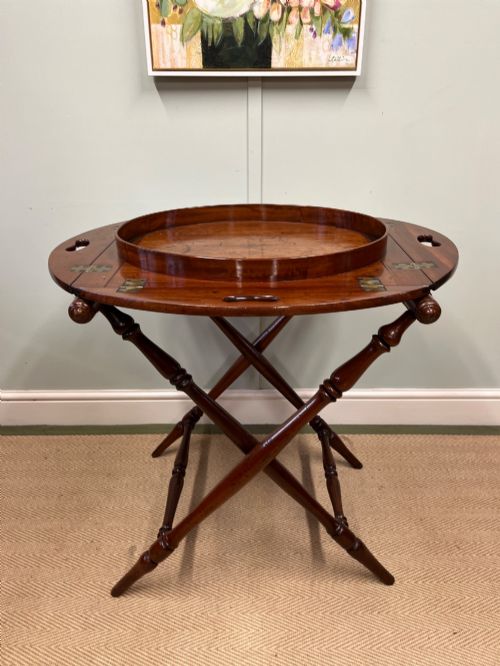
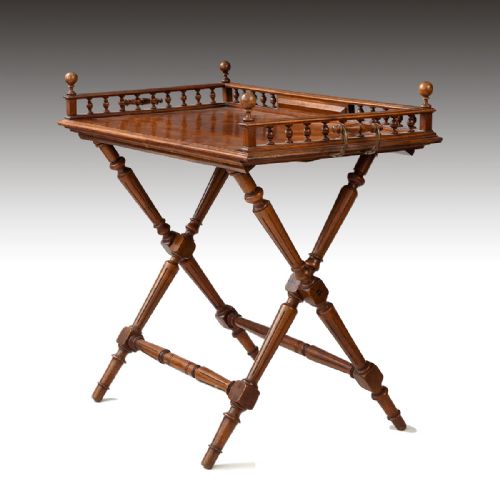
Cabinetmakers utilised dense hardwoods like mahogany, walnut, and oak to construct durable tray edges and sturdy folding stands, often incorporating brass bound decoration or hinges for practical movement. Surfaces frequently display intricate marquetry, hand-painted chinoiserie, or applied gold leaf upon black lacquer and papier-mâché bases.
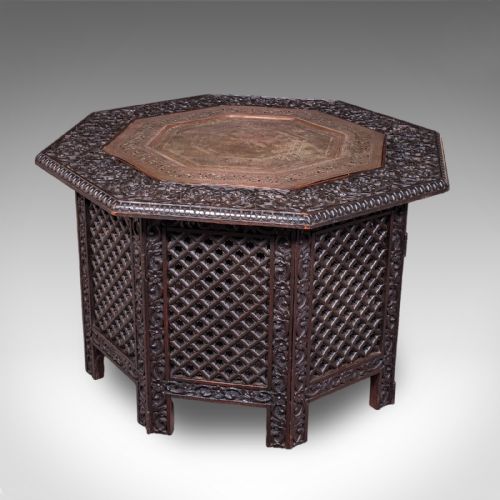
Metal alternatives rely on heavy brass sheets beaten, engraved, or etched with detailed Islamic and oriental motifs, supported by collapsible wooden or ebonised bases. Each material required specialised joinery and finishing techniques to ensure the removable tray sat securely upon its companion stand.
Antique Coffee Table Tray Retail Price Guide 2026
Typical asking prices for coffee table tray among the pieces listed under this phrase on Sellingantiques today, from the lower quarter to the upper quarter. They describe what is for sale here now, not the wider market.
Listings feature items spanning the 18th Century through the 1930s, encompassing Regency, Victorian, and Edwardian design movements.
What varies in quality
Quality rests in the selection of timbers and the precision of the surface decoration, distinguishing standard production from exceptional country house or commissioned pieces. Subtleties in hand-carved stand joinery, the crispness of brass engraving, and the depth of lacquer layers separate ordinary items from superior examples.
Proportion and originality dictate the standing of a piece within its period, particularly where stands match the exact age and timber species of the tray top. Pieces retaining original surface patination, gilt highlights, and functional drop-flaps carry greater integrity than later marriages of mismatched trays and bases.
The Antique Coffee Table Tray Glossary
- Butler tray
- A portable wooden serving tray featuring raised sides, often with hinged drop-flaps, designed to rest upon a folding X-frame stand.
- Chinoiserie
- European artistic interpretations of Chinese decorative motifs, frequently executed in lacquer, gilt, and painted details on furniture surfaces.
- Papier-mâché
- A composite material made from paper pulp mixed with glue and resin, pressed into moulds and hardened to form smooth, durable tray bases.
- Toleware
- Lacquered or enamelled metalware, usually tin or iron, painted with floral or scenic designs popular during the eighteenth and nineteenth centuries.
- Marquetry
- Decorative woodwork where thin veneers of various coloured timbers are fitted together to create pictorial or geometric patterns on tabletops.
Antique Coffee Table Tray: Frequently Asked Questions
How were butler trays originally used?
These trays functioned primarily for transporting food, tea, or tableware from kitchens to dining rooms or parlours by domestic staff. The raised edges and drop-flaps prevented items from sliding during transit.
Once delivered, the tray rested upon a folding stand to create an immediate temporary serving surface. This dual functionality made them essential furniture within large country houses and urban residences alike.
Can I fold the tray stand away?
Most traditional stands utilise a folding X-frame design intended for convenient storage when the serving surface was not in use. Historic hinges and pivoting wooden joints allow the base to collapse flat.
Users should examine the pivot points and locking mechanisms carefully before attempting to fold older wooden or metal stands. Preserving the structural integrity of these antique joints prevents unnecessary strain on the original timber.
How do I clean a lacquer tray top?
Dusting surfaces regularly with a soft, dry cloth prevents particulate accumulation from scratching delicate nineteenth-century lacquer or painted finishes. Avoid modern chemical solvents, abrasive cleaners, or excess water completely.
If moisture is necessary to lift stubborn marks, a slightly damp cloth followed immediately by dry buffing protects the underlying material. Preserving the original wax or varnish layer maintains the historical sheen of the piece.
Are brass tray tables stable?
Heavy engraved brass trays, such as those from Islamic or Indian traditions, rely on deep rims and fitted folding wooden stands for balance. The weight of the metal itself helps anchor the top securely onto the base.
Placing the tray centrally upon the supporting rails ensures even weight distribution during daily use as a coffee table. Proper alignment prevents tipping when resting beverages or books near the outer edges.