

Antique Lacquer Tray
An antique lacquer tray brings hand-painted scenes and deep gloss finishes to a table, combining utility with decorative art.
Antique Lacquer Tray
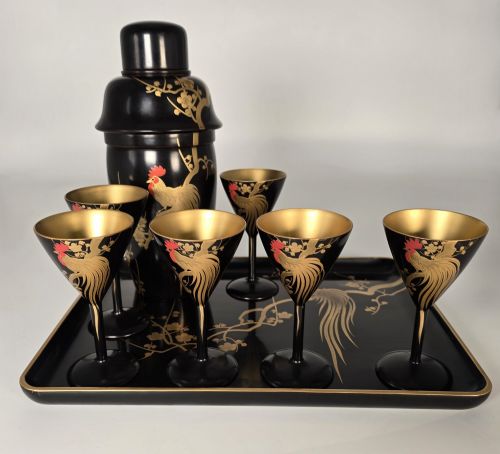
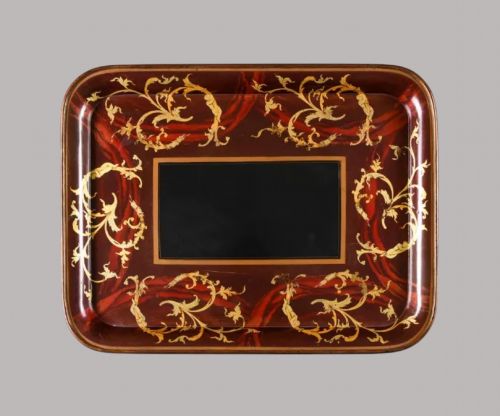
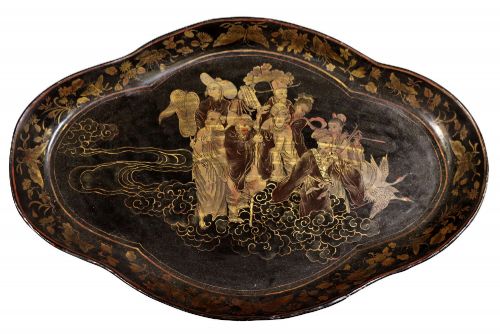
When you search for an antique lacquer tray, you encounter pieces designed for serving, display, or later conversion into occasional and coffee tables. The selection ranges from Georgian and Regency papier-mâché serving dishes to Victorian Chinoiserie boards and early twentieth-century Japanese lacquerware.
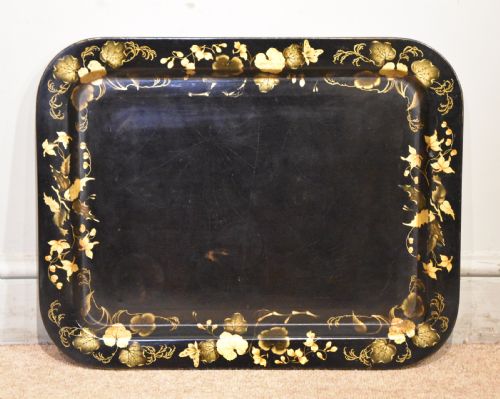
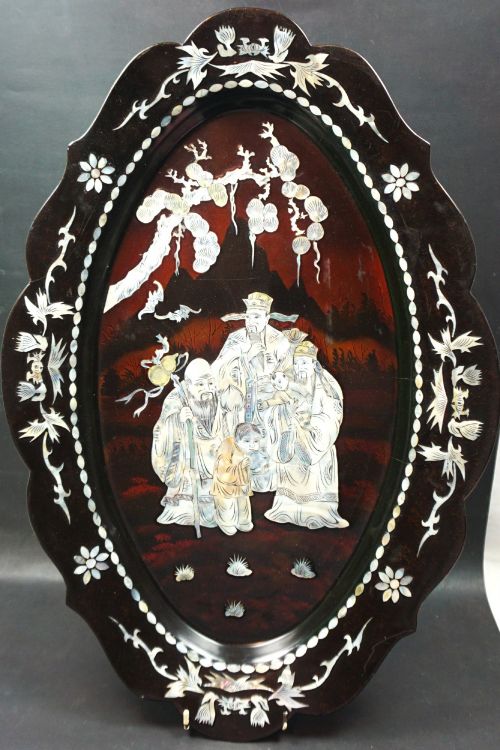
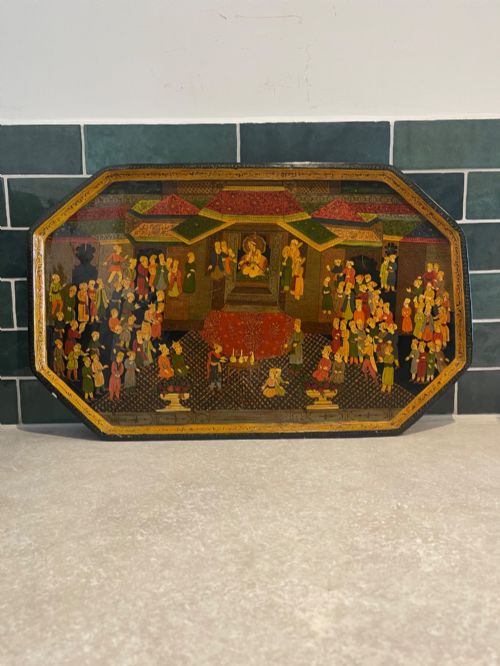
Papier-mâché examples from English workshops dominate the earlier periods, often finished with gilt decoration or ebonised surfaces. Alongside these, Asian imports and regional pieces from Kashmir bring hand-painted details and mother-of-pearl inlay to the form.
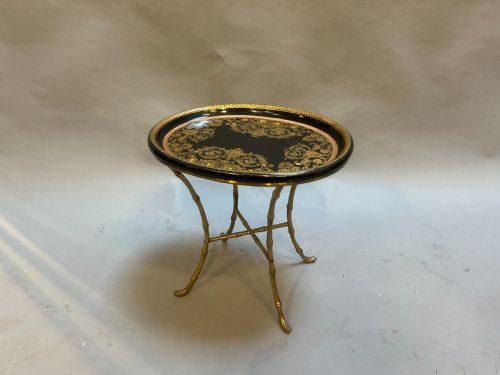
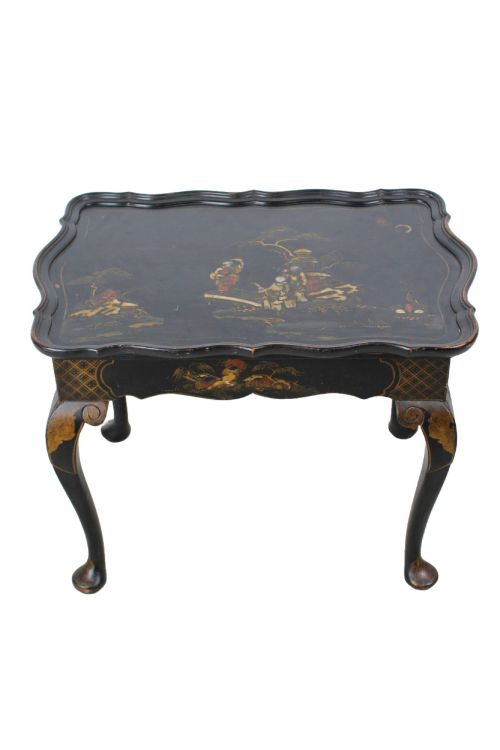
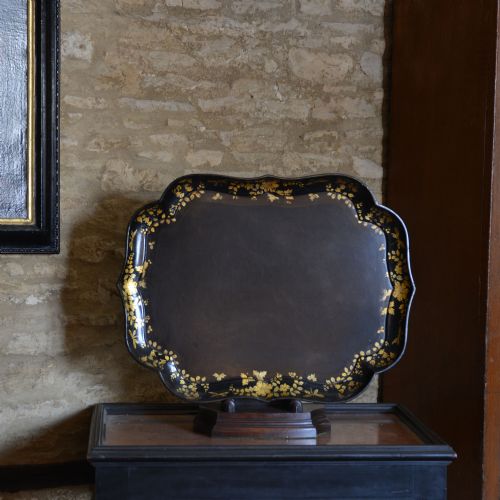
Many items survive as flat serving trays or waiters, while others arrive mounted on custom stands to function as tray tables. The forms span small card baskets, oval platters, and deep octagonal dishes intended for both decorative and practical use.
How they were made
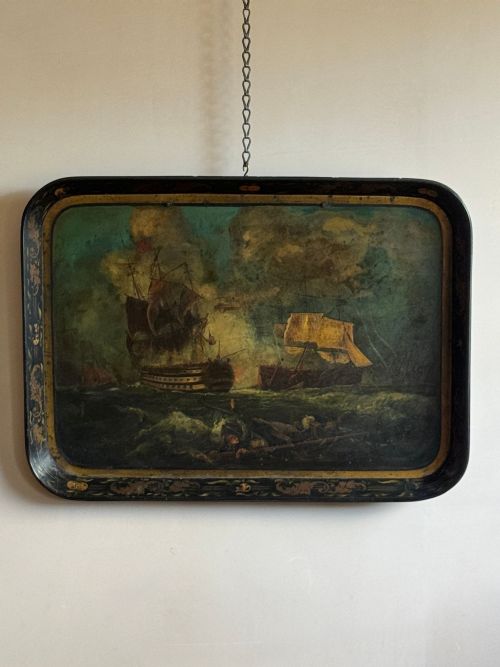
Papier-mâché construction involves building up layers of paper pulp or sheets, heavily pressed, dried, and coated with varnish to create a rigid, lightweight base. This material allows for smooth surfaces capable of holding complex painted scenes and heavy layers of black or coloured lacquer.
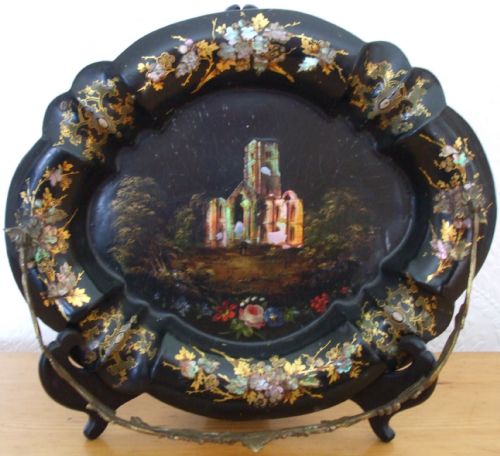
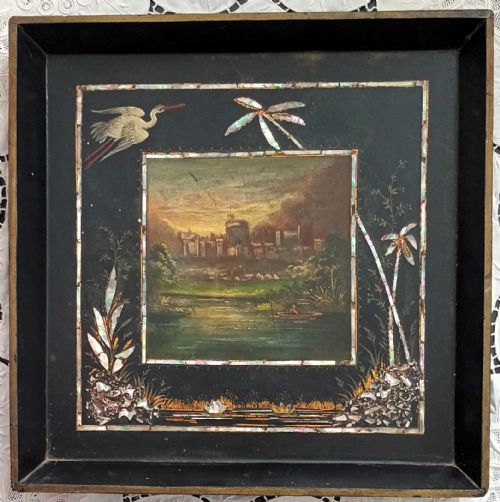
Decoration relies on hand painting, gold leaf application, and mother-of-pearl inlay set directly into the lacquered surface. Japanning techniques mimic Asian lacquerwork using European varnishes and metallic powders, sealed and polished by hand.
Makers occasionally utilised crushed eggshell within lacquer designs to mimic the texture of cherry blossom petals.
What varies in quality
The standard of an antique lacquer tray depends on the crispness of the hand-painted detail and the depth of the varnish layers. Superior pieces retain their original gilding and show careful execution in figural or floral motifs.
Makers known for exceptional production, such as Jennens & Bettridge or Henry Clay, demonstrate superior structural stability in their papier-mâché bases and refined edge finishing. Quality also rests on the preservation of the original surface without heavy overpainting.
Jennens & Bettridge·Henry Clay
The Antique Lacquer Tray Glossary
- Papier-mâché
- A composite material made from paper pulp or layered paper mixed with glue, baked and shaped into rigid trays and boxes before lacquering.
- Japanning
- A European imitation of East Asian lacquerwork, created by applying successive coats of varnish and heat-curing them.
- Chinoiserie
- European decorative style reflecting Chinese and East Asian artistic motifs, prominent in tray painting throughout the Georgian and Victorian periods.
- Gilt
- A thin layer of gold leaf or gold powder applied to the surface of the tray to highlight borders and decorative scenes.
- Mother-of-pearl
- Iridescent inner shell material used for inlay work, creating luminous highlights within painted lacquer designs.
Antique Lacquer Tray: Frequently Asked Questions
How do I clean an antique lacquer tray?
Dust gently with a soft, dry microfibre cloth to protect the delicate varnish and painted surface.
Avoid using water, chemical sprays, or abrasive cleaners, as moisture penetrates old lacquer and damages the finish.
Can I use an antique tray for serving drinks?
Most antique lacquer trays suit light use, but moisture from condensation or heat from hot cups can harm historical varnish.
Place coasters or linen mats on the surface if you plan to use the piece for everyday serving.
How can I tell a Regency tray from a Victorian one?
Regency trays often feature restrained neoclassical motifs, gilt borders, and deep, robust papier-mâché construction.
Victorian examples frequently showcase elaborate Chinoiserie landscapes, floral patterns, and mother-of-pearl inlay work.
What is a tray table conversion?
A tray table conversion is a piece where a detachable serving tray rests securely on a custom-made folding or fixed wooden stand.
Many period trays were mounted on stands later in their life to serve as coffee tables or side tables in modern interiors.