
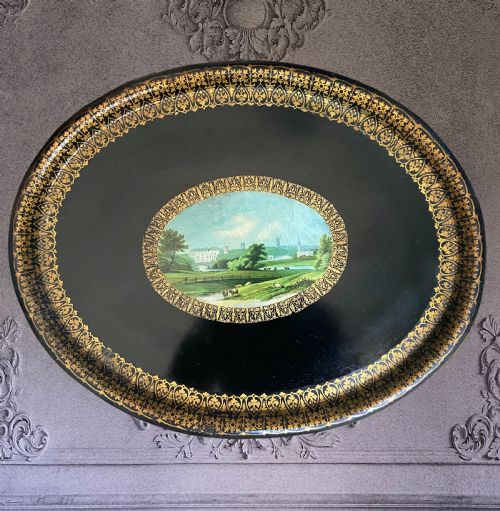


Gilded Black Tray
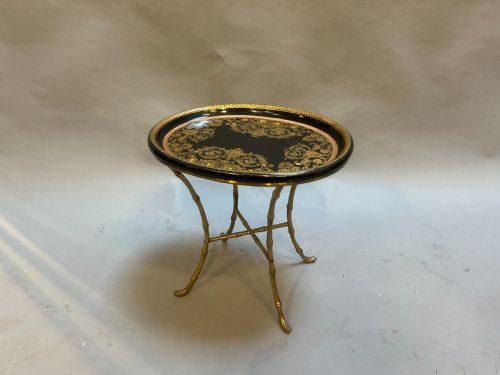
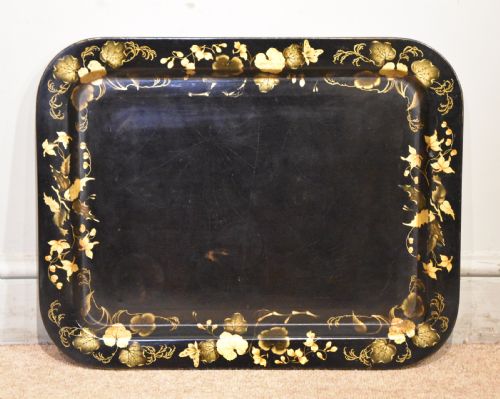
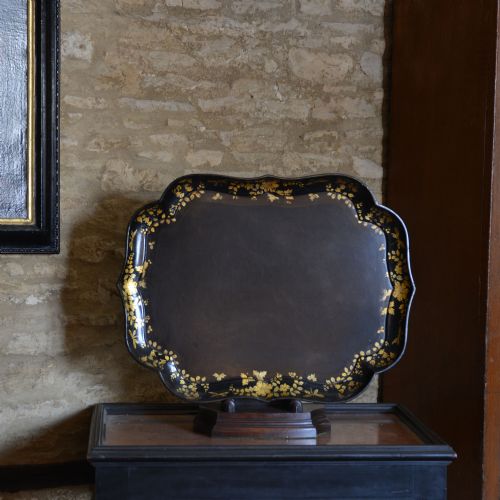
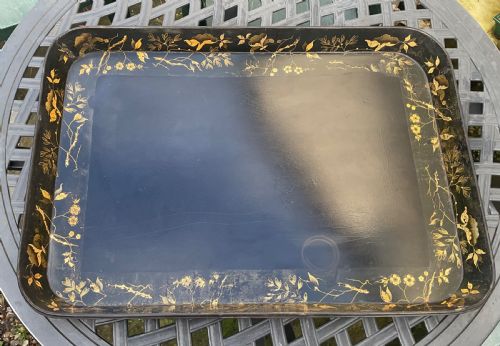
A gilded black tray brings deep lacquer and metallic leaf together, offering a functional centrepiece that anchors any tabletop.
Gilded Black Tray
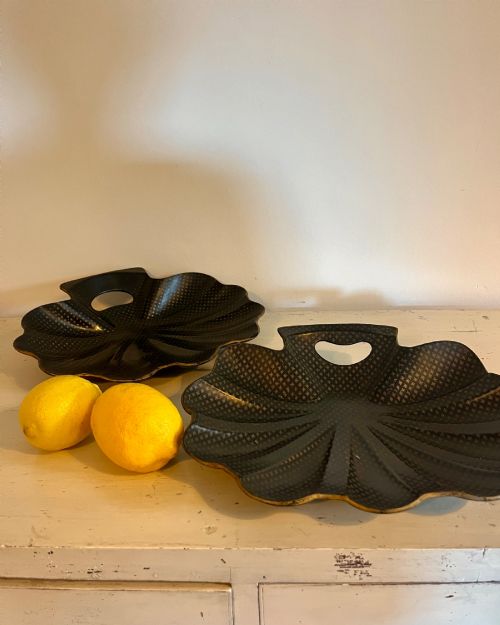
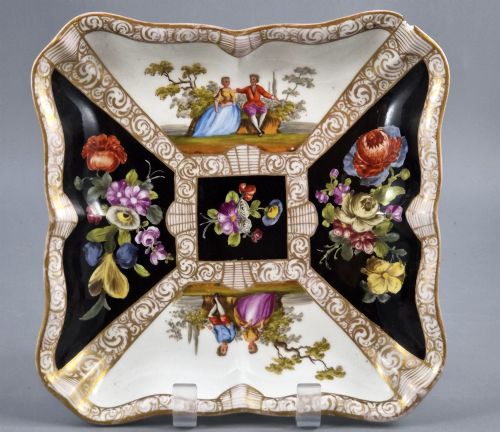
A gilded black tray is a surface designed for serving, display, or support, frequently encountered in papier-mâché and toleware forms from the eighteenth century onward. These pieces range from compact serving dishes and card baskets to large oval trays mounted on stands as coffee tables or side tables.
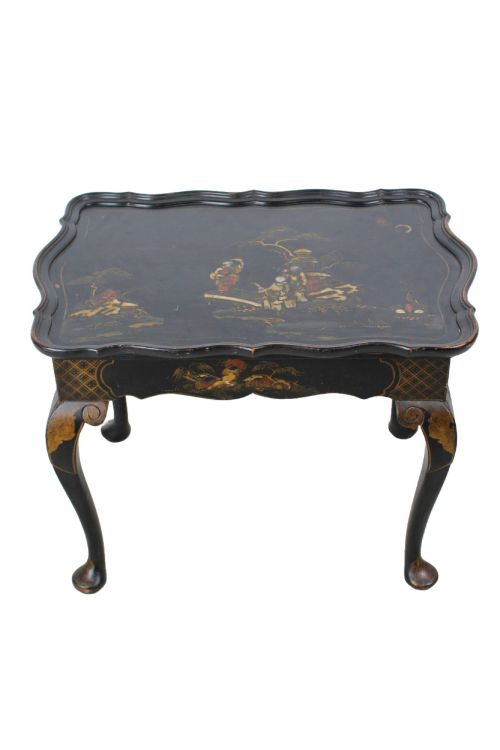
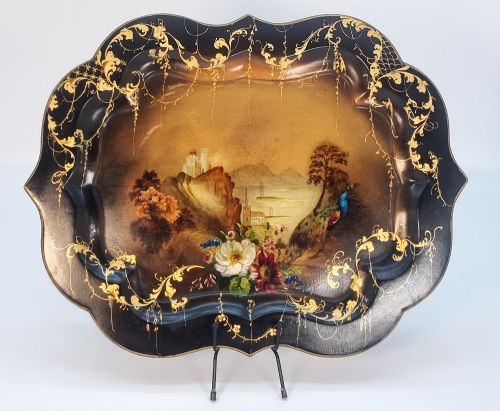
The Regency and Victorian periods dominate the selection, bringing black lacquered grounds paired with gilt borders, hand-painted hunting scenes, or Chinoiserie motifs. Buyers select these items to introduce historic texture and reflective metallic detail into contemporary interiors.
How they were made
Makers built papier-mâché trays by pressing layers of paper pulp and glue over a mould, creating a rigid and lightweight core before applying dark lacquer. Metal toleware pieces utilised shaped sheet iron treated with protective dark finishes.
Artisans applied gold leaf and gilt paint by hand, often building up raised ornamentation or delicate borders over the black ground. Protective varnishes sealed the painted surfaces against moisture and wear.
Several pieces depict hunting scenes where spirited dogs and riders pursue unseen prey across black lacquer horizons.
What varies in quality
Quality rests in the crispness of the hand-painted detailing and the depth of the lacquer finish. Superior examples display refined brushwork in landscape or figural scenes rather than simple mechanical stencil patterns.
The structural integrity of the papier-mâché or metal core dictates the longevity of the piece. Fine maker attributions and intact, undisturbed original gilding elevate distinct specimens above standard production wares.
Jennens & Bettridge·Henry Clay·A. Marionnet
The Gilded Black Tray Glossary
- Papier-mâché
- A composite material made from paper pulp or layered sheets mixed with glue, pressed and dried to form a sturdy, lightweight object.
- Toleware
- Painted or lacquered sheet metal items, commonly iron, produced for domestic use in serving and display.
- Chinoiserie
- European artistic interpretations of Chinese and East Asian decorative styles, frequently featuring figures, pavilions, and landscapes.
- Gilding
- The application of gold leaf or powder to a surface to create a metallic decorative finish.
- Ground
- The primary background colour of a painted or lacquered object, establishing the visual tone for subsequent decoration.
Gilded Black Tray: Frequently Asked Questions
How are these trays used today?
These trays function well on coffee tables, sideboards, or desks to organise smaller objects and display decorative items. Many larger examples rest on custom stands to serve as stable low tables.
Placing them away from direct heat sources and excessive moisture preserves the historic lacquer and delicate gold leaf.
What is papier-mâché?
Papier-mâché is a durable composite material formed from paper pulp or layered paper bonded with glue and pressed into moulds. Once dried, it accepts smooth dark lacquers and fine hand-painted decoration.
This technique allowed makers to create lightweight yet robust trays with curved edges and moulded details.
How do I date a black lacquered tray?
Dating relies on stylistic clues, construction methods, and materials such as papier-mâché versus sheet iron toleware. Regency and Georgian examples often display specific Chinoiserie motifs and hand-brittled gilt borders.
Maker signatures stamped or painted on the underside provide the most precise chronological markers.